Some living rooms look finished in an afternoon, and some look like they’ve quietly gathered personality for years — the second kind is almost always the one people want to sit in. Boho living room ideas aren’t really about buying the right things, they’re about letting a space feel a little unfinished on purpose, layered with texture and pieces that don’t need to match to belong together. Below are seventeen ways to bring that relaxed, collected feeling into a living room, whether you’re starting fresh or just want one corner to finally feel warmer.
Affiliate Disclosure: This article contains affiliate links which means we may earn a commission at no extra cost to you. You can check our affiliate disclosure page here.
17 Boho Living Room Ideas Worth Trying
Each of these works as its own small shift, whether it’s a full seating arrangement or a single layer added to a space that already exists. Mix a few together, or start with whichever one matches the corner that’s been bothering you most.
1. Layered Textile Floor Seating
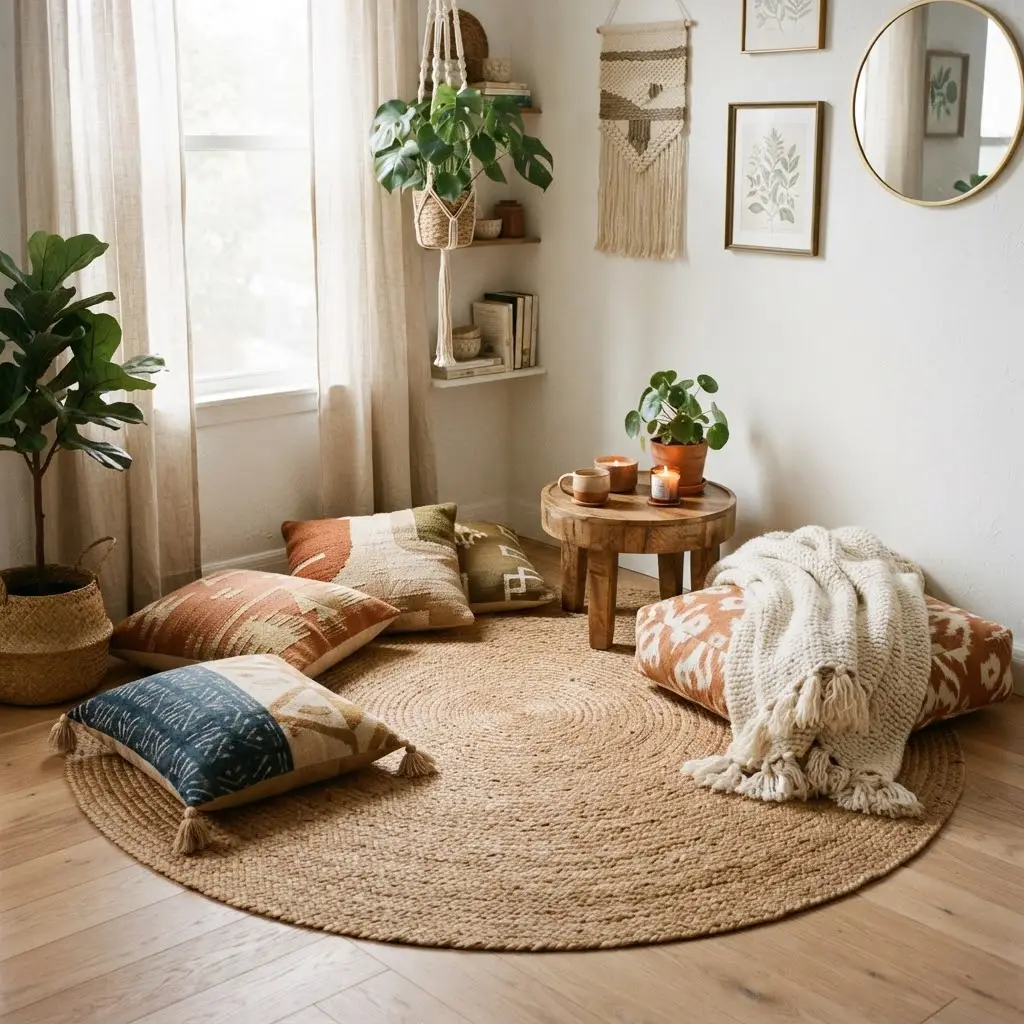
A living room corner without a traditional sofa can still feel complete with a low seating area built entirely from layered floor cushions and a woven rug beneath them. The mix of textures does most of the visual work here, without needing any actual furniture at all.
- A jute area rug grounds the whole setup and gives the floor enough texture that cushions don’t feel like they’re floating on bare wood.
- A stack of floor cushions in mismatched patterns creates the kind of visual variety that makes the corner look gathered rather than purchased as a set.
- A low wooden side table nearby holds a drink or a book within reach without requiring anyone to get up.
- A woven throw blanket draped loosely over one cushion adds warmth for cooler evenings spent sitting low to the ground.
2. Rattan Peacock Chair Corner
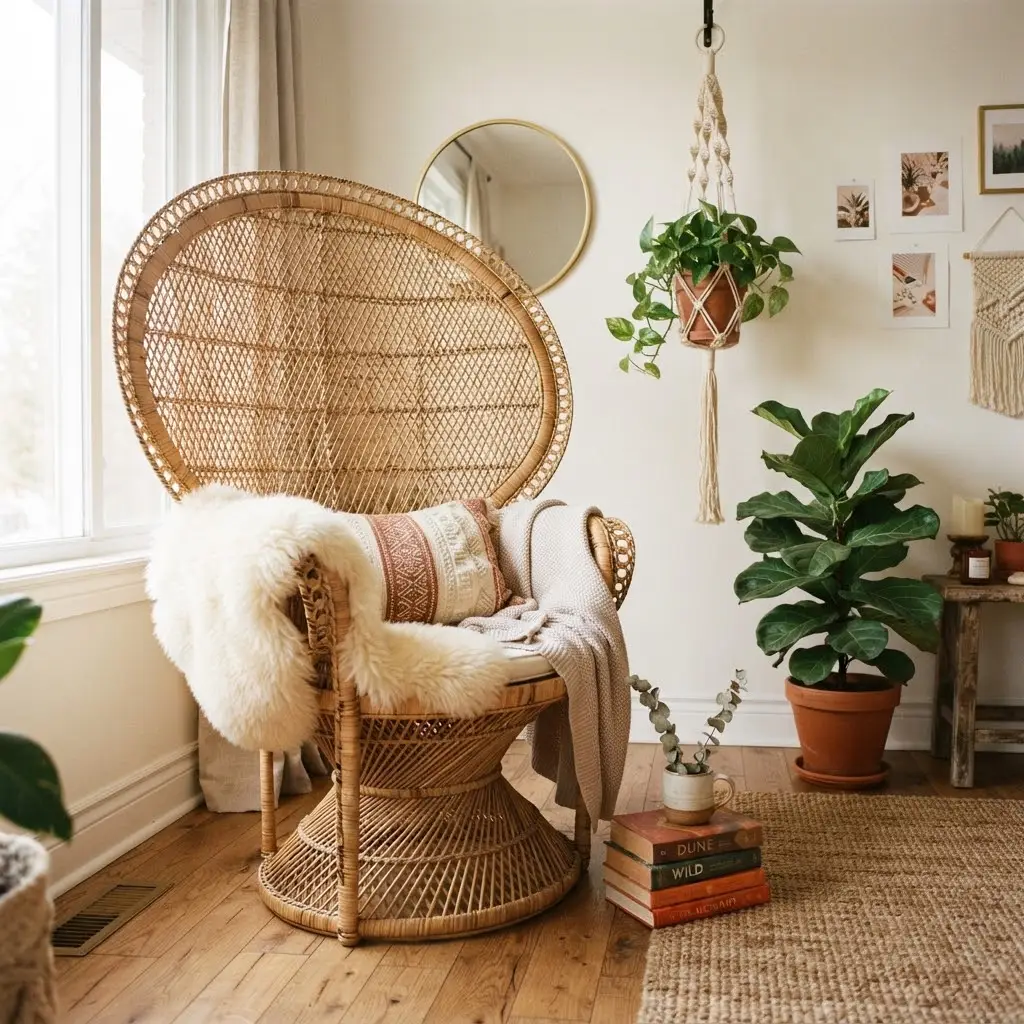
An empty corner of a living room becomes a striking reading spot with a rattan peacock chair placed at an angle rather than pushed flush against the wall. The chair’s shape alone does most of the visual work, needing very little else layered around it.
- A single macrame plant hanger suspended nearby fills the vertical space above the chair without crowding it.
- A small stack of books on the floor beside the chair suggests it actually gets used rather than just admired.
- A sheepskin throw draped over one arm softens the woven texture and adds a bit of warmth to sit on.
- Natural light from a nearby window highlights the chair’s woven pattern in a way artificial lighting rarely manages.
3. Layered Vintage Rug Combination
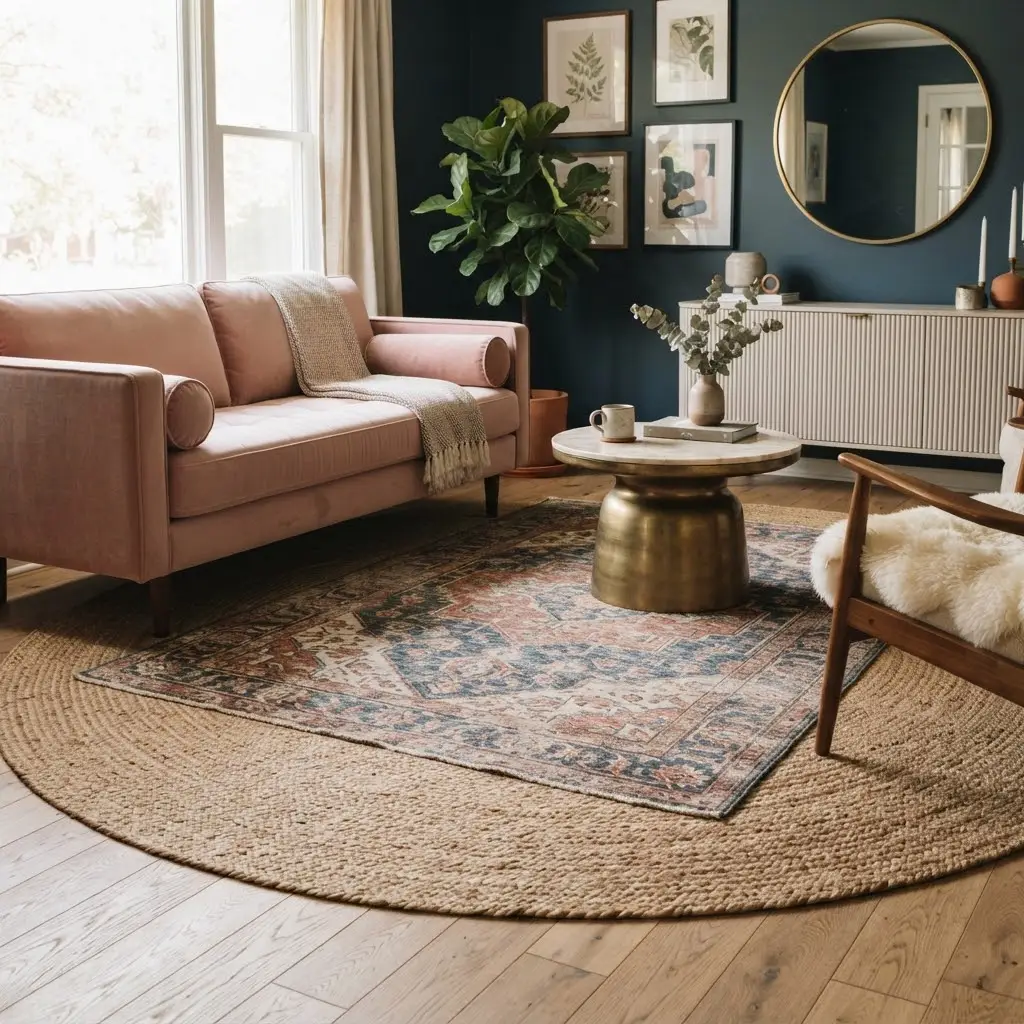
Two rugs layered together, rather than one large rug alone, gives a living room floor the kind of depth a single flat rug can’t achieve on its own. The layering technique works especially well when the two patterns share at least one color in common.
- A large jute rug serves as the base layer, covering most of the floor with warm, neutral texture.
- A smaller vintage-style area rug sits on top, slightly askew, introducing pattern without overwhelming the room.
- Furniture legs resting partially on both rugs help tie the layered look together rather than making it feel accidental.
- The edges of both rugs stay visible rather than one being tucked fully under furniture, which is part of what makes the layering read as intentional.
4. Macrame Wall Hanging Statement
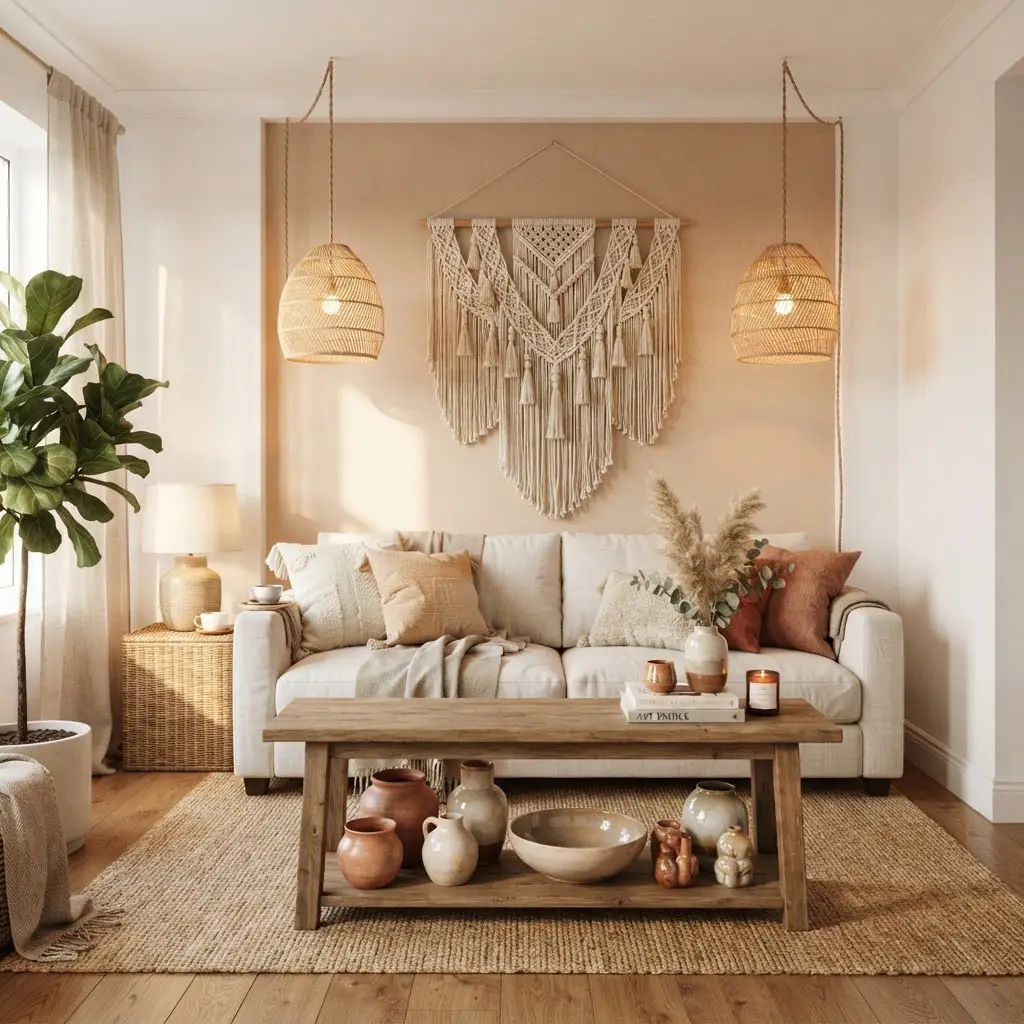
A plain wall behind a sofa becomes the room’s focal point with a large macrame wall hanging taking up most of the visible space above the seating. The knotted texture adds warmth to a wall that would otherwise feel flat and unfinished.
- A pair of rattan pendant lights hung symmetrically on either side frame the macrame piece without competing with it.
- A low console table beneath holds a small collection of ceramics that echo the macrame’s neutral, earthy tones.
- Fringe or tassels along the bottom edge of the hanging catch light and shadow differently throughout the day.
- The wall stays otherwise bare, letting the single statement piece carry the whole visual weight of that side of the room.
5. Earthy Terracotta and Rust Palette
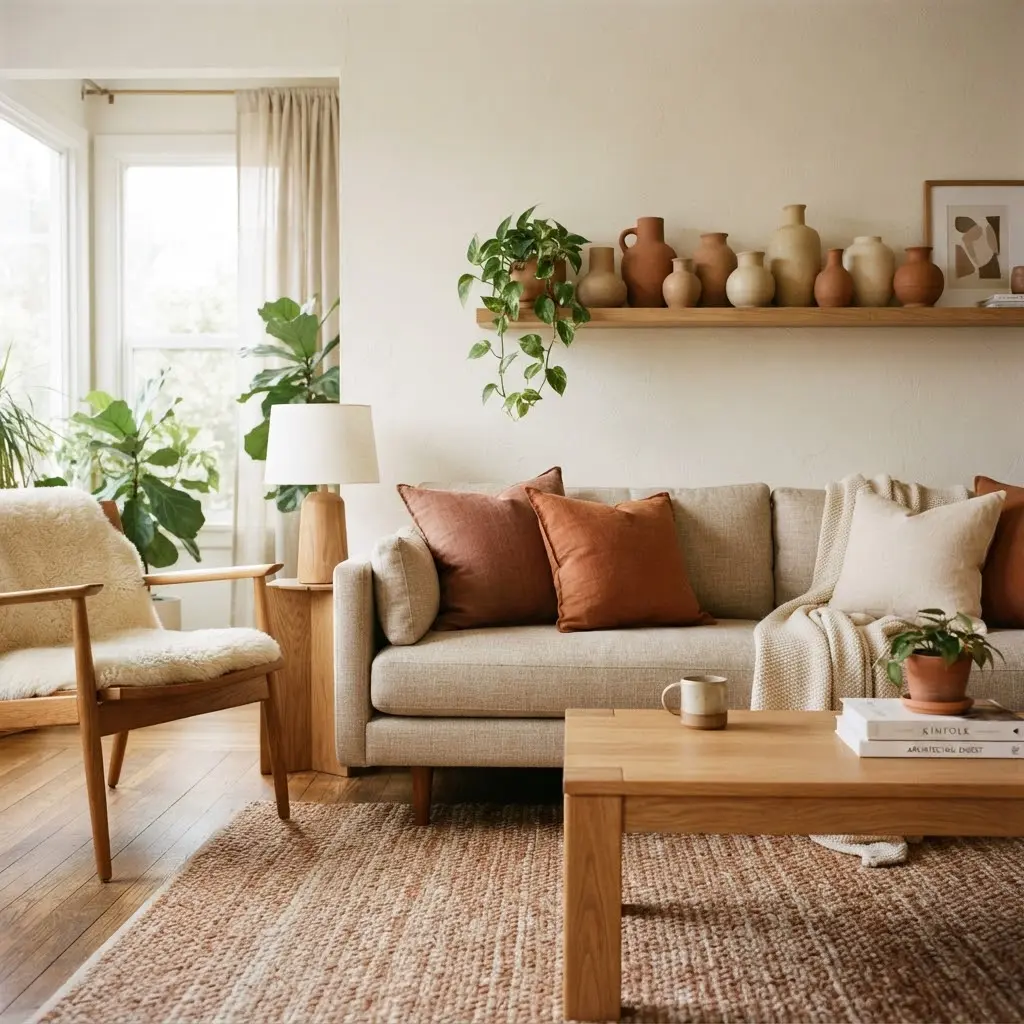
A living room built around warm terracotta, rust, and clay tones instead of the more common neutral palette gives the whole space an earthy, sun-baked feeling year-round. The warmth of these tones works particularly well against natural wood furniture.
- Terracotta throw pillows scattered across a neutral sofa introduce the color story without requiring a full furniture change.
- A clay-toned area rug ties the warm palette into the floor, anchoring the rest of the room’s tones.
- A cluster of unglazed ceramic vases on a shelf continues the earthy theme in a smaller, more subtle way.
- Natural wood furniture throughout the room complements the warm palette rather than competing with it.
6. Trailing Plant Wall Corner
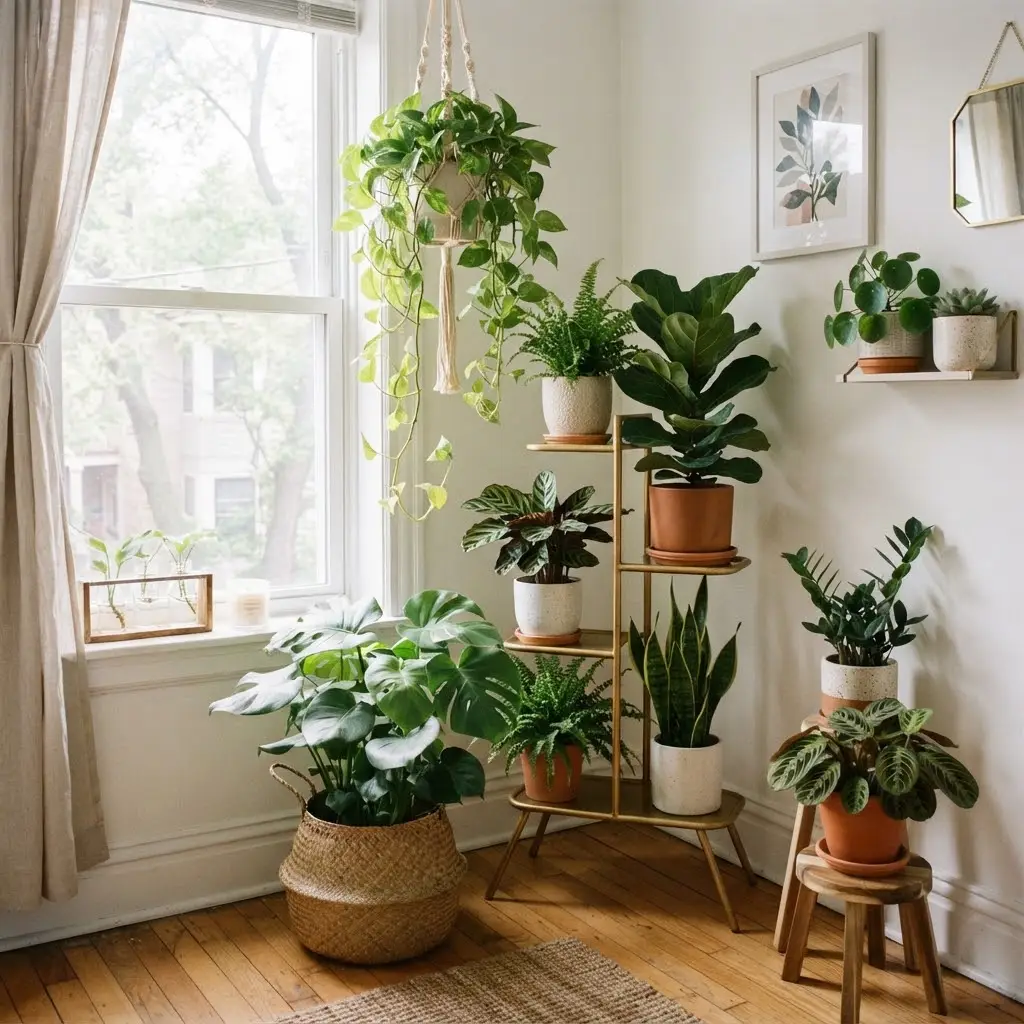
A bare corner near a window transforms into a small indoor jungle with a mix of trailing plants at varying heights, some hanging and some placed on stands. The layered greenery brings life into a room in a way static decor never quite manages.
- A tall plant stand elevates one larger plant, giving the corner some height variation instead of everything sitting at floor level.
- A hanging planter suspended from the ceiling holds a trailing pothos or philodendron, letting vines cascade down naturally over time.
- A woven plant basket disguises a plastic nursery pot for anything still sitting in its original container.
- The plants get grouped closely together rather than spread evenly around the room, creating one dense, jungle-like moment instead of scattered greenery.
7. Vintage Kilim Accent Chair
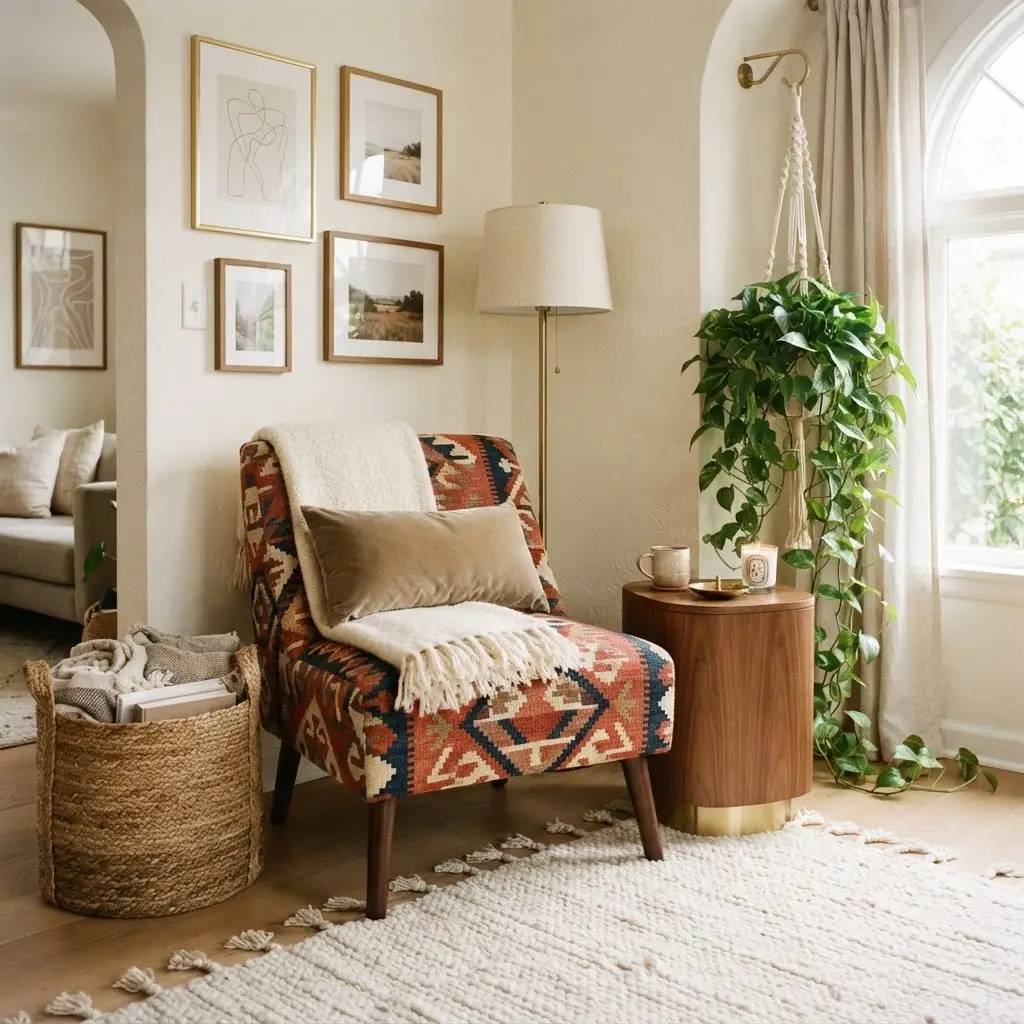
A single accent chair upholstered in a kilim-patterned fabric brings pattern and history into a living room without requiring a full furniture overhaul. The chair works especially well as a slight contrast to an otherwise neutral seating arrangement.
- A woven storage basket placed beside the chair holds blankets while echoing the same handmade, textural quality.
- A small side table with a rounded, organic shape softens the geometric pattern of the chair’s fabric.
- A single trailing plant nearby adds a bit of green against the chair’s warm, earthy tones.
- The chair angled slightly rather than facing straight ahead makes the whole corner feel more like a considered reading nook.
8. Floor Cushion and Low Table Lounge
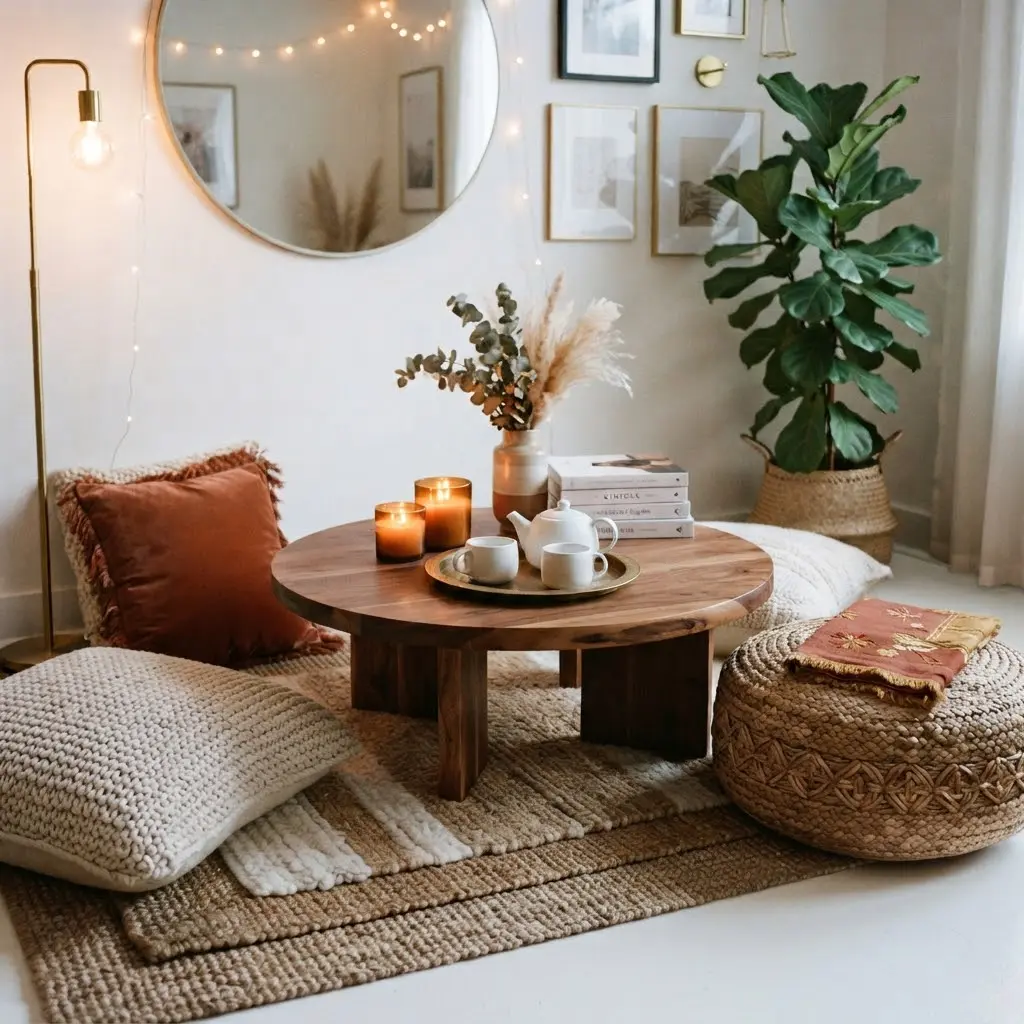
A living room built around a low wooden coffee table surrounded by floor cushions instead of traditional chairs creates a more casual, ground-level gathering spot. This layout works particularly well in rooms with lower ceilings, where it visually opens up the space.
- A cluster of floor cushions in mixed textures and patterns surrounds the table on three sides.
- A woven pouf serves as an extra seat that can be pulled in or pushed aside depending on how many people are gathered.
- A small tray on the table holds tea or snacks within easy reach of everyone seated around it.
- Candles placed directly on the low table add warm, ambient light once the sun goes down.
9. Layered Throw Blanket Sofa Styling
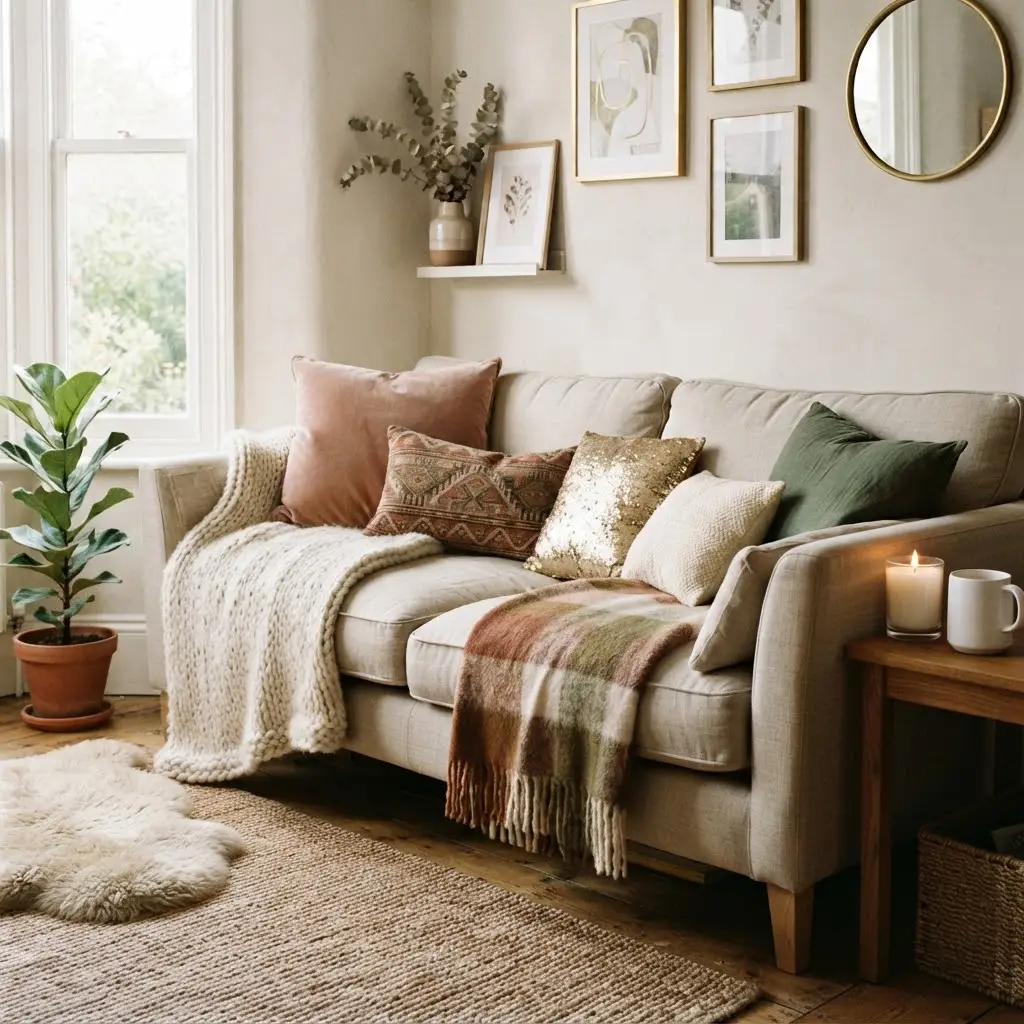
A plain sofa gets an instant boho update with several throw blankets layered across the back and one arm, mixing different textures like chunky knit, woven cotton, and soft fringe. The layering technique alone can transform an otherwise ordinary sofa.
- A chunky knit throw draped over one arm adds visible texture that photographs beautifully in natural light.
- A fringed throw blanket layered beneath the knit one introduces movement and a bit of boho detail.
- Mismatched throw pillows in varying patterns complete the layered look without needing to match each other exactly.
- The blankets stay slightly rumpled rather than perfectly folded, which is part of what keeps the whole look feeling lived-in rather than staged.
10. Woven Pendant Light Fixture
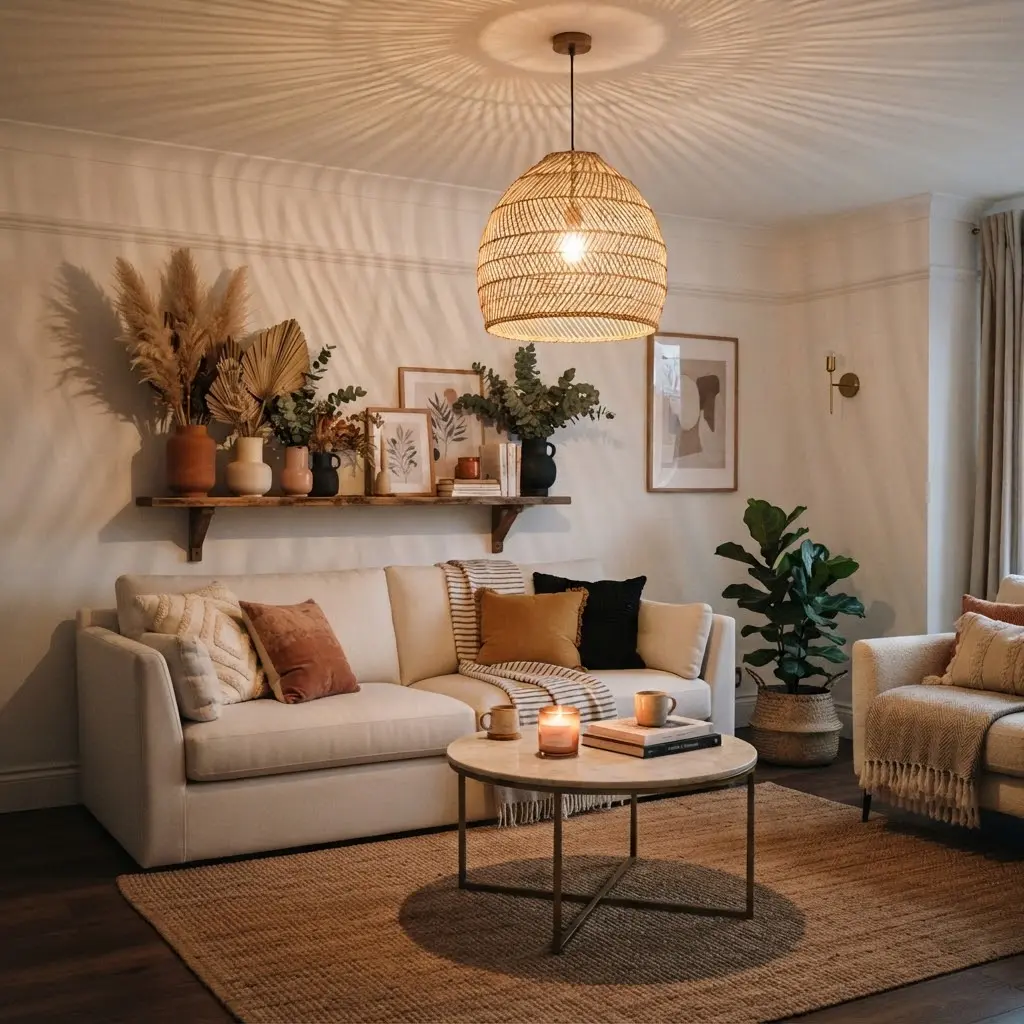
Swapping a plain overhead light for a woven rattan pendant light changes the entire character of a room, casting warm, dappled shadows across the ceiling and walls once it’s turned on. The natural material softens a space that overhead lighting often makes feel harsh.
- The pendant fixture hung at a slightly lower height than a standard ceiling light creates a cozier, more intimate feel in the seating area below.
- A dimmer switch, when available, lets the warm shadow pattern become more pronounced in the evening.
- A cluster of dried florals or pampas grass placed nearby echoes the fixture’s natural material.
- The woven texture of the shade catches afternoon sunlight in a way that changes the room’s mood throughout the day.
11. Vintage Brass and Wood Accent Table
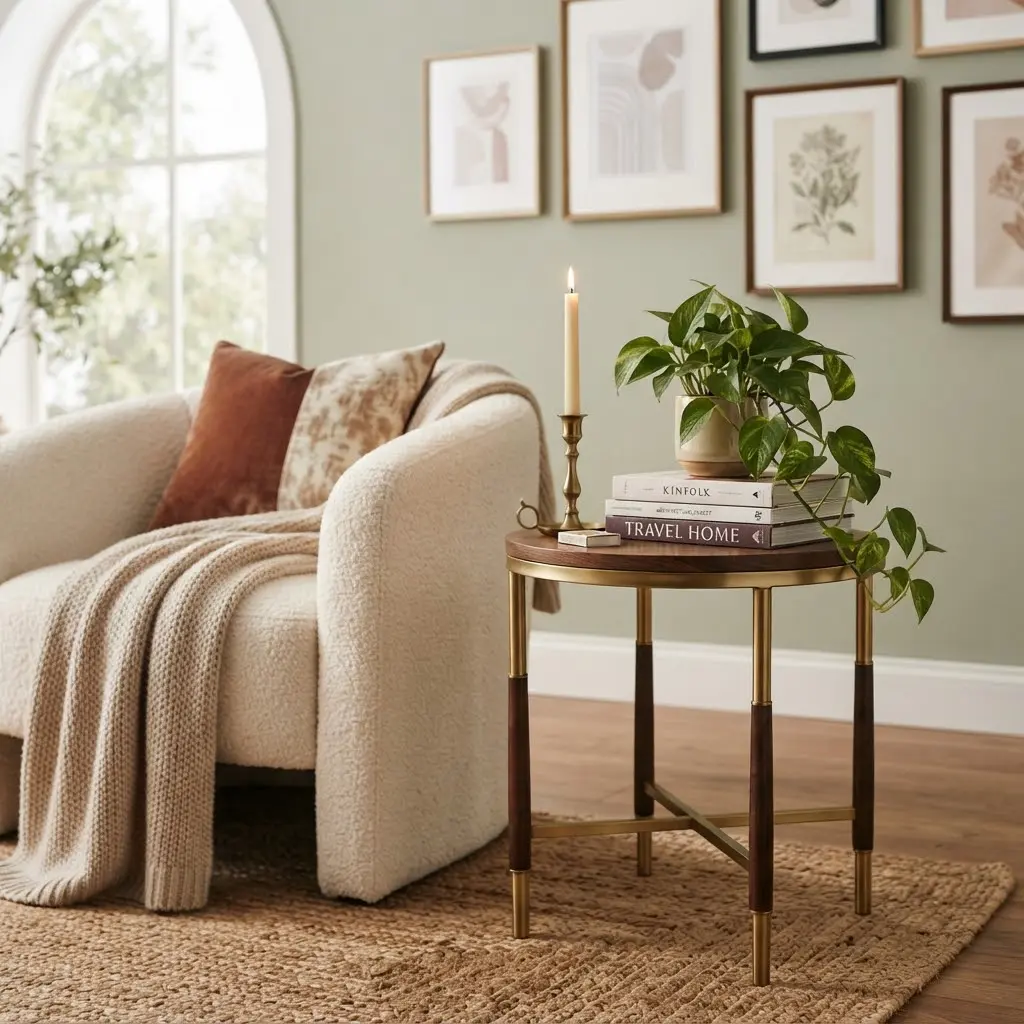
A brass and wood accent table placed beside a favorite chair introduces warm metal tones that pair naturally with the earthier elements found throughout a boho living room. The mix of materials keeps the table from feeling like it belongs to any one specific style.
- A small stack of books topped with a single trailing plant gives the table’s surface a bit of height variation.
- A brass candle holder nearby adds warm light without requiring an overhead fixture to be on.
- The table’s rounded edges soften a room that might otherwise feel too angular from other furniture pieces.
- Placed slightly closer to the chair than expected, the table feels more like it’s actually used rather than purely decorative.
12. Handwoven Basket Storage Wall
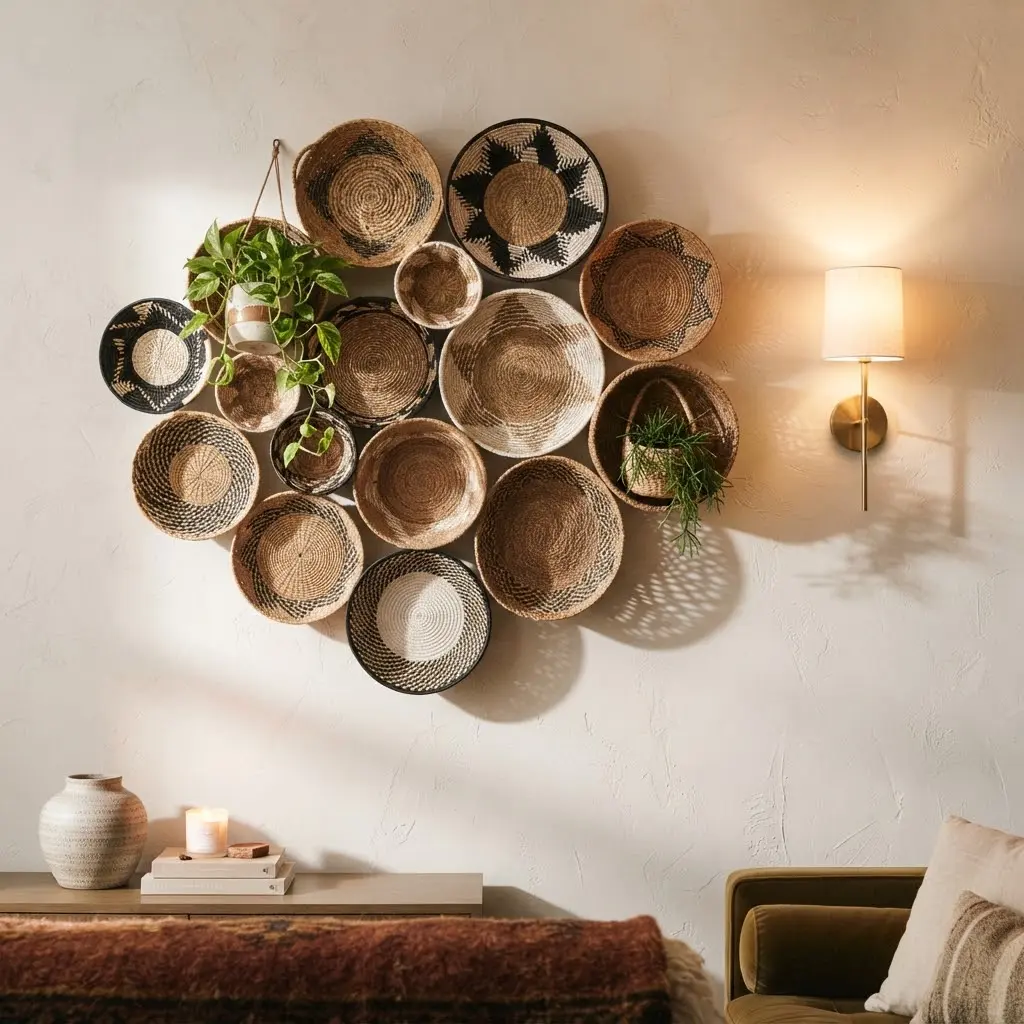
A wall near a sofa or reading chair gets both function and texture with a cluster of handwoven wall baskets arranged in a loose, asymmetrical pattern. Some hold small plants while others stay empty, adding dimension to a plain wall.
- A mix of basket sizes arranged with visible gaps between them keeps the wall from feeling too uniform or gridlike.
- A small trailing plant tucked into one or two of the baskets softens the display with a bit of greenery.
- The natural color variation between the baskets, even within the same material, adds subtle visual interest.
- A single lantern or sconce placed nearby casts shadow through the woven texture once evening comes.
13. Layered Pouf and Ottoman Seating
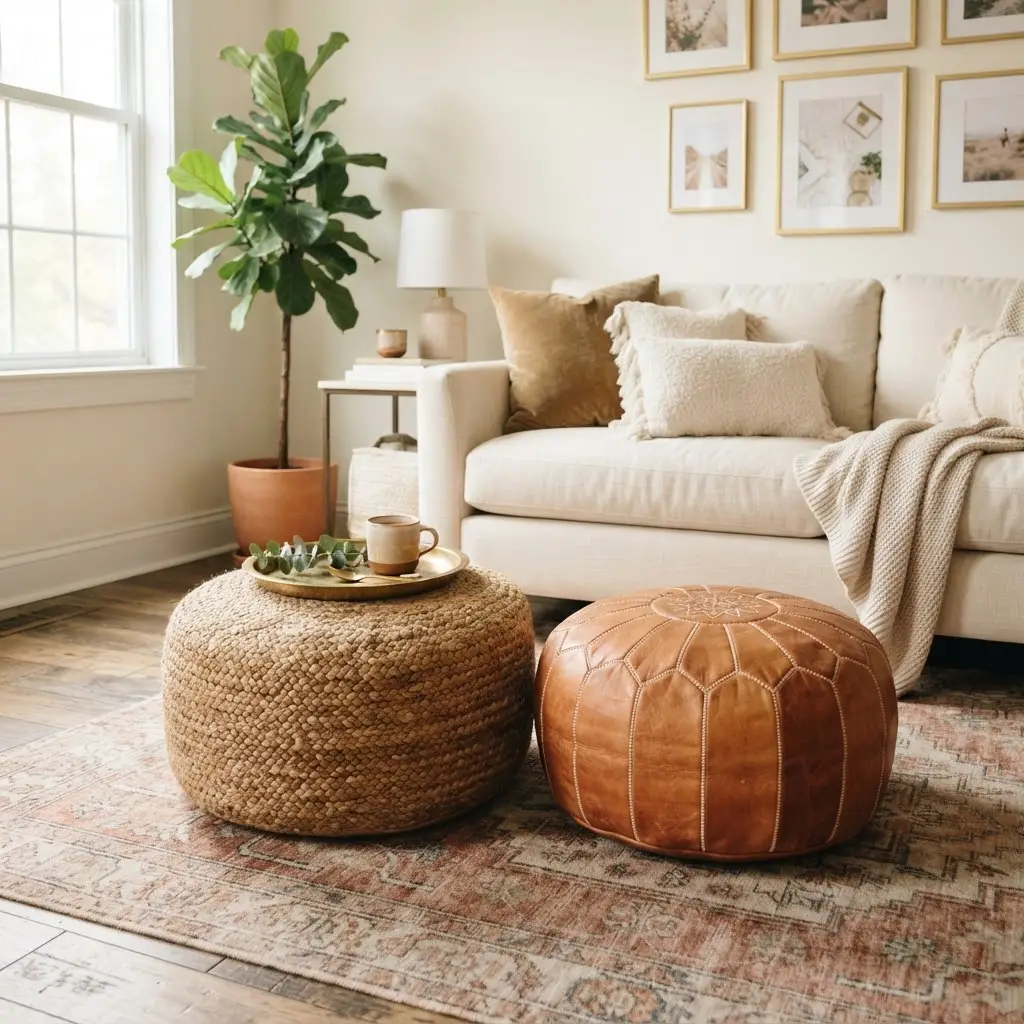
Extra seating in a boho living room often comes from woven poufs and ottomans rather than additional chairs, since they tuck in and out of a space more easily while adding texture. A cluster of two or three in varying heights works especially well near a sofa.
- A round woven pouf in a neutral tone serves as a footrest or extra seat depending on the moment.
- A leather pouf in a contrasting texture adds variety when placed beside the woven one.
- Both pieces get pulled slightly away from the wall, positioned more like part of the seating arrangement than storage.
- A small tray placed on top of one pouf turns it into a makeshift side table when extra surface space is needed.
14. Fringe and Tassel Curtain Detail
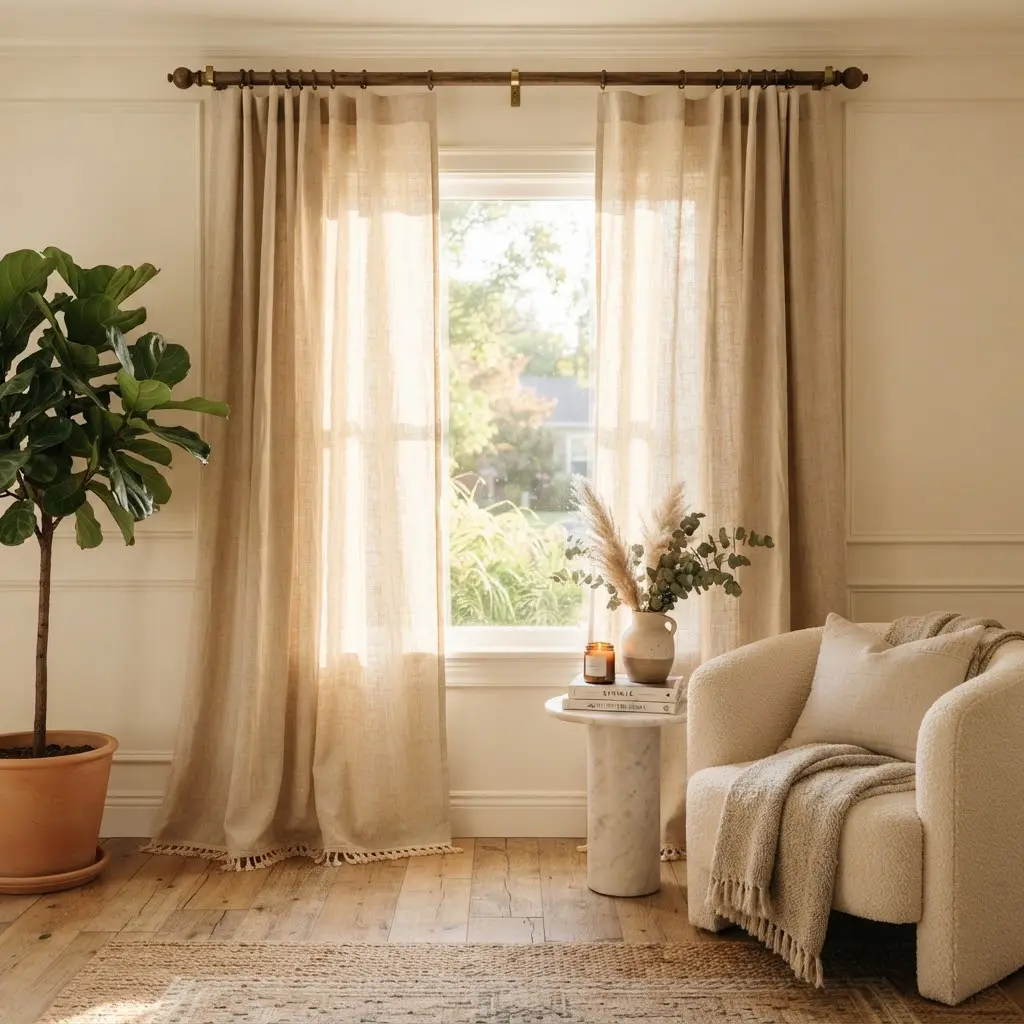
Window treatments get a boho update with curtains finished in fringe trim along the bottom edge, adding movement and texture that plain curtains don’t offer. The detail catches the light differently depending on the time of day.
- Linen curtains in a natural, undyed tone provide the base fabric for the fringe detail to stand out against.
- The fringe trim moves slightly with any breeze from an open window, adding a subtle sense of motion to an otherwise still room.
- A wooden curtain rod rather than a metal one continues the natural material theme found throughout the rest of the room.
- Curtains left slightly open rather than fully closed let light filter through the fringe’s texture during the day.
15. Global Textile Throw Pillow Mix
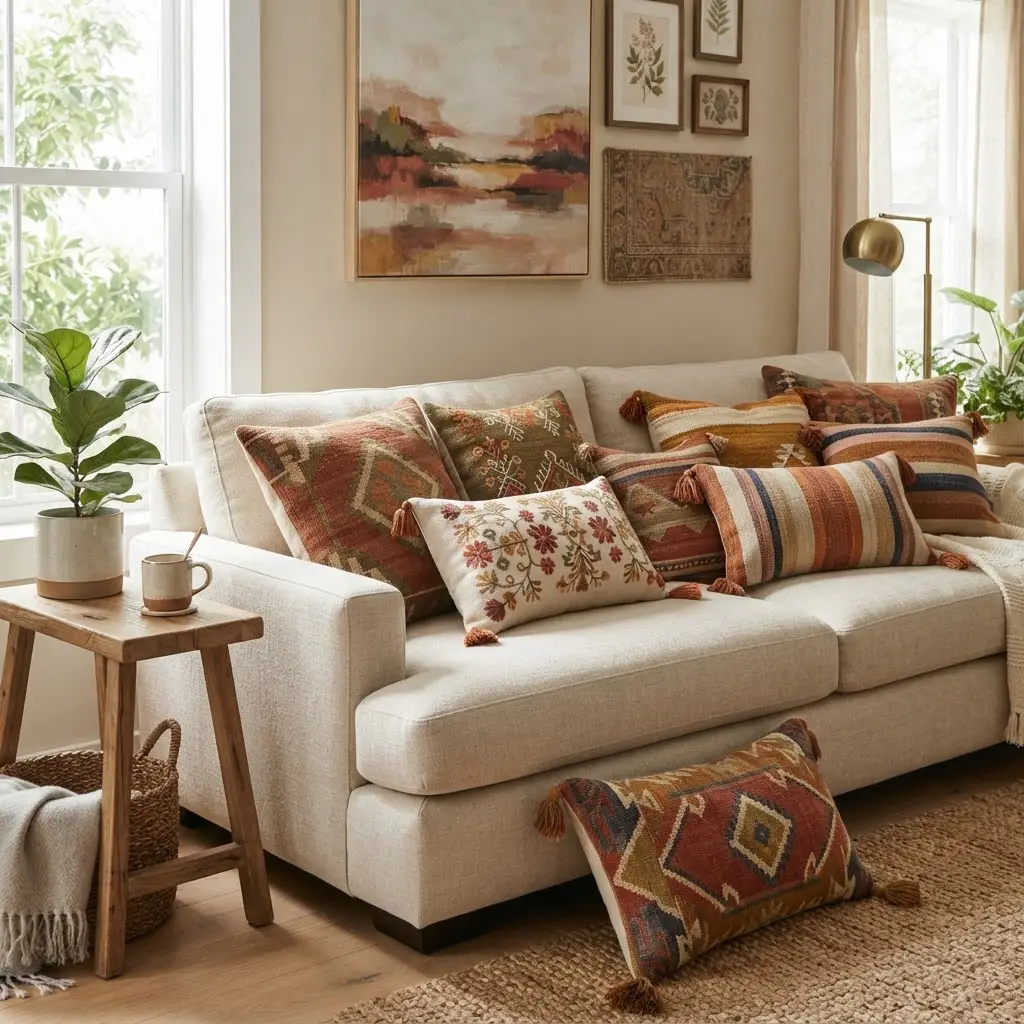
A neutral sofa transforms with a mix of throw pillows featuring global-inspired textiles, patterns, and embroidery that don’t match each other exactly but share a similar color palette. The variety is part of what makes the arrangement feel collected rather than store-bought as a set.
- Embroidered throw pillows in earthy tones anchor the arrangement with texture and detail.
- A striped kilim pillow adds pattern contrast without clashing with the more neutral pieces around it.
- Pillows arranged in odd numbers, rather than a perfectly even pair, tend to look more natural against a sofa.
- Sizes vary slightly between pillows, avoiding the overly matched look of a purchased set.
16. Natural Wood and Stone Coffee Table Styling
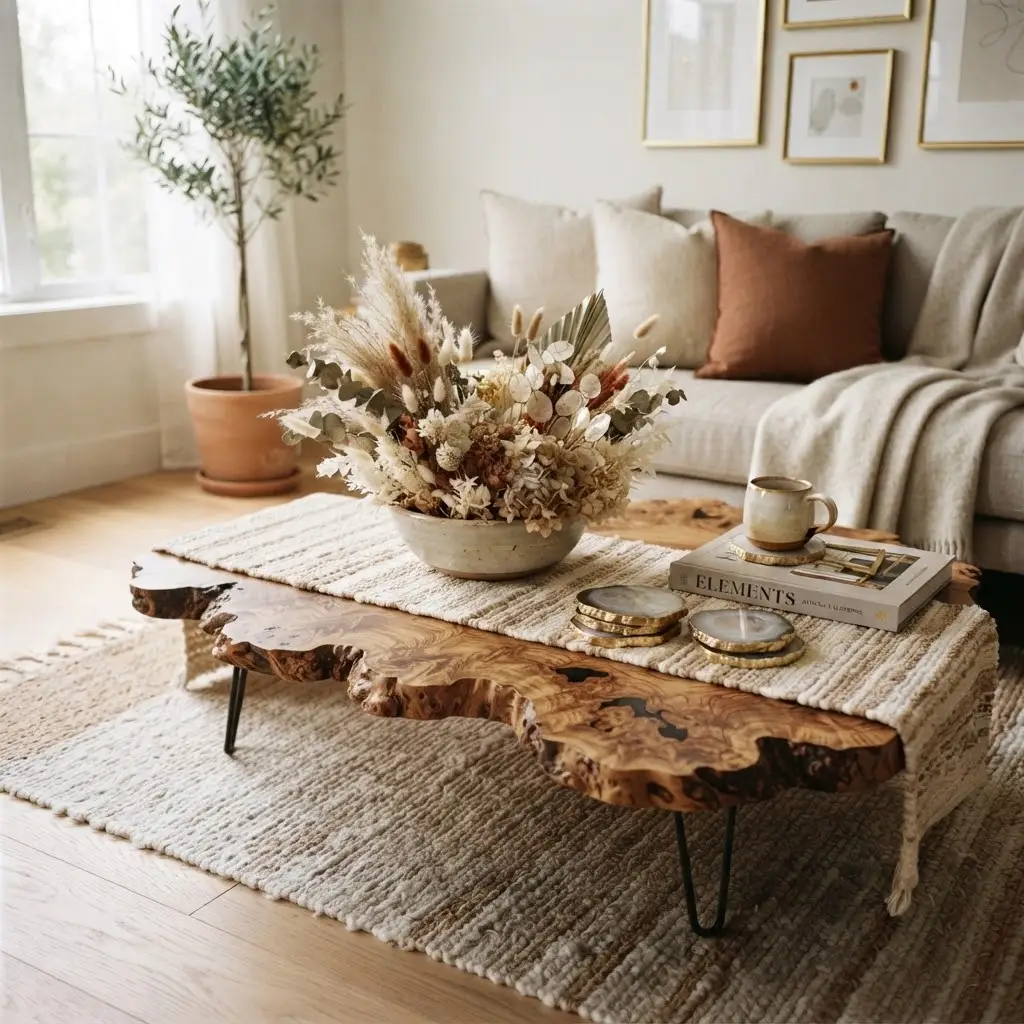
A coffee table styled with natural materials rather than typical decorative objects gives a boho living room an earthy, grounded centerpiece. The styling works whether the table itself is wood, stone, or a mix of both materials.
- A wood slice coffee table shows off natural grain and edge detail rather than a perfectly uniform surface.
- A small stack of stone coasters doubles as both function and decor sitting at one corner of the table.
- A low bowl of dried florals or pampas grass sits at the center, adding a bit of texture without much upkeep.
- A woven table runner beneath everything ties the whole surface together without hiding the wood grain completely.
17. Sheepskin and Wood Accent Layering
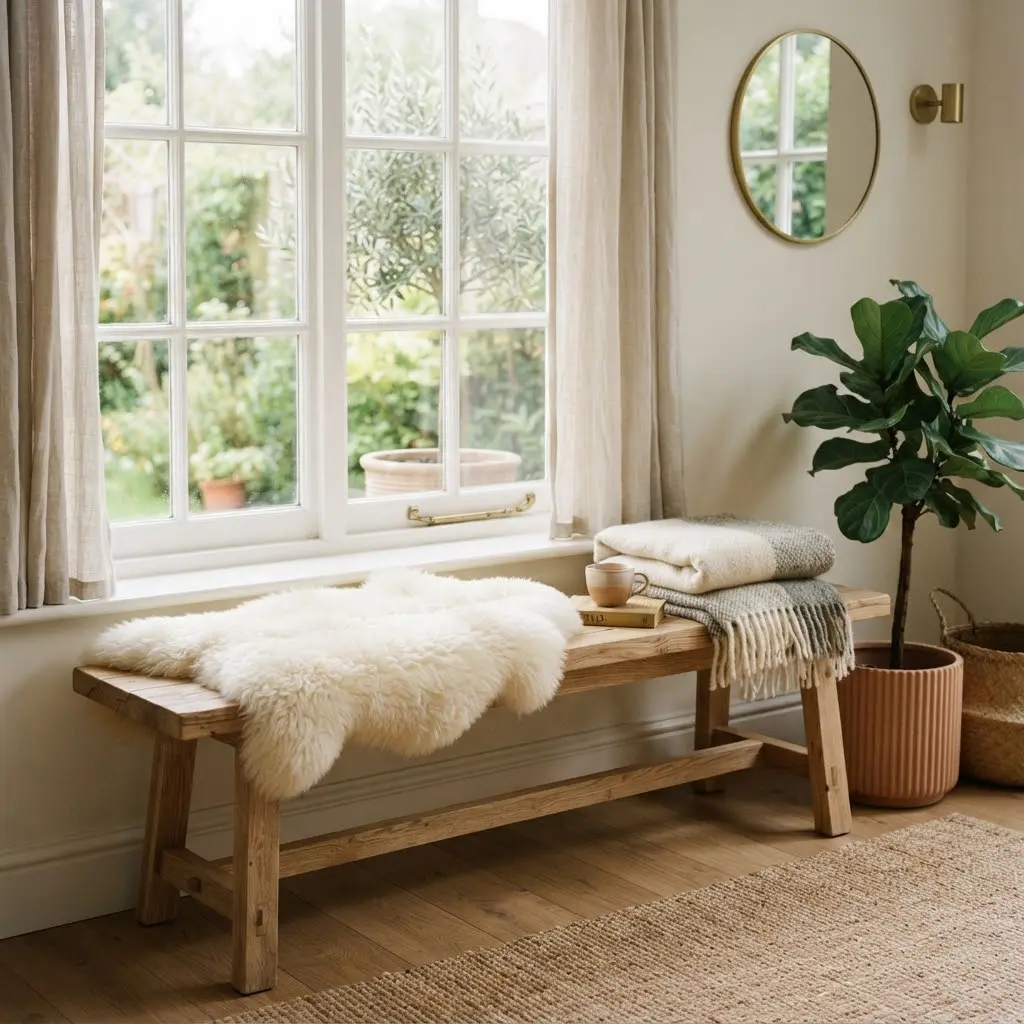
A single wood chair or bench gets a soft update with a sheepskin throw draped loosely across the seat, softening what might otherwise be a hard, cold surface. The pairing of raw wood and soft fur is a signature boho contrast.
- The sheepskin draped rather than perfectly smoothed keeps the whole look casual instead of overly staged.
- A wooden bench or chair beneath shows off its natural grain in the areas the sheepskin doesn’t cover.
- A woven throw blanket folded nearby offers a second layer of texture for cooler evenings.
- Placed near a window, the wood and fur combination catches natural light differently throughout the day, shifting the mood of the corner as the light changes.
A boho living room rarely feels “done” in the way other styles do, and that’s part of what makes it work. New textiles get added, plants get moved around, one thing gets swapped for something better found later — the room keeps changing in small ways long after the big decisions are made. Pick whichever idea speaks to the space you already have, and let the rest follow naturally from there.
FAQ
Do all the pieces in a boho living room need to match?
No — in fact, avoiding an obviously matched look is part of what defines the style. Pieces are meant to look collected over time, often from different sources, sharing a general color palette or material rather than an exact set.
What colors work best for a boho living room?
Warm neutrals, terracotta, rust, and deep earthy greens tend to define the aesthetic, though the palette can shift slightly depending on whether the space leans more modern boho or traditionally bohemian.
Can a boho living room work in a small space?
Yes — layering textures like rugs, pillows, and throws tends to have more visual impact than adding large furniture pieces, which makes the style adaptable to smaller rooms without feeling cramped.
How is modern boho different from traditional bohemian style?
Modern boho tends to use a more restrained color palette and cleaner furniture lines, while traditional bohemian style often leans into more pattern, color, and a maximalist layering of objects.