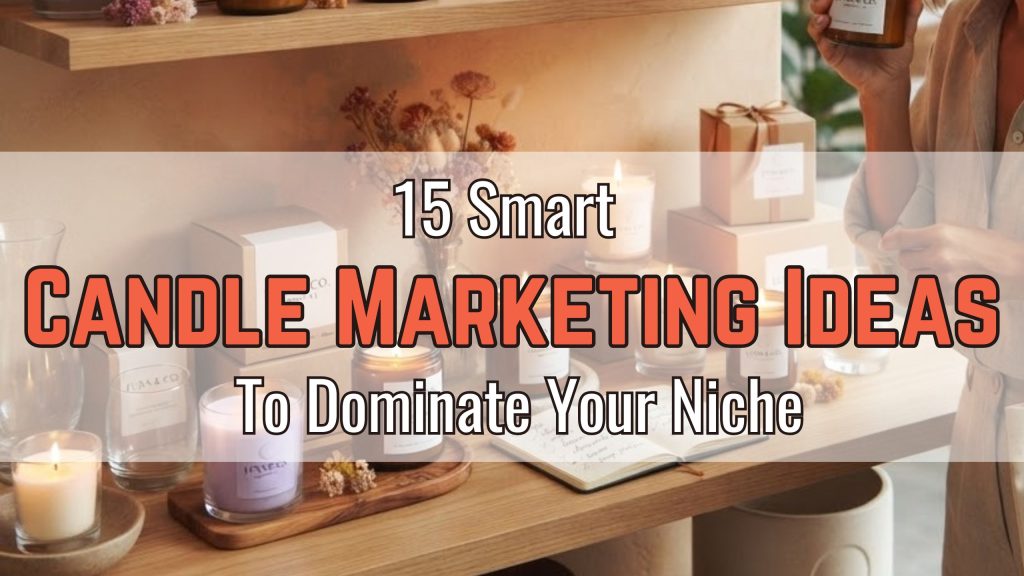
The best candle marketing ideas are not the ones everyone is already doing. They are the ones that make someone stop mid-scroll, mid-walk, or mid-shopping trip and think — wait, that is clever. The candle market is crowded, beautifully photographed, and increasingly hard to stand out in through conventional means alone. Posting on Instagram and hoping the algorithm is kind is not a strategy. It is a lottery.
This article is something different. It covers fifteen ideas — some guerrilla, some digital, some so low-cost they are almost free — that are genuinely designed to get your candle business in front of people who have never heard of you and turn them into customers who tell everyone they know. Whether you are just starting out or you have been selling for a while and hit a plateau, at least a handful of these will change how you think about candle marketing entirely.
Affiliate Disclosure: This article contains affiliate links which means we may earn a commission at no extra cost to you. You can check our affiliate disclosure page here.
What Good Candle Marketing Actually Looks Like
Before the ideas — a quick reframe that changes everything.
Most candle business marketing operates on a single assumption: find people who already want candles and show them yours. That works, up to a point. But the businesses that grow fastest do something more interesting — they create moments. Moments of surprise, delight, curiosity, or connection that make a brand feel alive rather than just present.
The ideas below are built around that principle. Some of them put your brand in front of people who were not thinking about candles at all — which is often exactly where the best customers come from.
15 Candle Marketing Ideas That Actually Work in 2025
1. The Money Drop — Guerrilla Marketing at Its Finest
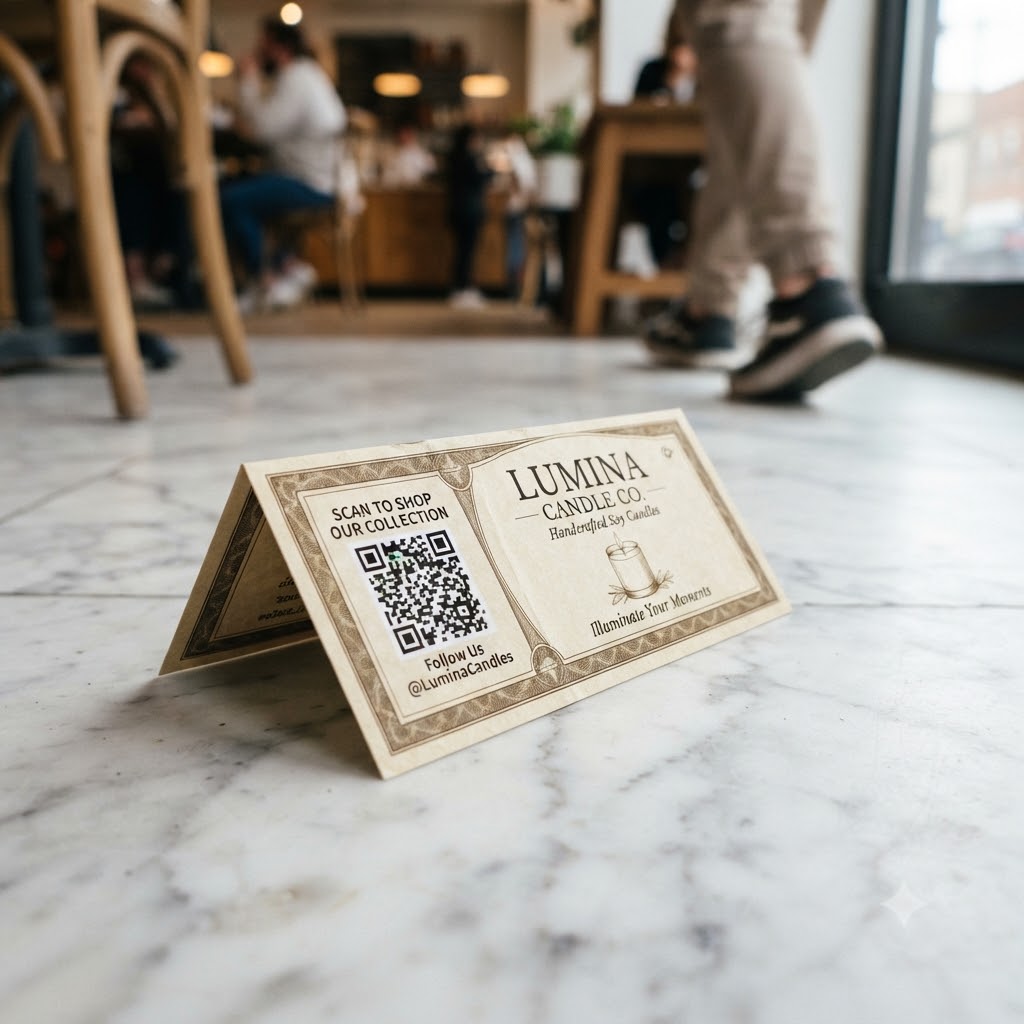
The idea that makes people pick something up off the floor and discover your brand.
Fold small, beautifully designed cards to look convincingly like folded banknotes from a distance — the right size, the right colour, enough visual similarity that someone walking past genuinely does a double take and picks it up. When they open it, instead of money they find your brand name, a single compelling line about your candles, and a QR code that takes them directly to your shop with a first-order discount already applied.
Where to drop them:
- Coffee shop floors and counters
- Gym changing rooms
- Shopping centre floors near busy entrances
- University common rooms and libraries
- Inside fashion boutiques and independent shops
What makes it work: The moment of surprise is the marketing. The person who picks it up has already invested attention — they are far more likely to scan the code than they would ever be to click an ad. The discount waiting for them on the other side converts that curiosity into action.
Cost per card: Pennies. Impact per card: disproportionately high.
2. Hidden Cards in Complementary Shops
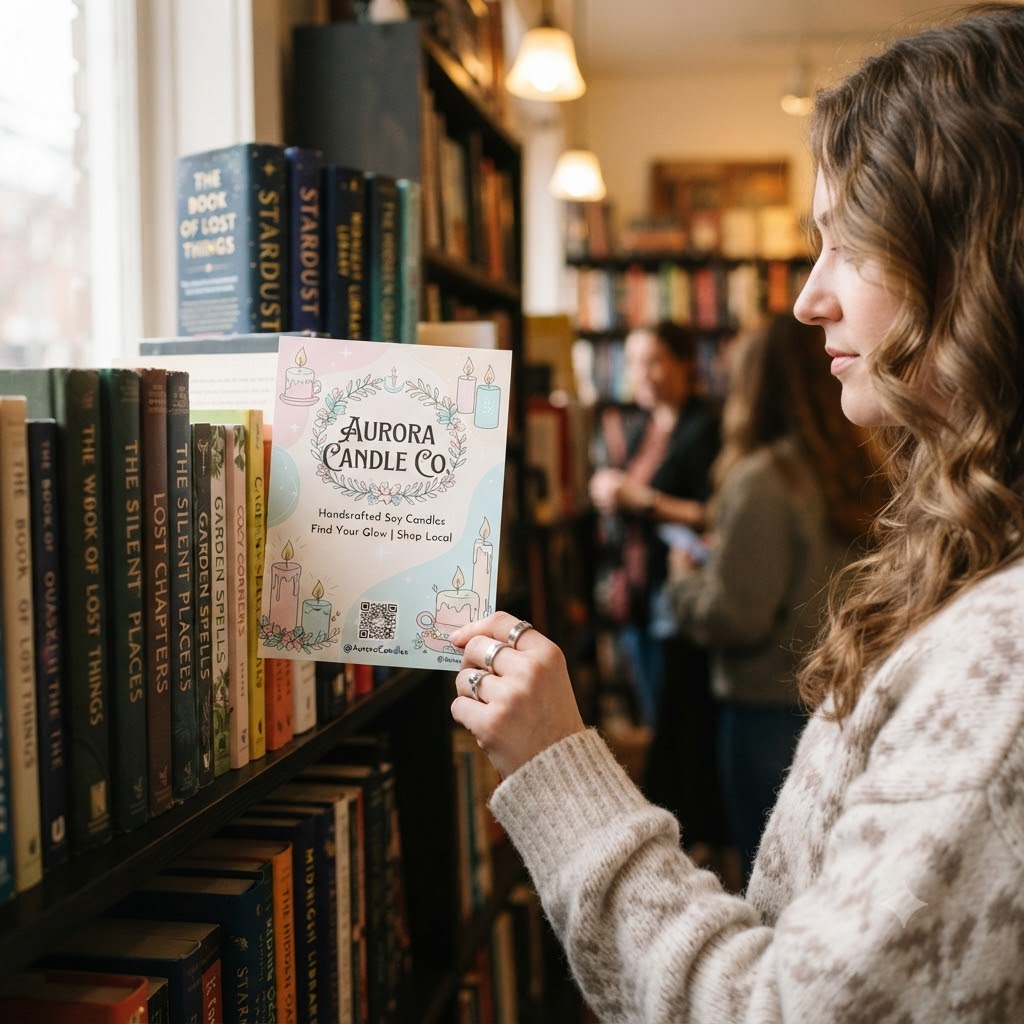
Get your brand in front of someone else’s already-converted customers — for free.
Approach independent shops that sell complementary products — bath and body stores, bookshops, plant shops, home décor boutiques, gift shops, yoga studios — and ask if you can leave a small stack of beautifully designed cards near the till or tuck them into their bags. Better yet, slip them between products on the shelves so customers discover them organically mid-browse.
What your card needs:
- A single beautiful image of your best-selling candle
- One line that makes them want to know more
- A QR code to your shop
- A discount code exclusive to that location — this also tells you exactly which shop sent them
Why shop owners say yes: You are not competing with them. You are adding value to their customer’s experience. Frame it as a gift to their customers, not a favour to yourself.
Scaling this up: Once you have a system that works in three or four shops, you have a replicable candle business marketing channel that runs itself with minimal maintenance and zero ongoing cost.
3. The Scented Card Direct Mail Drop
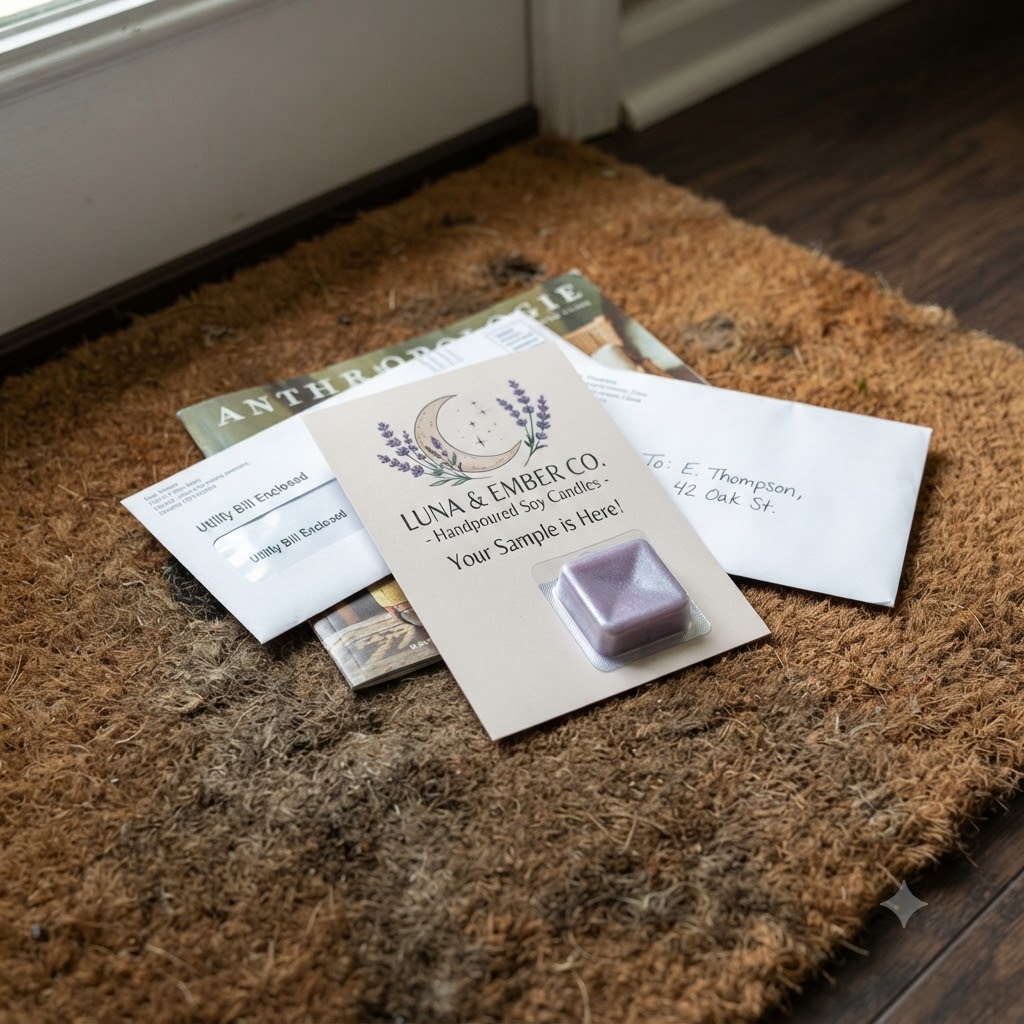
In an era of digital noise, something physical in someone’s hands is extraordinary.
Design a small card — postcard size — that is scented. Either spray it with your signature fragrance or attach a small wax melt sample to it. Mail it to a targeted list of addresses in your area, or hand-deliver it through letterboxes in neighbourhoods that match your ideal customer profile.
What goes on the card:
- Your brand name and a single beautiful visual
- “This is what our candles smell like — imagine it filling your home”
- A QR code to your bestseller with a first-order discount
Why this works in 2025: Almost nobody is doing physical direct mail anymore. The average person receives dozens of emails a day and almost no physical marketing. A scented card through the letterbox is genuinely surprising — and scent is the most emotionally powerful sense. You have made them feel something before they have even visited your shop.
Cost consideration: Printing and postage costs more than digital — but the conversion rate on genuinely surprising physical marketing consistently outperforms digital ads for local audiences.
4. Micro-Influencer Gifting — But Done Properly
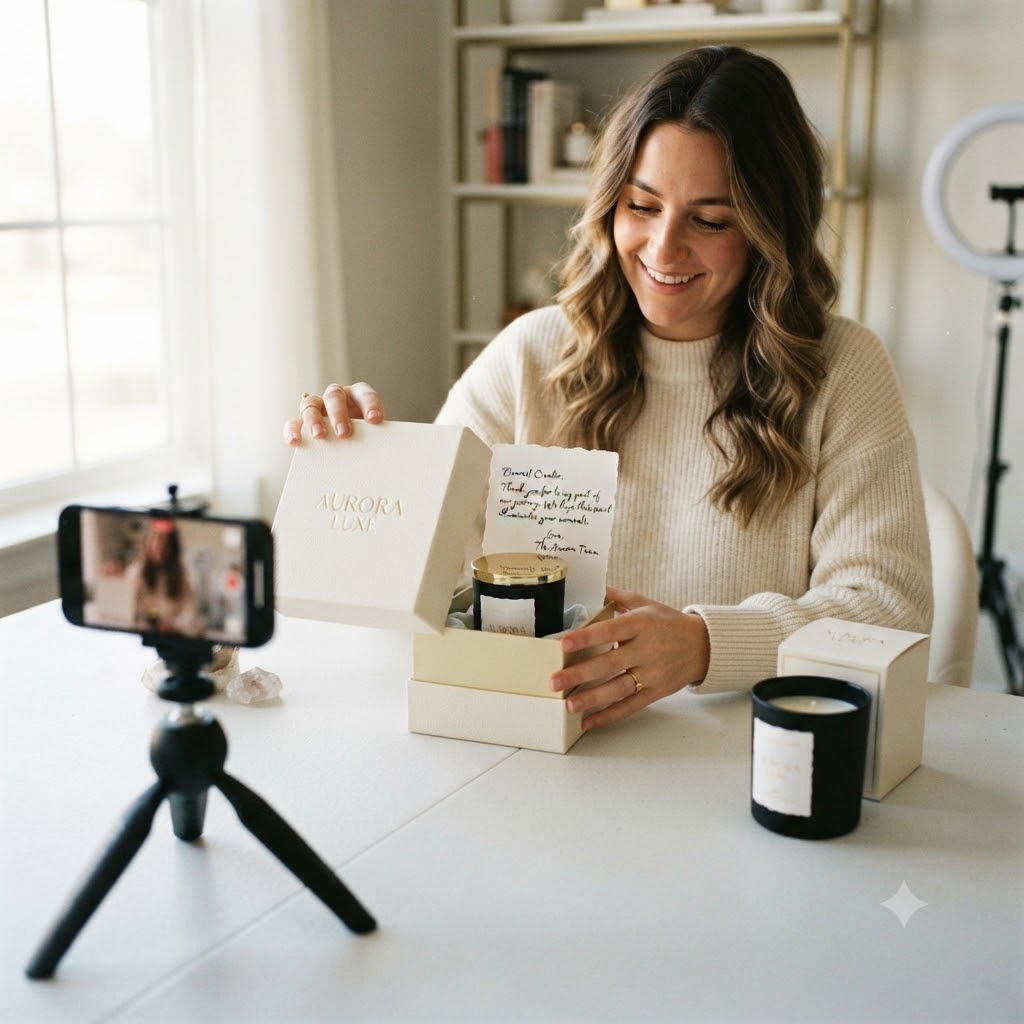
Not the spray-and-pray approach. The surgical one that actually converts.
Forget macro influencers with hundreds of thousands of followers. The candle marketing move that consistently delivers the best return in 2025 is gifting to micro-influencers — people with 2,000 to 20,000 highly engaged followers in niches that overlap with your customer profiles. Home décor accounts. Wellness creators. Bookish communities. Slow living advocates. Cosy home aesthetics.
How to do it properly:
- Research genuinely — look at their comment quality, not just follower count
- Personalise every outreach message — reference something specific about their content
- Send something beautiful — not just the candle, but the whole unboxing experience
- Do not dictate what they say — ask only for an honest share if they genuinely love it
What to include in the package:
- Your hero candle, perfectly presented
- A handwritten note — this gets photographed and shared more than anything else
- A personal discount code for their audience — this is how you track the return
The mindset shift: You are not paying for an ad. You are starting a relationship with someone whose audience trusts them. That trust transfers — but only if the gifting feels genuine rather than transactional.
5. Pop a Sticker or Sample on Every Outgoing Order
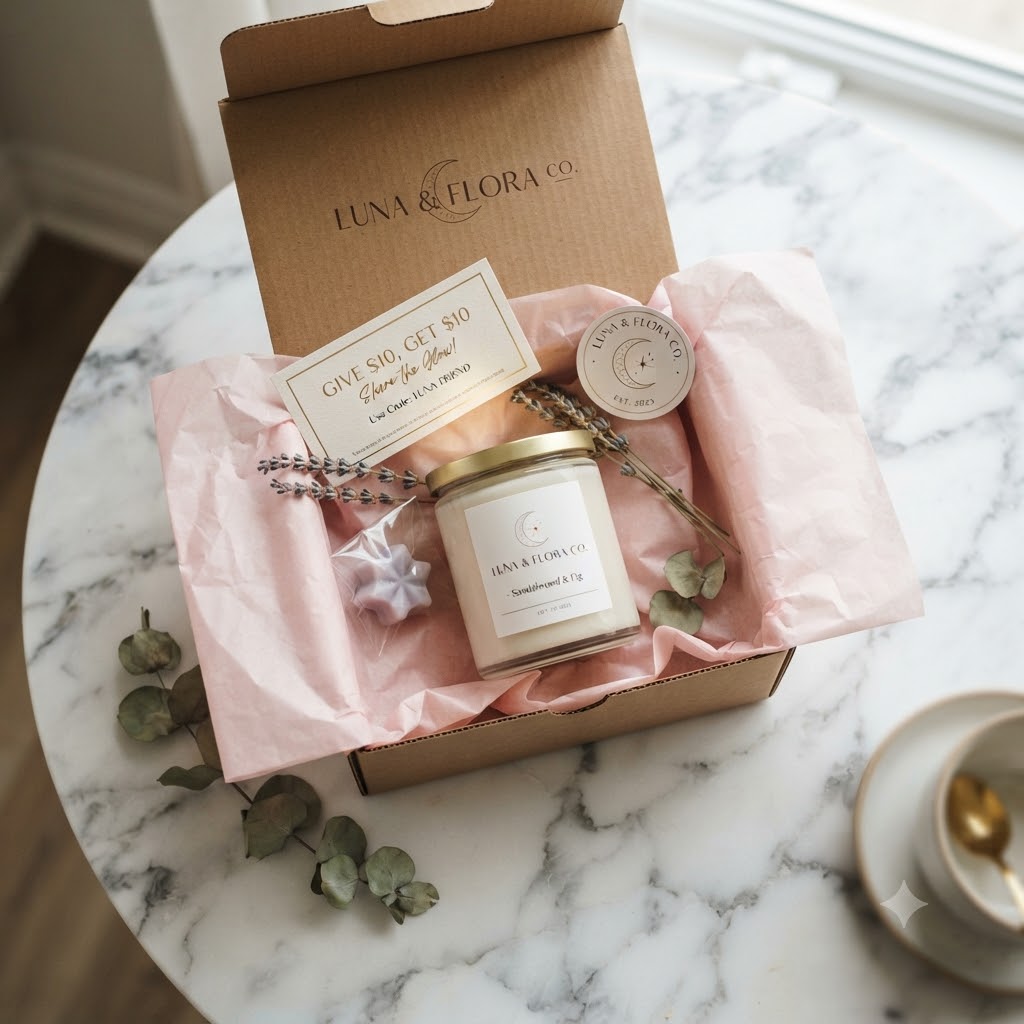
Your existing customers are your best marketing channel — and most businesses massively underuse them.
Every single order that leaves your hands is a marketing opportunity. Include a small branded sticker, a miniature sample candle or wax melt, and a card that says something like — “if this makes your home smell incredible, tell someone.” Simple. Direct. Effective.
What to include:
- A sample of a scent they did not order — this introduces them to a second product
- A referral card with a unique discount code they can give to a friend
- A sticker or small branded item they will actually keep and display
Why the referral card matters: Word of mouth is the oldest and most powerful candle business promotion tool in existence. A referral card with a discount for the friend and a reward for the sender turns every happy customer into an active advocate. It costs almost nothing to implement and compounds significantly over time.
6. Seasonal Scent Drops With Built-In Urgency
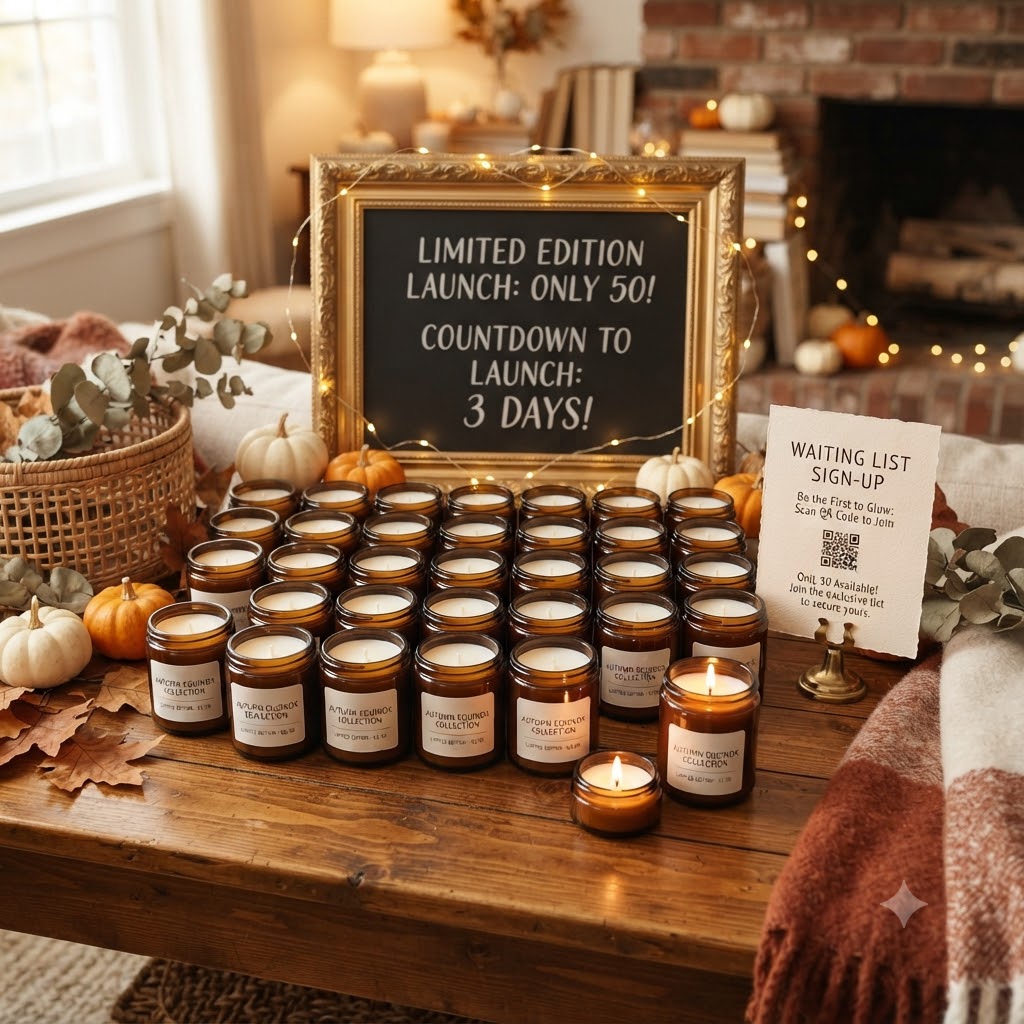
Scarcity is one of the most powerful forces in consumer behaviour — use it deliberately.
Create a small number of seasonal or limited edition scents that are genuinely only available for a defined window — six weeks, a season, a specific occasion. Not “limited edition” as a marketing label slapped on a permanent product, but actually limited. When they are gone, they are gone.
How to build the launch:
- Announce the scent two weeks before release — tease the name, the notes, the inspiration
- Open a waitlist — this builds a list of warm, engaged buyers before a single candle is made
- Release to the waitlist 24 hours before the general public
- Set a clear end date and stick to it
Why this works: It transforms passive followers into active participants. Someone on a waitlist has made a micro-commitment to your brand. They are invested. The candle business growth that comes from a well-executed limited drop is not just the sales from that drop — it is the list of engaged buyers you have built for everything that comes after it.
Candle business tip: Name your seasonal scents in a way that tells a story — not “Autumn Spice” but “The Last Sunday Before Everything Gets Busy.” The name is part of the product.
7. Live Candle Pouring on Social Media
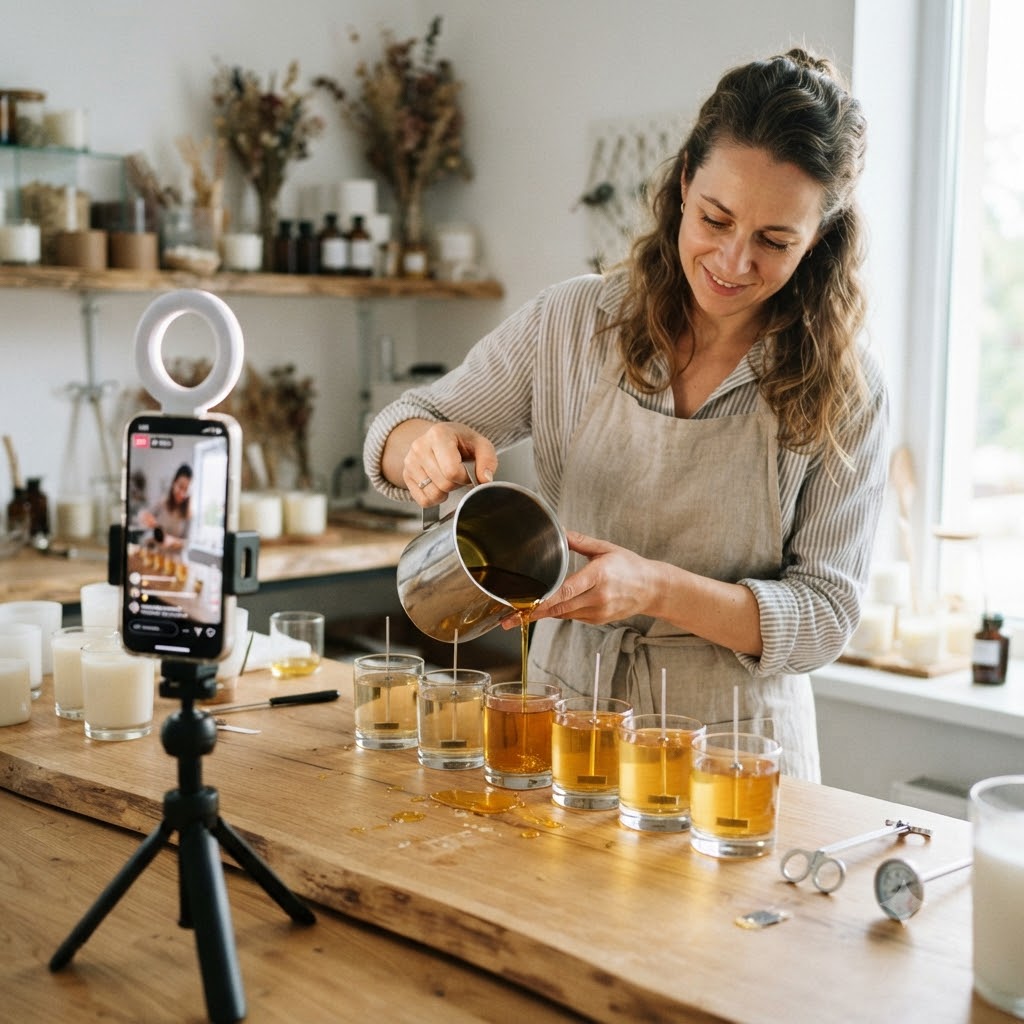
People are endlessly fascinated by watching things being made — and candle pouring is genuinely mesmerising.
Go live on Instagram or TikTok while you pour a batch. Show the wax melting, the fragrance being measured, the pour, the set. Talk through what you are making, why you chose that scent, what it smells like, who it is for. Answer questions in real time.
What this does for your candle business marketing:
- It builds trust — people see the care and craft behind what they are buying
- It creates real-time engagement that the algorithm rewards disproportionately
- It humanises your brand in a way that no product photo ever can
- It gives you content — clip the best moments for Reels, TikToks, and Stories
What to show:
- The pouring process — the slow fill, the surface setting, the first pull of scent
- Behind-the-scenes moments — your workspace, your supplies, your process
- The finished product coming out of the mould or being labelled
You do not need a studio or professional equipment. A phone, decent natural light, and something interesting happening on camera is genuinely enough.
8. Leave Candles in Airbnbs and Holiday Lets
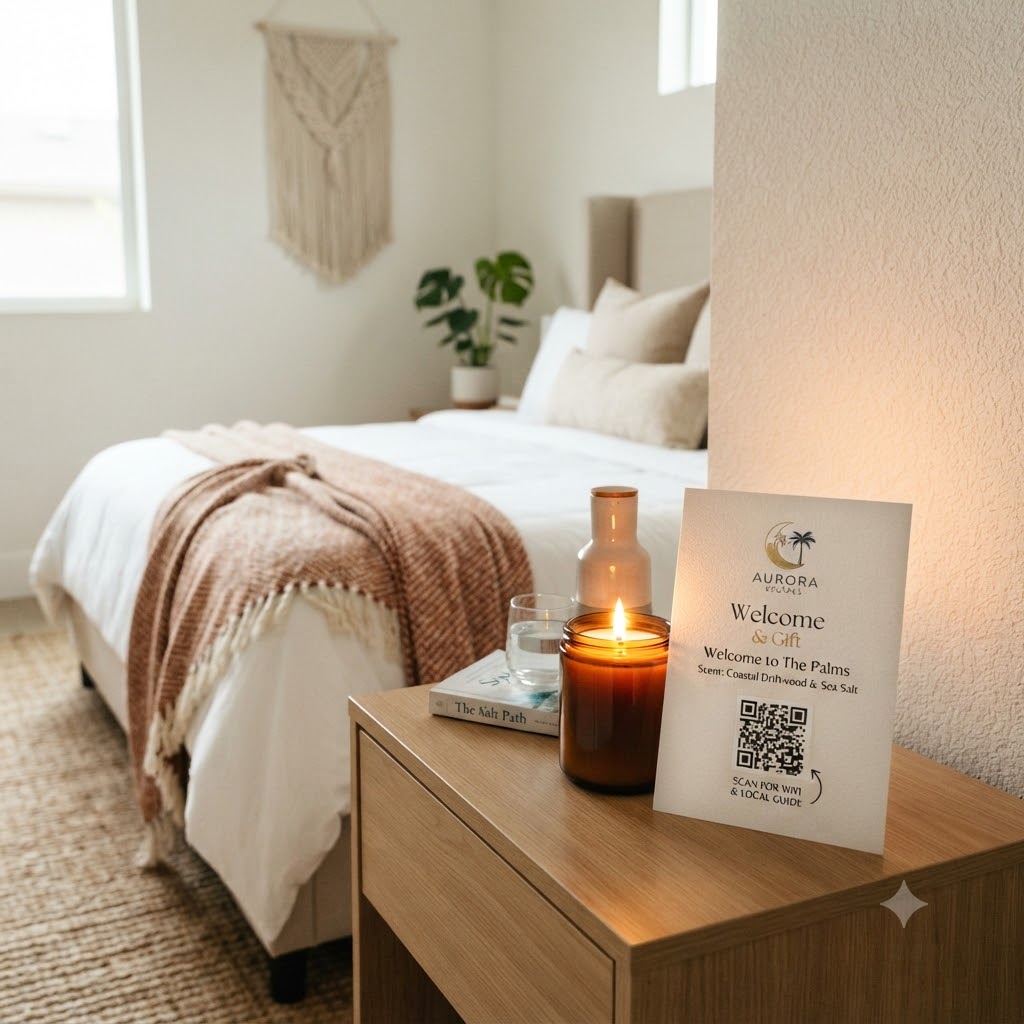
A captive audience, a beautiful setting, and a purchase decision made in a moment of genuine pleasure.
Approach local Airbnb hosts and holiday let owners and offer to supply candles for their properties — either free initially or at a wholesale rate. In return, your branded card sits beside the candle explaining where it came from and how to order. Guests staying in a beautiful space, in a relaxed frame of mind, lighting a candle that makes the room smell extraordinary — that is one of the highest-converting moments in how to sell candles online, because the purchase decision is made in an emotional peak.
What to leave with the host:
- Two or three candles for the property
- A card beside each candle with your brand, QR code, and a guest-exclusive discount
- A small supply of cards for the host to replenish between guests
Why hosts say yes: A beautiful candle elevates their listing photos, improves guest reviews, and costs them nothing. You are solving a problem for them while marketing to their guests.
Scaling this: Ten Airbnb properties in your area means hundreds of potential customers per year seeing your product in the most favourable possible context — and you paid for it with cost-price candles and a stack of cards.
9. The Strategic Freebie at Local Events

Not a market stall. Not a stand. Just your product, in someone’s hands, at the right moment.
Attend local events — farmers markets, wellness fairs, yoga classes, book clubs, coffee mornings, school fairs — not as a vendor but as a participant. Bring small sample wax melts or mini candles in branded packaging and simply give them to people you talk to naturally. No sales pitch. No stand. Just — “I make candles, here is one, tell me what you think.”
Why this works better than a market stall:
- No stall fee
- No pressure — neither on you nor on the person receiving
- The gift frame triggers reciprocity — people who receive something generous feel positively disposed toward the giver
- The follow-up is natural — “Did you try the candle? What did you think?”
What to include in the sample pack:
- A mini wax melt or travel candle
- A card with your QR code and social handles
- A personal note if you have time — even a two-line handwritten note changes how the gift lands
This is one of the most human and effective marketing ideas for small business and it costs almost nothing beyond the samples themselves.
10. Build a Signature Scent for a Local Business

One of the most powerful brand-building moves available to a small candle business — and almost nobody is doing it.
Approach a local business whose brand and values align with yours — a boutique hotel, a high-end coffee shop, a yoga studio, a spa, a florist — and propose creating a custom signature scent exclusively for them. Their scent. Their name on the label. Something that guests and customers associate entirely with that space.
Why businesses say yes:
- A signature scent is a genuine luxury brand asset
- It differentiates their space in a memorable, sensory way
- It gives them a retail product to sell to customers who want to take the experience home
What you get:
- A wholesale relationship that produces consistent recurring revenue
- Your candles burning in a space your ideal customers visit regularly
- Brand association with a business that already has the trust of your target audience
- The credibility of being “the candle brand behind” somewhere people love
How to pitch it: Walk in, introduce yourself, light one of your candles, and say — “I think I can make a scent that smells exactly like this place feels.” That is a pitch almost nobody can resist.
11. Create a Candle Subscription With a Waiting List
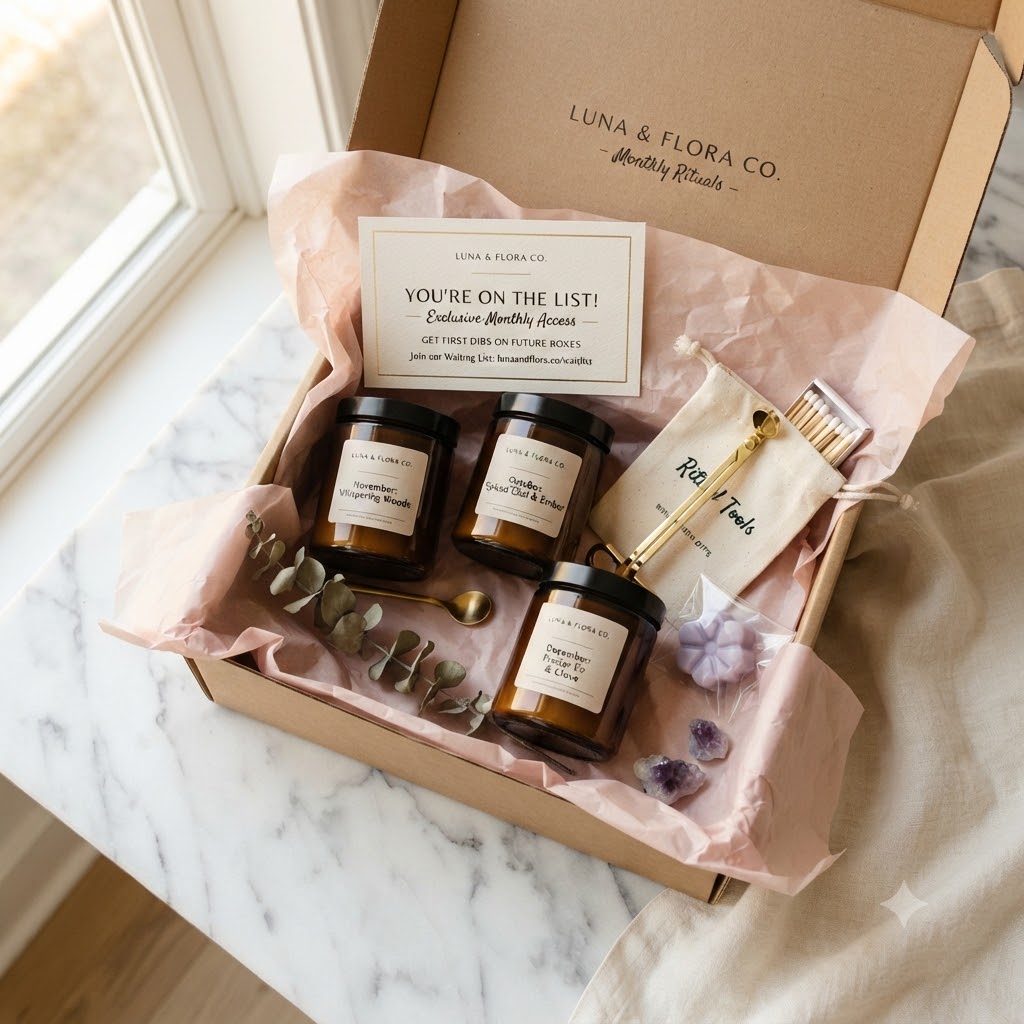
Recurring revenue, guaranteed sales, and a waiting list that does your marketing for you.
A subscription box — one new candle or scent collection delivered monthly — is one of the most powerful structures available for candle business growth. But the way most people launch subscriptions is wrong. They open it immediately to anyone. The smarter move is to create a waiting list first.
How to build the waiting list:
- Announce the subscription on social with a teaser of what subscribers will receive
- Open a waiting list — email only, no purchase yet
- Share updates exclusively with the list — behind-the-scenes, scent previews, the story of what is coming
- Open to the list first, with a founding member price that is only available at launch
What this does: By the time you open subscriptions, you have a warm list of people who have already invested attention and anticipation. Conversion rates from a warm list consistently outperform cold traffic by a significant margin.
Subscription box tip: The unboxing experience is as important as the candle itself for subscribers. Tissue paper, a personal note, a small extra — these are what people photograph and share, and sharing is free marketing.
12. Pinterest SEO — The Slowest Burn With the Longest Glow
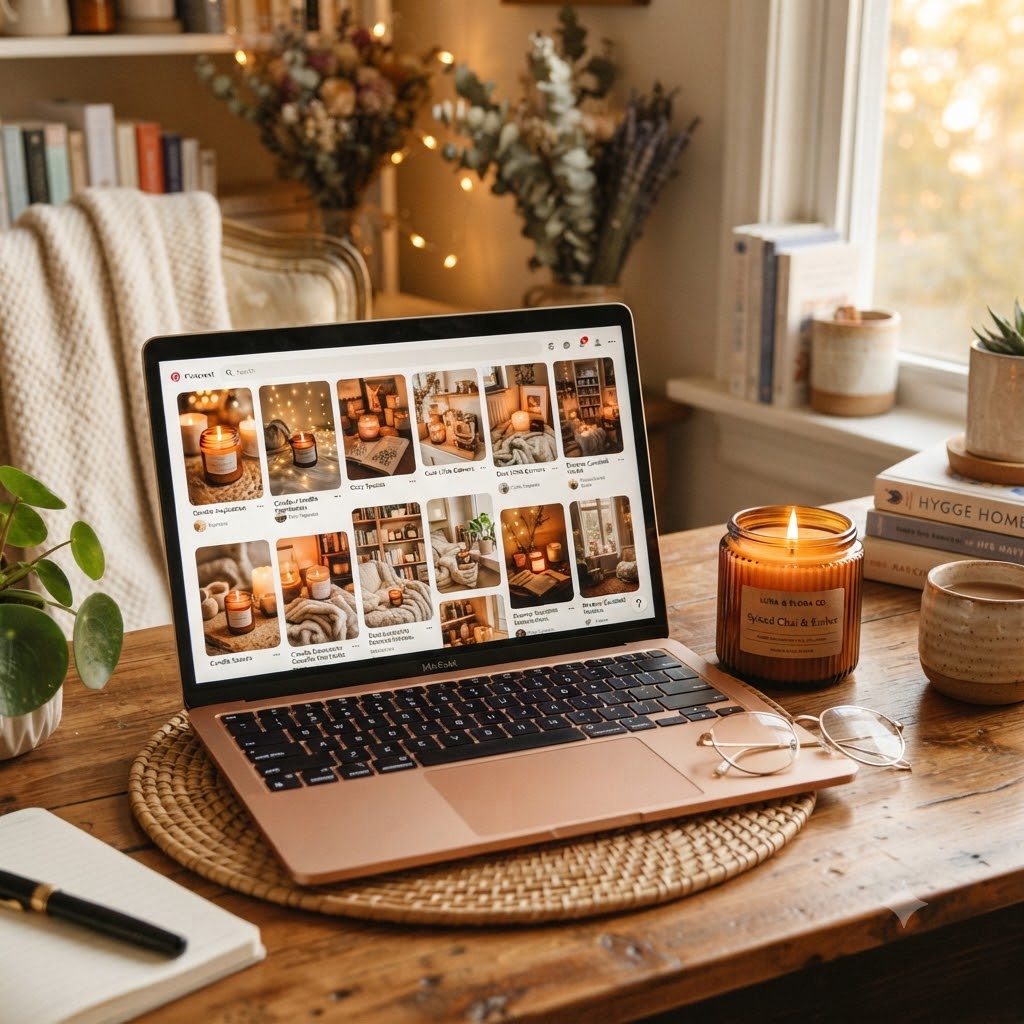
While everyone else is chasing the algorithm, Pinterest is quietly sending traffic for years.
Pinterest is not a social media platform. It is a visual search engine — and it is one of the most underused candle marketing channels available to small businesses in 2025. A well-optimised Pinterest pin does not disappear after 48 hours the way an Instagram post does. It surfaces in search results for months and years after it was posted.
How to use it properly:
- Create boards around your customer’s interests, not just your products — “cosy home inspiration,” “self-care rituals,” “sustainable living ideas”
- Write pin descriptions using the actual search terms your customers type — “how to market candles” style language in the description, not just pretty words
- Link every pin directly to a relevant page on your website — a product, a blog post, a collection
- Post consistently — fifteen to twenty pins per week is the baseline for meaningful growth
What to pin:
- Product photography in lifestyle settings
- Behind-the-scenes making content
- Seasonal mood boards featuring your candles
Pinterest traffic compounds. The work you do today will still be sending customers to your shop in the coming two years.
13. Collaborate With Complementary Small Businesses
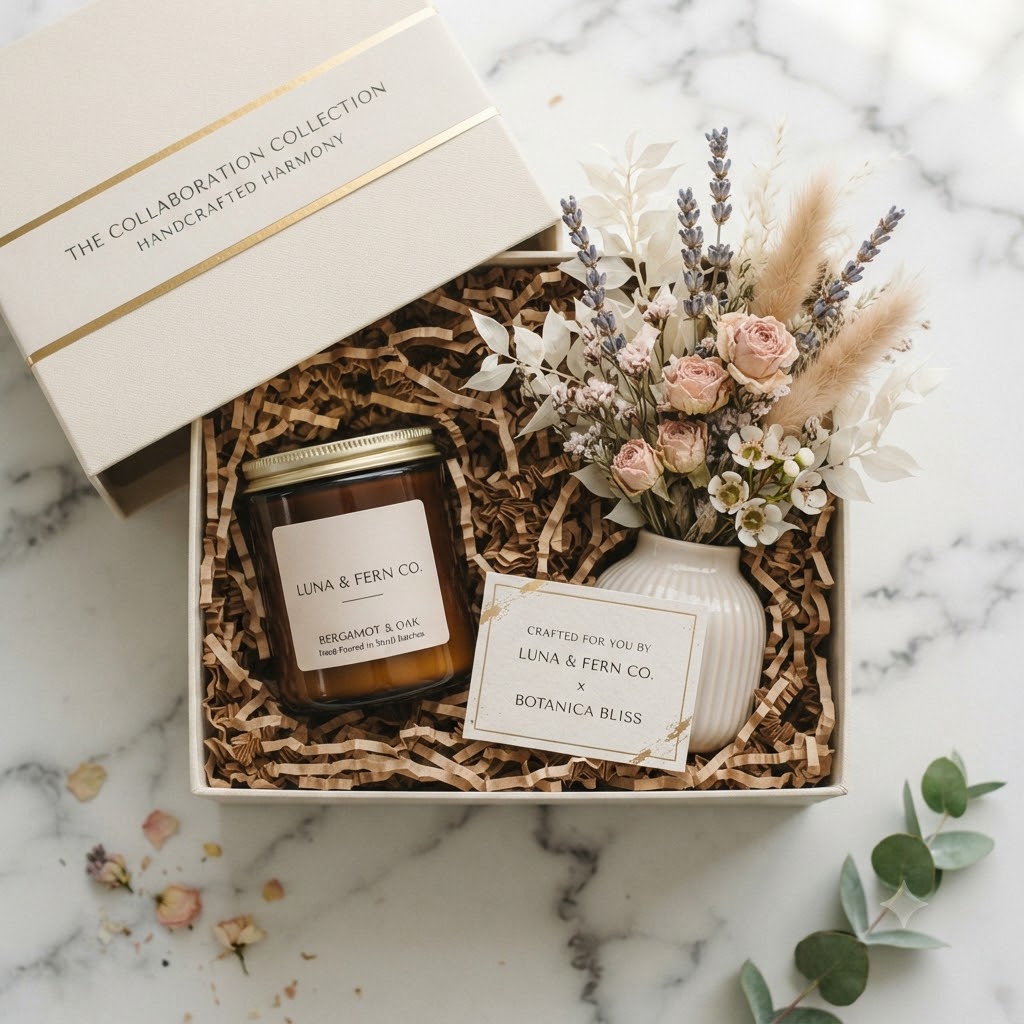
Two audiences are always larger than one — and the best collaborations cost nothing but creativity.
Find small businesses whose customers overlap with yours but who are not competitors — a florist, a bookshop, a bath and body brand, a tea or coffee company, a stationery brand — and propose a genuine collaboration. A joint gift set. A co-branded seasonal bundle. A shared giveaway. A pop-up at their location.
What makes a collaboration work:
- Both audiences should genuinely benefit — not just exposure, but something worth having
- The aesthetic and values of both brands should align closely enough that the crossover feels natural
- The mechanics should be simple — complicated collaborations collapse under their own weight
Collaboration formats that work well for candle businesses:
- A “perfect pairing” gift set — your candle with their product, packaged together
- A joint giveaway on both social accounts — cross-pollinating audiences with zero ad spend
- A pop-up or market stall shared between two complementary brands
The long game: A strong collaboration with the right brand can introduce you to hundreds of warm, pre-qualified new customers in a single campaign. It is one of the most efficient how to grow candle business moves available to a small operation with a limited marketing budget.
14. Email Marketing — The Channel That Actually Converts
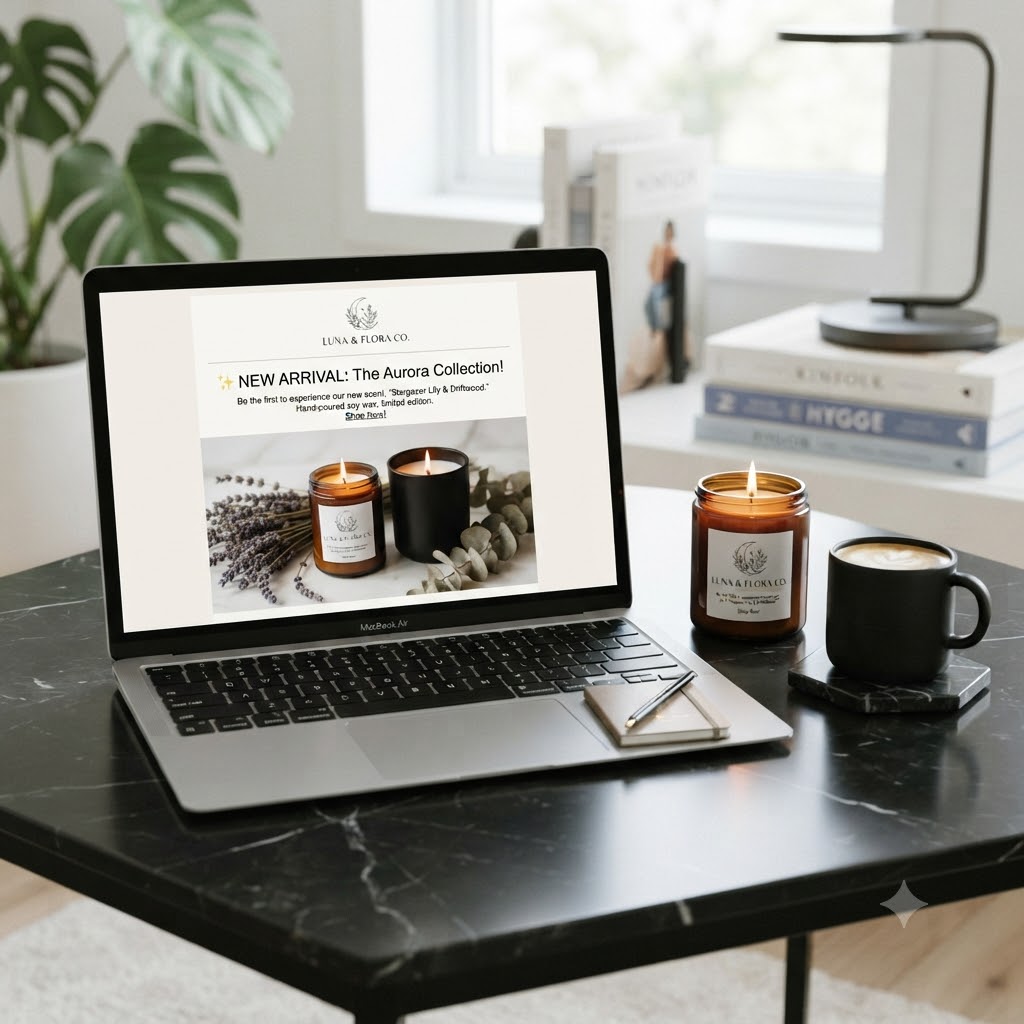
Social media builds awareness. Email builds revenue. Most candle businesses have the ratio completely backwards.
An email list of one thousand genuinely interested subscribers will consistently outperform ten thousand social media followers in terms of actual sales. Social reach is borrowed — the platform can change the algorithm tomorrow and your reach disappears overnight. An email list is yours.
How to build it:
- Offer something genuinely valuable in exchange for an email address — a discount, a free wax melt sample with first order, a candle care guide, a scent quiz with personalised recommendations
- Add a sign-up to every touchpoint — your website, your packaging, your social bio, your checkout confirmation
What to send:
- New product launches and seasonal drops — to your list first, always
- Behind-the-scenes content that makes subscribers feel like insiders
- Candle care tips and usage ideas — genuinely useful, not just promotional
- Personal notes from you — the founder, the maker, the person behind the brand
Frequency: Once a week is sustainable and effective. More than that risks fatigue. Less than once a fortnight and people forget they signed up.
Email is not glamorous. It is also the single most reliable candle business promotion channel available and the one most small businesses invest in last, when it should be first.
15. Turn Your Packaging Into a Street-Level Advertisement
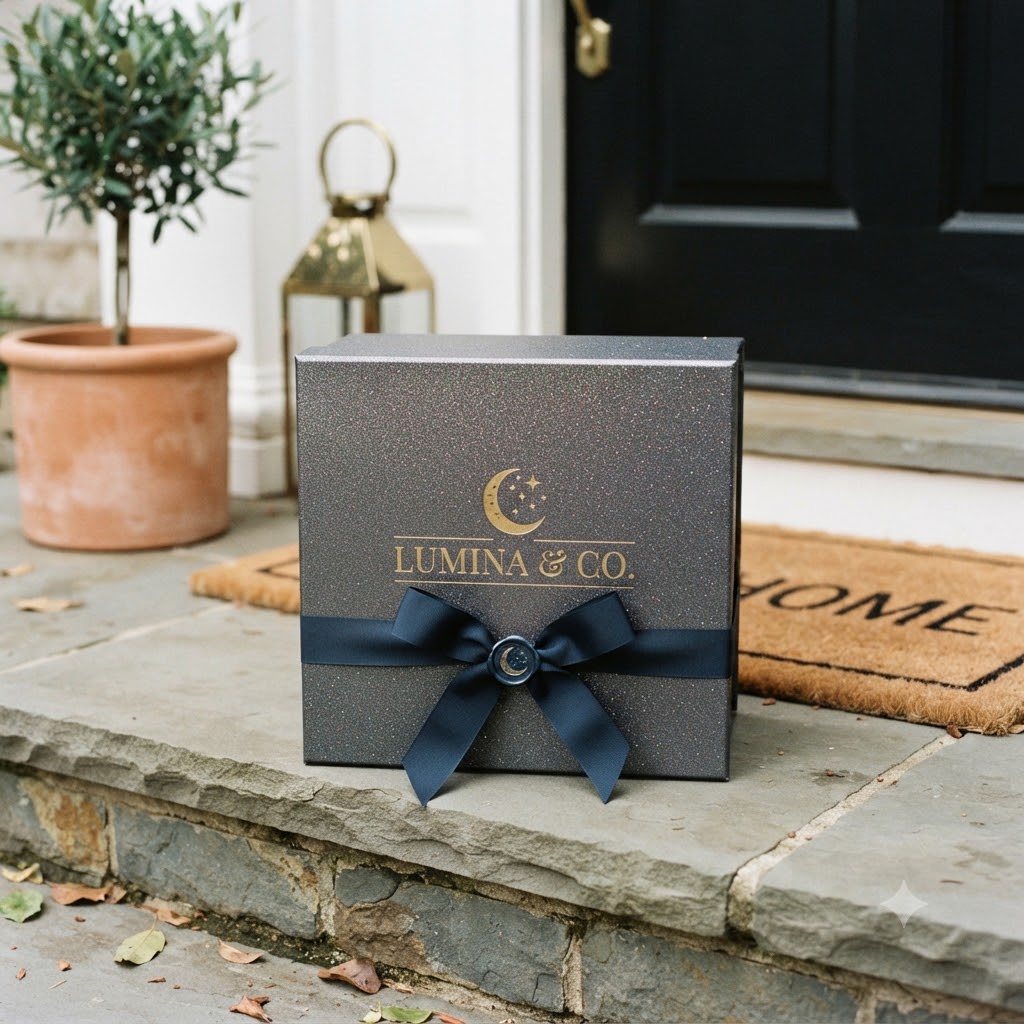
Every candle that leaves your hands and sits on someone’s shelf, desk, or windowsill is a passive advertisement — make it work harder.
Most candle packaging is beautiful on the inside and anonymous on the outside. The shipping box is brown. The outer wrap is plain. Nobody who sees it on a doorstep, in an office, or being carried on public transport knows what is inside or where it came from.
Fix this deliberately:
- Brand your outer shipping boxes — even a simple stamp with your logo and a single line like “something that will make your home smell extraordinary” turns a brown box into a conversation starter
- Design your tissue paper with your brand pattern or logo — it gets photographed and posted far more than plain tissue ever does
- Include a card inside that is explicitly designed to be shared — beautiful enough that customers post it, with your handle clearly visible
Take it further:
- Design your candle vessel label so it is still beautiful and legible when the candle is burning on a windowsill — this is free advertising to everyone who walks past
- Use your packaging as a gifting experience so complete that the recipient photographs it and shares it before they have even lit the candle
Your packaging is not just protection for the product. It is the first physical expression of your brand that a customer touches — and in 2025, everything touchable is potentially shareable.
Products Worth Having for Your Candle Business Marketing
The ideas above are largely low-cost or free — but a few tools make executing them significantly more professional and effective.
A Thermal Label Printer — for branded cards, QR code stickers, product labels, and referral cards, a thermal label printer gives you print-on-demand flexibility without the per-unit cost of external printing. For a candle business for beginners building out their first marketing materials, this is one of the most useful early investments.
Custom Branded Stamps and Ink — for branding outer packaging, tissue paper, and cards without the cost of fully custom printed materials, a well-designed rubber stamp with your logo goes an extraordinarily long way. Clean, intentional, and immediately more professional than plain packaging.
QR Code Generator — Premium — a premium QR code tool lets you create branded, trackable codes for every marketing channel — one for your hidden shop cards, one for your Airbnb candles, one for your direct mail drops — so you know exactly which idea is sending customers to your shop and at what conversion rate.
Scent Sample Sets for Gifting — having a supply of beautifully packaged mini samples ready to hand out at events, include in collaborations, or send with every order is one of the most consistently effective candle selling ideas for turning a first impression into a first purchase. Package them as beautifully as your full-size products.
Email Marketing Platform Subscription — building your email list from day one is one of the most important small business tips in this entire article. A dedicated email marketing platform gives you the tools to segment your list, automate welcome sequences, and track what is actually converting — far beyond what any social platform offers in terms of actionable data.
Custom Tissue Paper and Branded Packaging Supplies — for turning your packaging into shareable marketing, custom tissue paper printed with your brand pattern or logo is the single most photographed element of a candle unboxing. Order in small runs initially to test designs before committing to large quantities.
You can find specialist candle business marketing supplies, branded packaging, and print-on-demand tools through dedicated small business suppliers, packaging specialists, and independent print studios — many of whom offer far better quality and minimum order flexibility than large commercial printers.
The best candle marketing ideas are not the most expensive ones. They are the ones that are genuinely surprising, genuinely human, and genuinely worth talking about. Build your marketing around moments that make people feel something — curiosity, delight, connection — and the talking happens for you.
Related: