If you’ve ever walked into a room and felt like something was “off” but couldn’t figure out why, there’s a good chance it’s your lighting. Most people never learn how to layer lighting properly, so they rely on one overhead fixture to do every job in the room — and one light source almost never works for every mood, task, and time of day. By the end of this guide, you’ll actually understand how to layer lighting in your own home, room by room, without needing to hire anyone.
Affiliate Disclosure: This article contains affiliate links which means we may earn a commission at no extra cost to you. You can check our affiliate disclosure page here.
What Layered Lighting Actually Means
Layered lighting just means using more than one light source, each doing a different job, instead of relying on a single ceiling fixture. Think of it the way you’d layer clothing — one piece for warmth, one for style, one for function. Lighting works the same way, and once you see rooms through this lens, you’ll notice which spaces in your own home only have one “layer” doing all the work.
The 3 Layers of Lighting You Need to Know
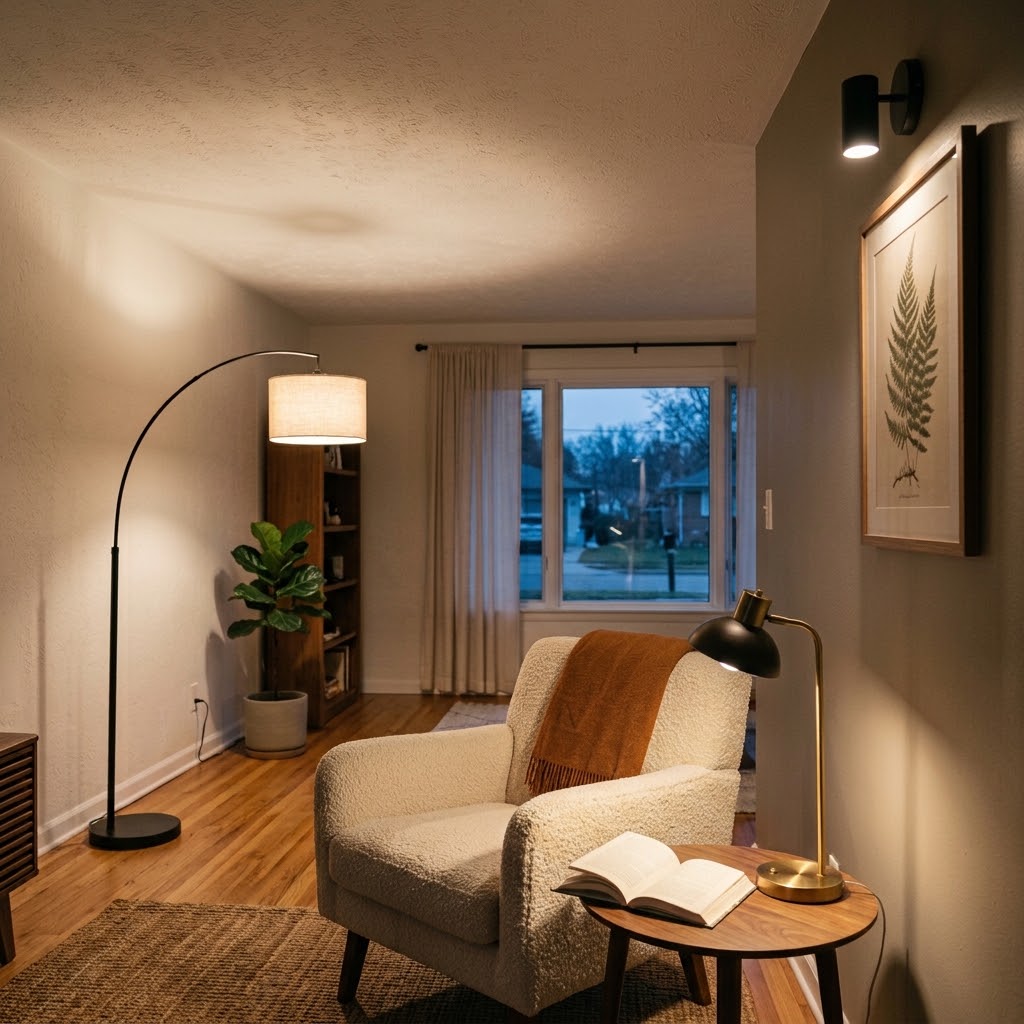
This is the entire foundation of learning how to layer lighting, so don’t skip it. Every well-lit room, no matter the style, uses some combination of these three layers.
Ambient lighting is your base layer — the general light that fills the room. This is usually your overhead fixture, but it can also come from a floor lamp placed centrally or a flush mount ceiling light. Ambient lighting should never be your only source of light in a room; on its own it tends to feel flat, overly bright, or clinical, which is why so many rooms feel “off” even when the bulbs are perfectly fine.
Task lighting is focused, functional light for a specific activity — reading, cooking, working, applying makeup. Whether it’s a desk fixture, an under-cabinet kitchen light, or a clip-on shelf light, each serves as a form of task lighting. If you’ve ever squinted while reading on the couch because the only light in the room was a ceiling fixture across the room, that’s a missing task lighting layer.
Accent lighting is the layer most people skip entirely, and it’s usually the one that makes a room look designed instead of just lit. This includes wall sconces, a picture light over artwork, or a small plug-in accent lamp in a corner. Accent lighting draws the eye to something specific — a piece of art, a shelf, a reading nook — and adds depth the way shadows do in a photograph.
Once you understand these three categories, layering lighting stops being a mystery. It becomes a simple checklist: does this room have ambient, task, and accent light, or is it running on ambient alone?
How to Layer Lighting in the Living Room
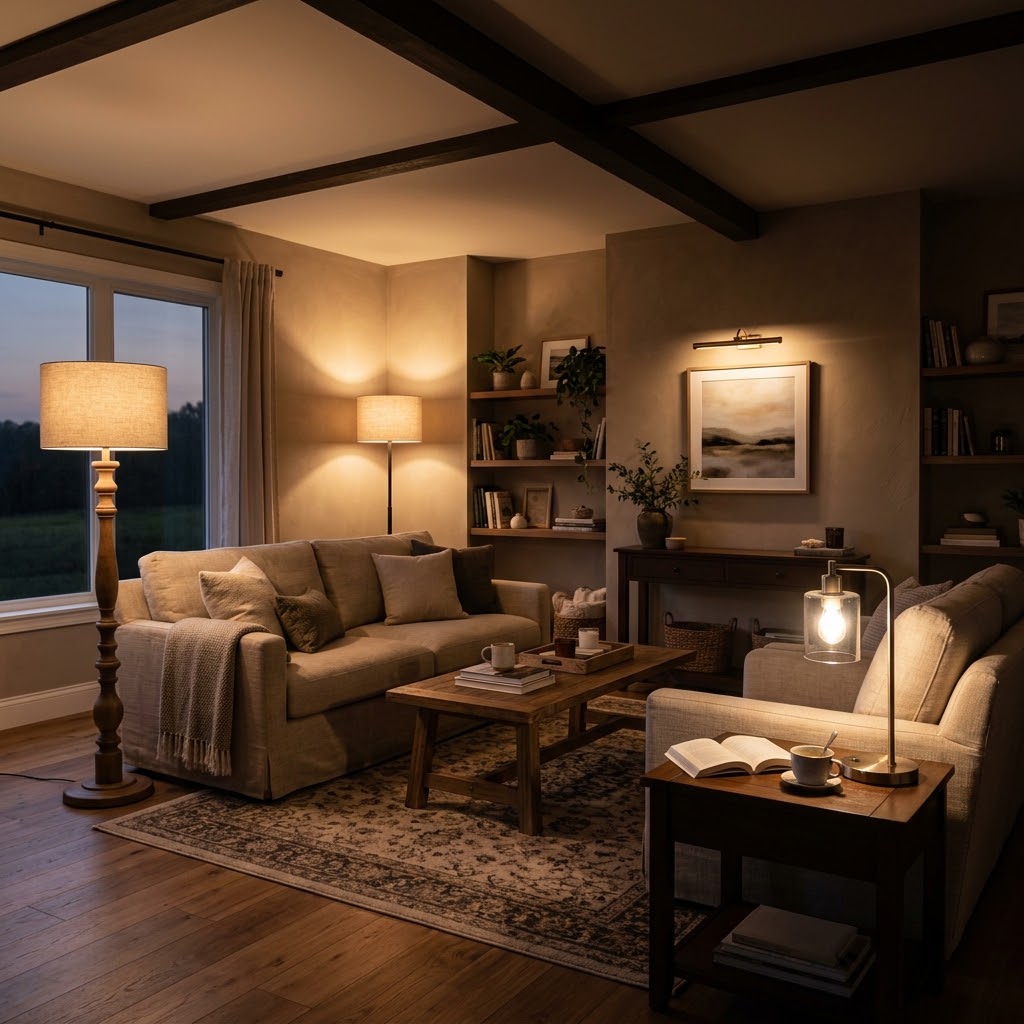
The living room is usually the room with the most going on — movie nights, reading, conversation, working from the couch — so it needs all three layers more than almost any other space.
Start with ambient light from your main fixture or a tall floor lamp in the corner that isn’t directly under the light switch. Add task lighting next to actual seating: a table lamp beside the reading chair, positioned at shoulder height when seated, not on a console across the room where it does nothing for the person trying to read. Finish with accent lighting — a small cluster of flameless LED candles on a shelf, or a picture light above your favorite print.
This is one of the easiest places to practice living room lighting ideas, because you can build the whole setup for well under $150 using a few plug-in pieces instead of rewiring anything.
How to Layer Lighting in the Bedroom
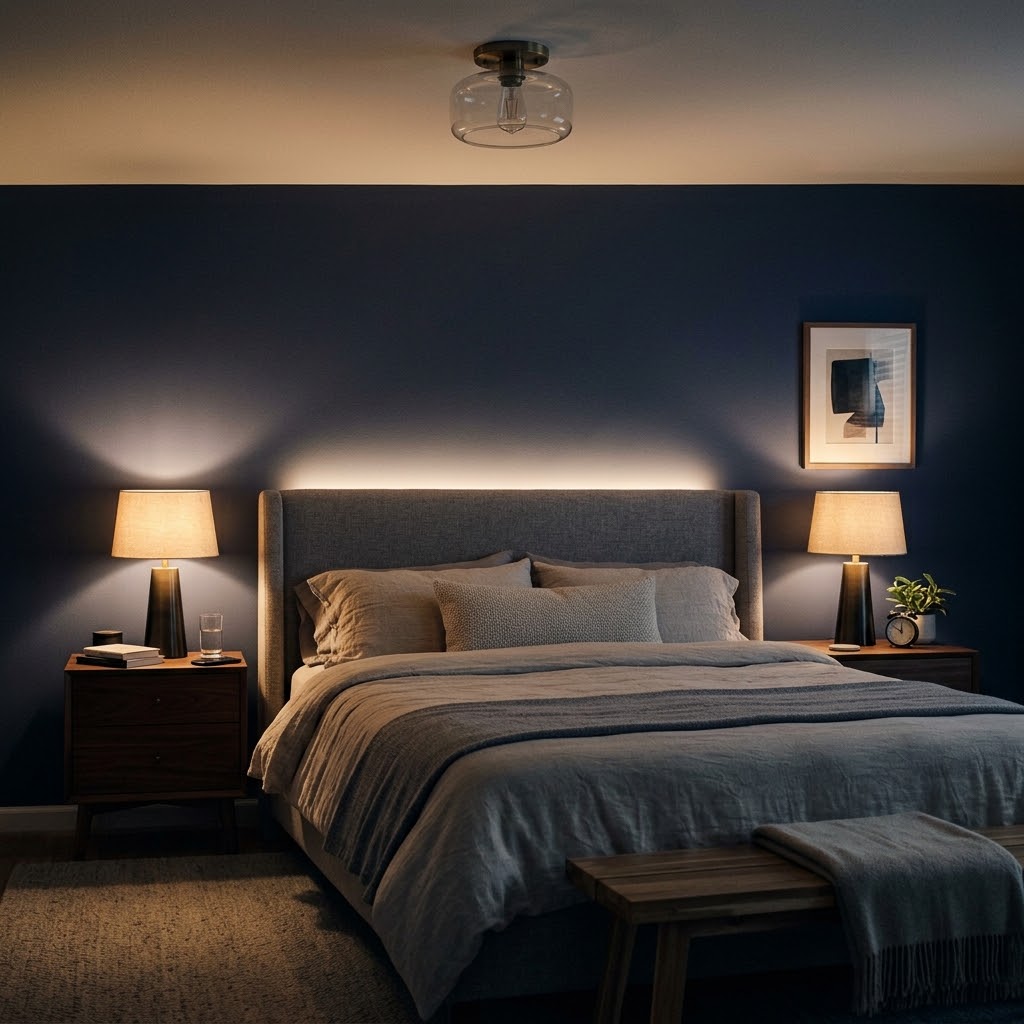
Bedrooms usually fail at layering because people rely entirely on one ceiling light, which is the worst possible setup for a room meant for winding down. Harsh overhead light right before bed actually works against your body’s natural signal to relax.
For ambient light, keep it dim and warm — a dimmer switch on your existing overhead fixture is one of the highest-impact, lowest-effort upgrades you can make in any bedroom, since you’ll still want full brightness for cleaning or getting dressed and low warm light for winding down. For task lighting, add a nightstand lamp on each side of the bed so you’re not reaching across the mattress or squinting to read. For accent lighting, a set of LED strip lights behind the headboard or along a shelf adds a soft glow that makes the whole room feel more like a hotel suite than a place you just sleep in.
This is where home lighting tips matter most, because bedroom lighting affects more than looks — it affects how easily you actually fall asleep.
How to Layer Lighting in the Kitchen and Dining Area
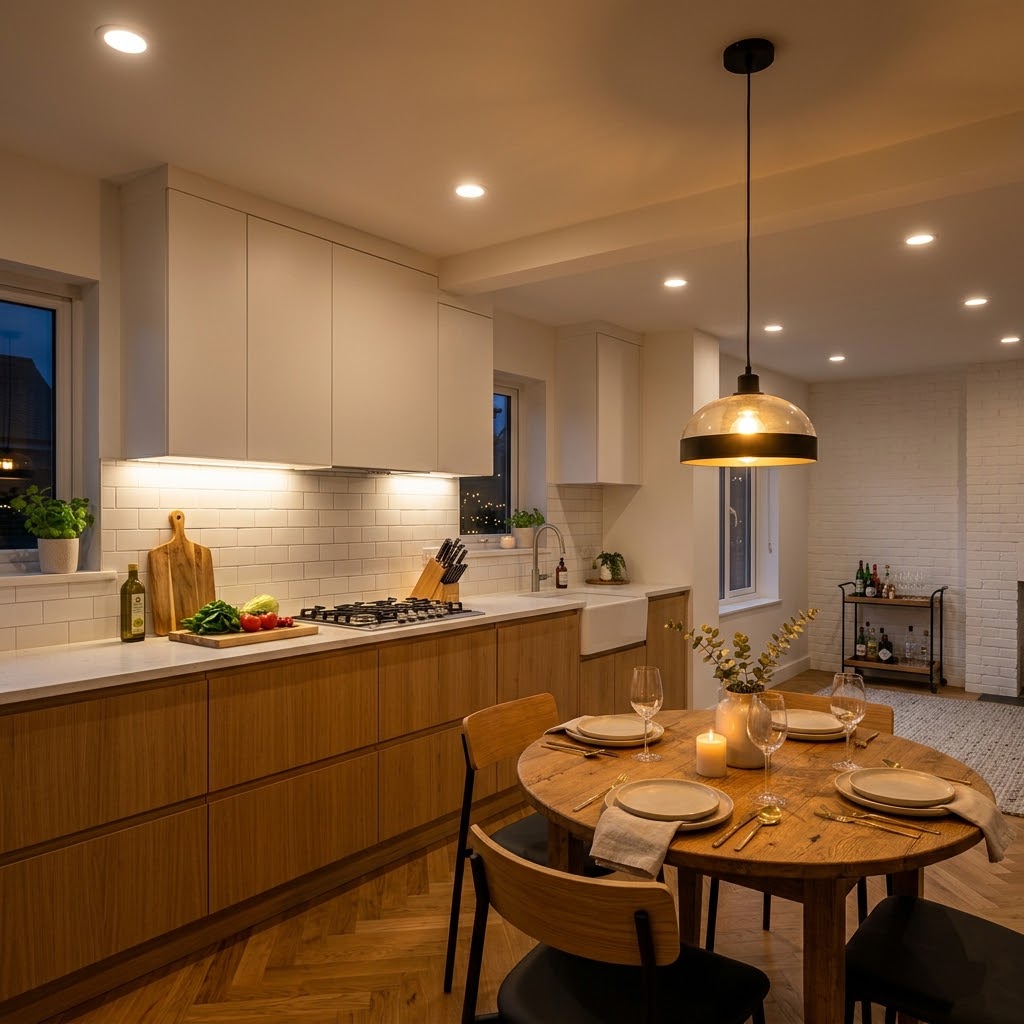
Kitchens need more task lighting than any other room in the house, but most only have one bright overhead layer and call it done.
Start with ambient light from recessed or flush ceiling fixtures spread evenly across the room — kitchens genuinely need to stay well-lit overall, so this base layer should stay brighter here than in a living room or bedroom. Then add task lighting exactly where you need it most: under-cabinet lighting over countertops so you’re not chopping vegetables in your own shadow. For the dining area specifically, swap a plain ceiling light for a pendant light hung about 30-36 inches above the table — this single swap does more for the “designed” look of a dining space than almost anything else on this list. Accent lighting here can be as simple as a plug-in sconce near a buffet or open shelving to add warmth to the edges of the room without dimming the overall brightness the space needs.
How to Layer Lighting in a Hallway or Entryway
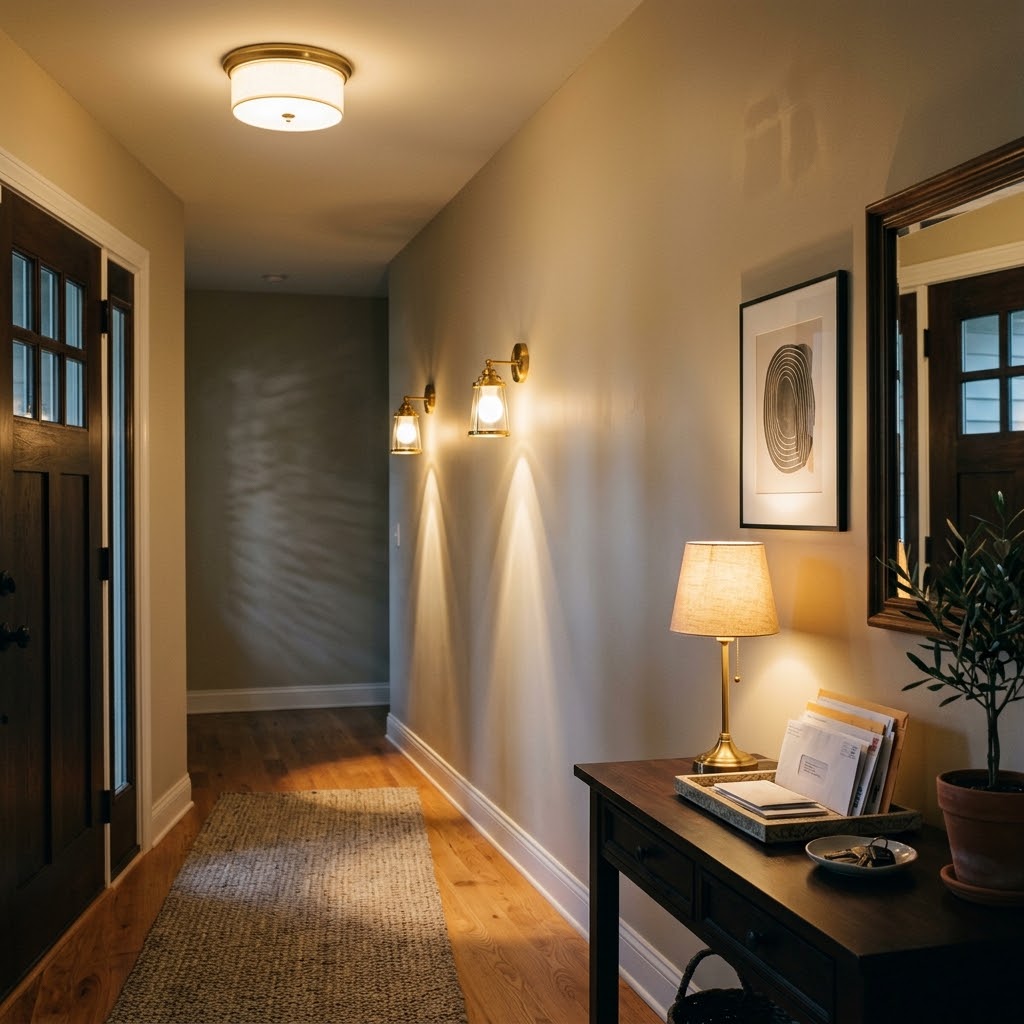
These smaller spaces get ignored constantly, but they’re actually some of the easiest places to practice layered lighting because they’re small and low-commitment.
In an entryway, pair your ambient ceiling light with a console table lamp for warmth the moment you walk in — it’s a small detail that makes a huge difference in how “finished” the space feels. Leading into the hallway, a row of small wall sconces spaced evenly along the wall adds accent lighting where there usually isn’t any at all, guiding the eye (and your feet) down the hall without needing the overhead light blasting the whole time.
The Layering Formula: How to Actually Put It All Together
Once you understand the three layers, here’s the simplest way to apply them to any room in your home, in order:
- Start with ambient light. Get the base level of the room right first — bright enough to move around safely, not so bright it feels clinical.
- Add task lighting wherever an activity happens. Reading chairs, desks, countertops, vanities — anywhere you do something specific needs its own dedicated light source.
- Finish with accent lighting. This is the layer that makes a room feel considered instead of just functional — sconces, picture lights, or a cluster of candles in a corner.
- Use dimmers wherever possible. A dimmer switch or a set of smart bulbs lets one fixture serve multiple moods instead of needing three separate lights for three different needs.
- Match your bulb temperature across the room. Mixing warm and cool bulbs in the same space is one of the fastest ways to make a room feel visually chaotic, even if every individual light looks fine on its own.
This formula works whether you’re chasing a specific ambient lighting aesthetic or just trying to stop squinting every time you sit down to read.
Common Mistakes People Make When Layering Lighting
A few mistakes show up constantly, no matter the room:
- Relying on one overhead fixture for the entire room, with zero task or accent layers to back it up.
- Using cool white bulbs in a space meant to feel cozy — bulb temperature affects mood more than almost any other single decor choice.
- Placing lamps too high or too low relative to where you’re actually sitting, which defeats the point of task lighting entirely.
- Skipping dimmers, which forces one bright setting to try to work for every time of day and every activity.
- Forgetting accent lighting completely, which is usually the layer that separates a “fine” room from one that looks genuinely styled.
Fixing even one of these across your home will make a noticeable difference before you touch anything else.
Bringing It All Together
Learning how to layer lighting isn’t really about buying more lamps — it’s about giving each room the right combination of ambient, task, and accent light for what actually happens in that space. A living room needs a different setup than a bedroom, and a home office needs something different again. Start with one room, apply the three-layer formula, and you’ll notice the difference the very first evening you turn everything on.
Related Articles:
- 15 Ways: How to Make Your Home Look Expensive on a Tight Budget
- 3 Ways: How to Make Your Home Smell Amazing and Fresh All Day
- 14 Entryway Decor Ideas Beyond Hooks and a Welcome Mat
FAQ
What’s the difference between ambient and accent lighting?
Ambient lighting fills the whole room with general light, while accent lighting highlights a specific spot, like artwork or a shelf. Accent light is usually dimmer and more focused than ambient light.
What bulb temperature should I use for a cozy room?
Look for bulbs labeled “warm white,” usually in the 2700K-3000K range. Cooler bulbs above 4000K tend to feel more clinical and work better in kitchens or home offices than living rooms or bedrooms.
Can I layer lighting without hiring an electrician?
Yes, almost entirely. Plug-in floor lamps, table lamps, LED strip lights, and battery-powered sconces can add every layer you need without any rewiring at all.
Where should task lighting be placed in a reading area?
Position it at or slightly above shoulder height when you’re seated, and close enough that light falls directly on the page or screen without casting your own shadow over it.