There’s a version of your bed that makes you want to crawl back into it the second you’re out of it — the kind you see in hotel rooms and design accounts and think, how is that just… a bed? The answer is layering, and it’s a lot less complicated than it looks once you actually know the order things go in and why each piece is there. This guide walks through the real basics first, step by step, and then covers eleven different ways to layer a bed depending on the exact mood you’re going for, so you can build something that finally feels like it’s yours.
Affiliate Disclosure: This article contains affiliate links which means we may earn a commission at no extra cost to you. You can check our affiliate disclosure page here.
How to Layer a Bed: The Basics, Step by Step
Once those seven layers are in place, the bones of a beautiful bed are already done. Everything from here is just about mood — the colors, the textures, the little details that make it feel like somewhere specific. That’s where the fun part actually starts.
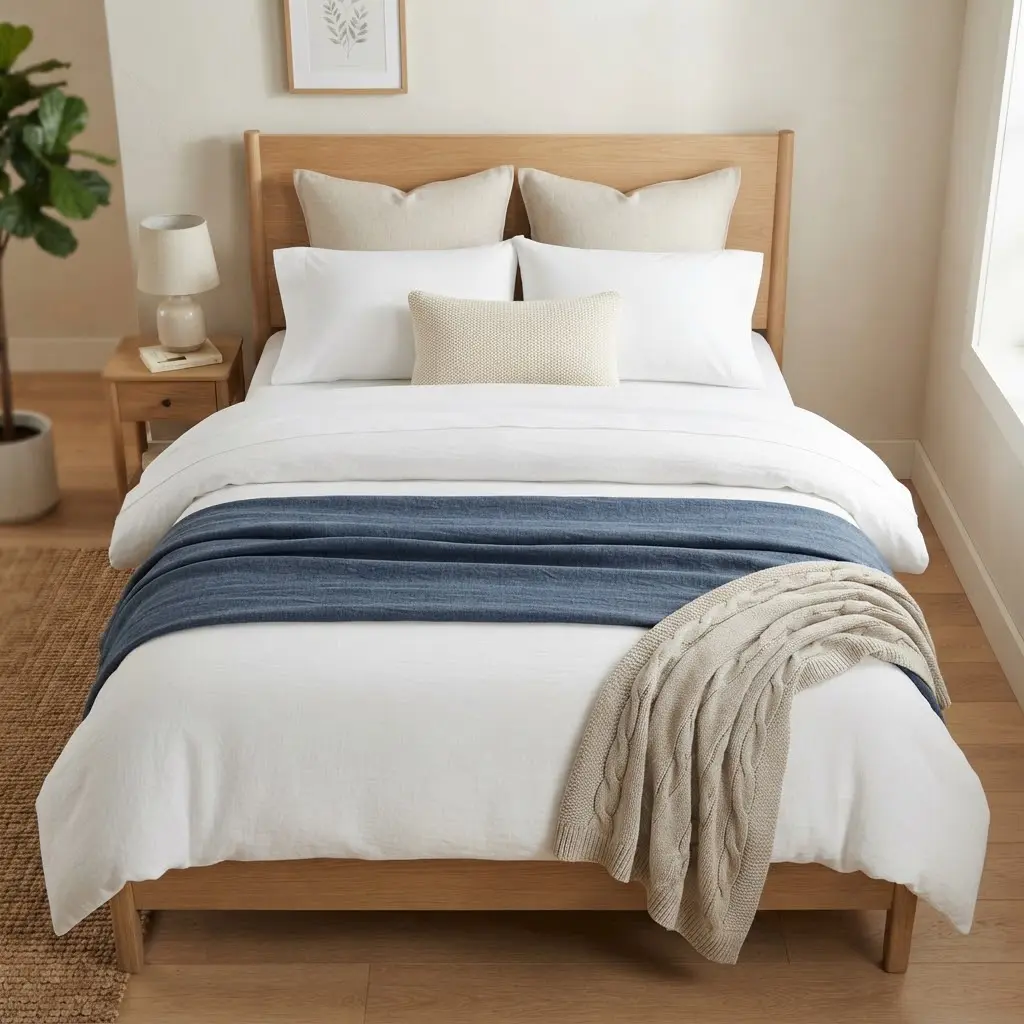
Step 1: Start With a Fitted Sheet
This is the foundation layer, and it should fit snugly around the mattress with no bunching or slipping. A good fitted sheet keeps everything layered above it sitting flat and smooth instead of shifting out of place overnight, which matters more than people expect once the rest of the layers go on top.
Step 2: Add a Flat Sheet (Optional but Worth It)
A flat sheet sits directly under the duvet or comforter and acts as a barrier between you and the heavier bedding on top. It’s an easy layer to skip, but it makes washing routines simpler, since the lighter sheet can go in the wash far more often than the bulkier duvet insert or cover.
Step 3: Layer In a Lightweight Blanket
A thin cotton waffle-knit blanket goes over the flat sheet and under the duvet, adding a bit of extra warmth without any real bulk. It also gives the bed a slightly more layered, hotel-like look even before the top bedding goes on, which is a small detail most people skip entirely.
Step 4: Add the Duvet or Comforter
This is the main warmth layer and usually the largest visual element on the whole bed. A duvet insert with a removable cover makes more sense than a fixed comforter, since it makes changing the color palette or texture of a room dramatically easier without buying a whole new set every time.
Step 5: Top With a Coverlet or Quilt
A folded quilted coverlet at the foot of the bed, or draped over roughly a third to half of the duvet, adds texture and a hint of color without covering the entire bed. This layer is really what separates a bed that looks intentionally styled from one that’s simply made, and it’s often the first thing people notice.
Step 6: Build the Pillow Layer
Start with the actual sleeping pillows pushed toward the back, then add a row of euro shams behind them for height and structure. Layer standard or king shams in front of those, and finish with a lumbar accent pillow at the very front for a pop of texture, pattern, or color that pulls the whole arrangement together.
Step 7: Finish With a Throw
A folded or loosely draped knit throw blanket at the foot of the bed is the final detail that pulls the whole layered look together. Beyond the visual appeal, it’s genuinely functional too, giving anyone a warm layer to grab without needing to dig through a closet on a cold night.
11 Bed Layering Ideas to Try
With the basics down, the same seven steps can be dressed up in endless different ways. Some lean soft and quiet, others rich and dramatic, but they all start from that exact same foundation. Here’s where that foundation goes next.
1. Hotel-Style White Layered Bed
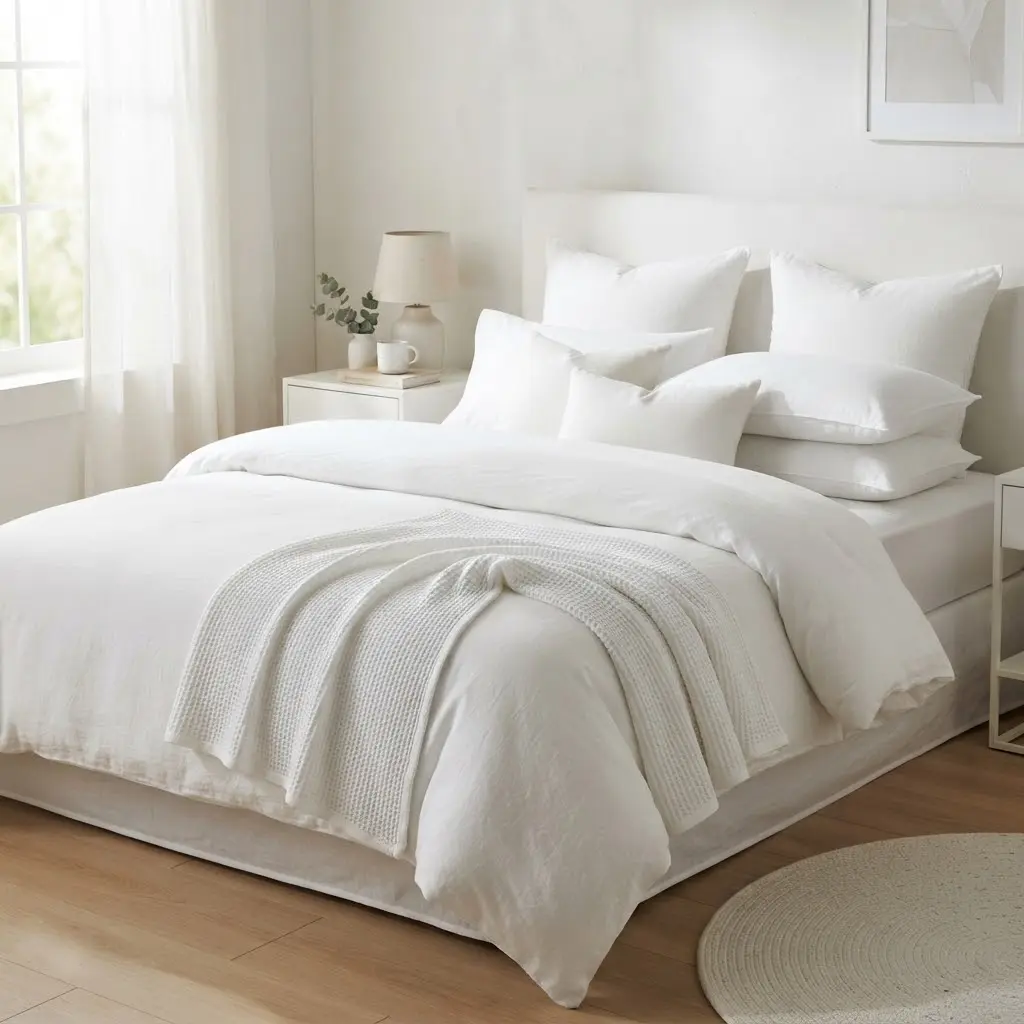
This is the look most people picture when they think of a perfectly made bed — crisp white sheets, a plump white duvet, and a stack of pillows in varying sizes, all kept in the same soft tone throughout. The magic here is in the texture, not the color: a waffle-knit throw or a jacquard coverlet adds real depth without breaking the all-white palette. It photographs beautifully and works in almost any bedroom regardless of the existing decor, which is exactly why it’s become the gold standard for layered bedding everywhere.
2. Luxury Layered Bed With Velvet Accents
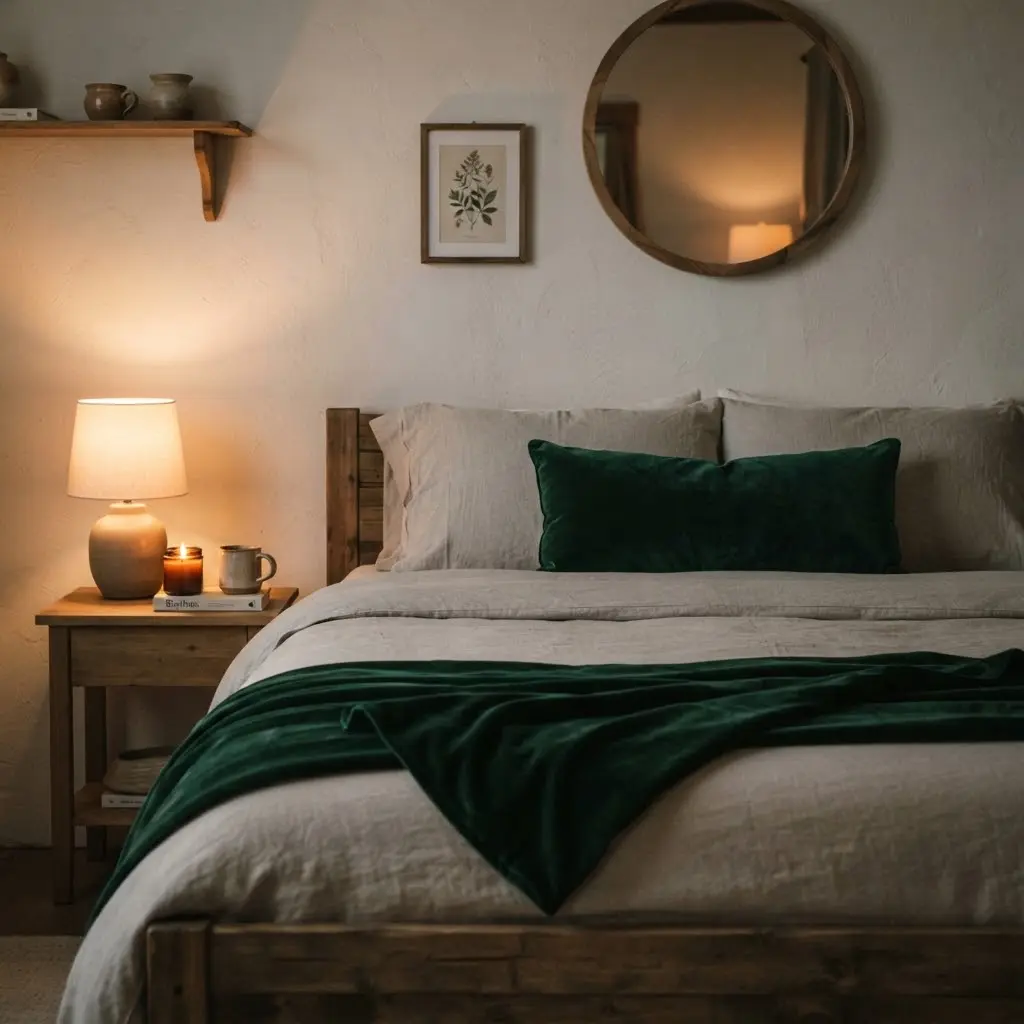
A velvet lumbar pillow or a folded velvet throw does a lot of heavy lifting in this look, instantly elevating an otherwise simple, quiet bed. Pair it with a matte, textured duvet cover in a deep jewel tone or a soft neutral, and let the sheen contrast between the fabrics do most of the visual work rather than adding more pattern. This style leans a little more dramatic than hotel-style, and it’s a great option for anyone who genuinely wants their bed to feel like the focal point of the room.
3. Boho Layered Bed
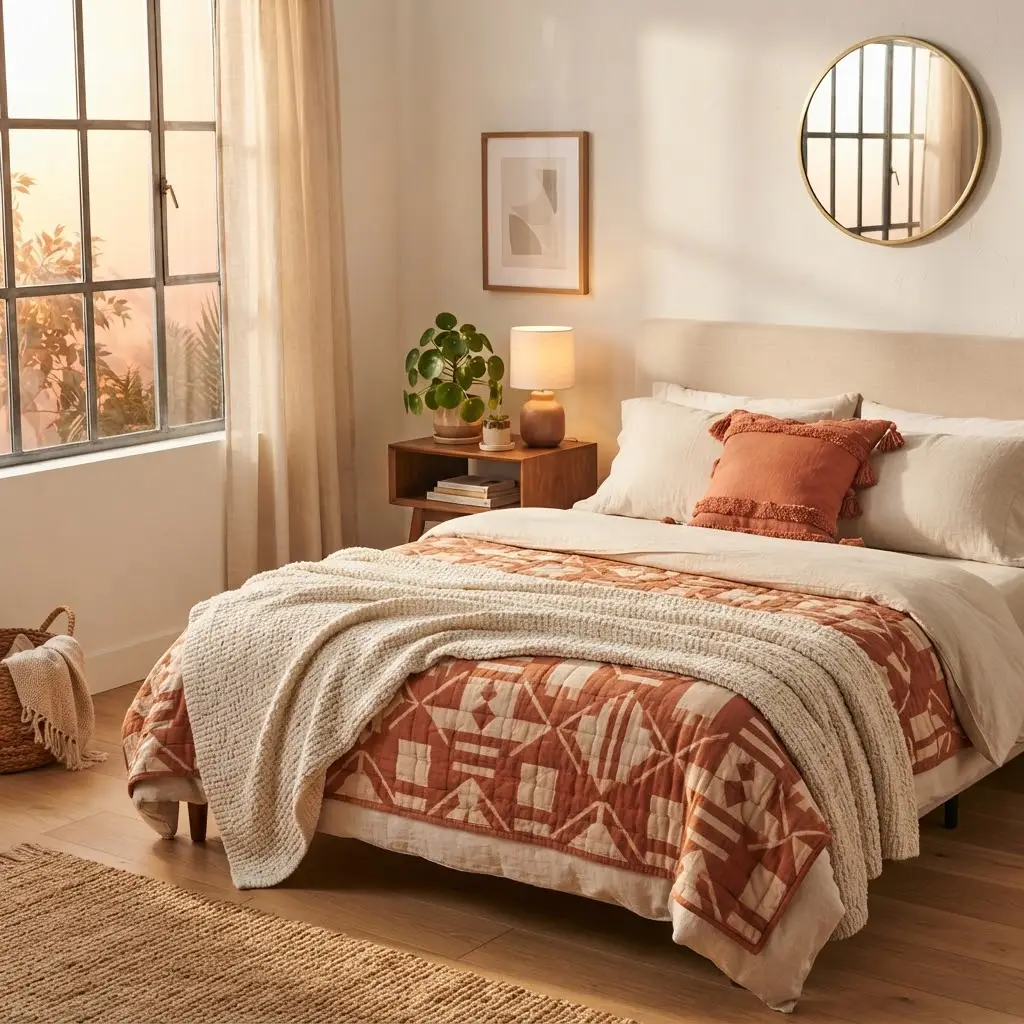
Boho layering thrives on mismatched textures living together on purpose — a woven throw, a tasseled pillow, and a patterned quilt, all in warm, earthy tones that don’t need to match perfectly to work well together. A little macrame or fringe detail on at least one pillow helps tie the whole arrangement together visually. This is the style with the most room for personal touches, since almost anything textured and warm-toned fits, making it a great starting point for anyone still figuring out their exact aesthetic.
4. Scandinavian Minimalist Layered Bed
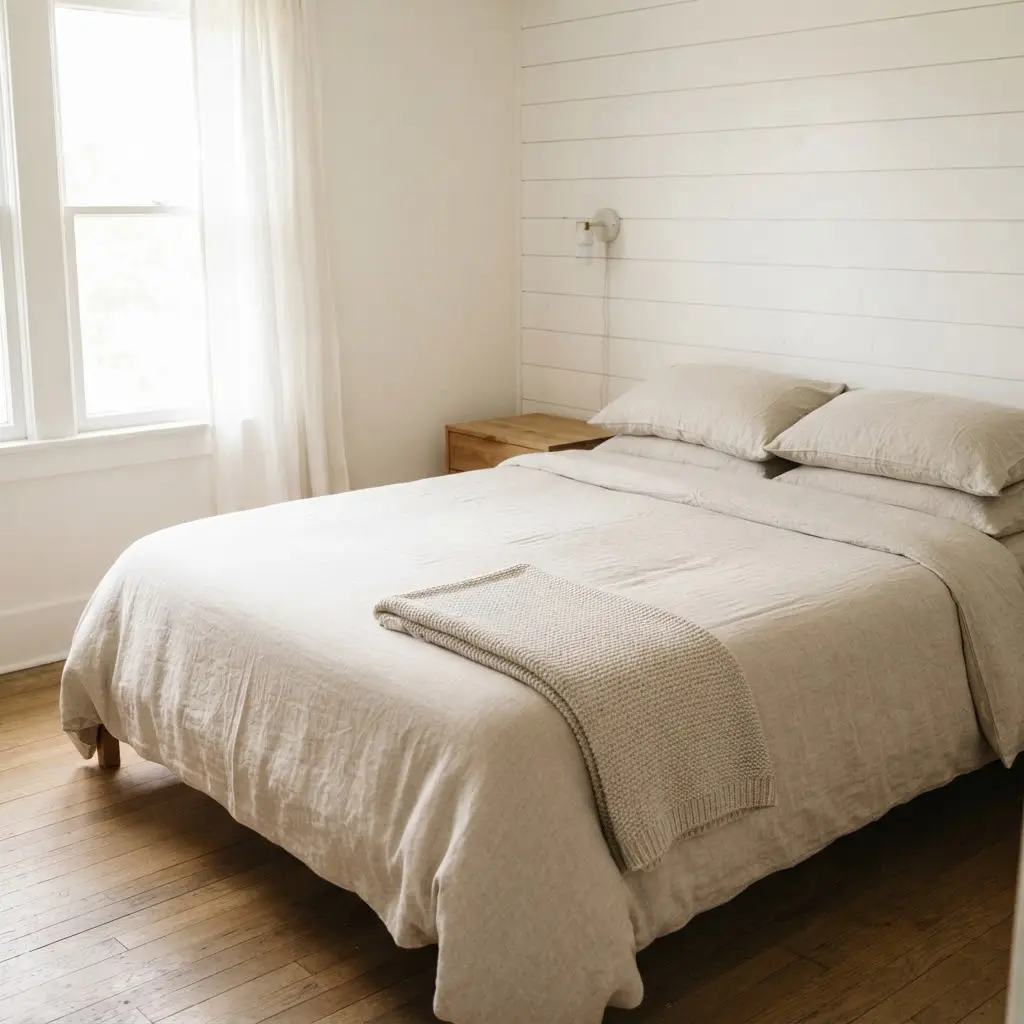
This look is built almost entirely on restraint — a plain linen duvet cover, just one or two pillows instead of a full stack, and a single brushed cotton throw folded simply at the foot of the bed. The texture comes from natural materials rather than leaning on pattern or bold color. It’s genuinely the easiest style to maintain on a daily basis, and it works especially well in smaller bedrooms where a large pillow stack would end up feeling like too much.
5. Cottagecore Layered Bed
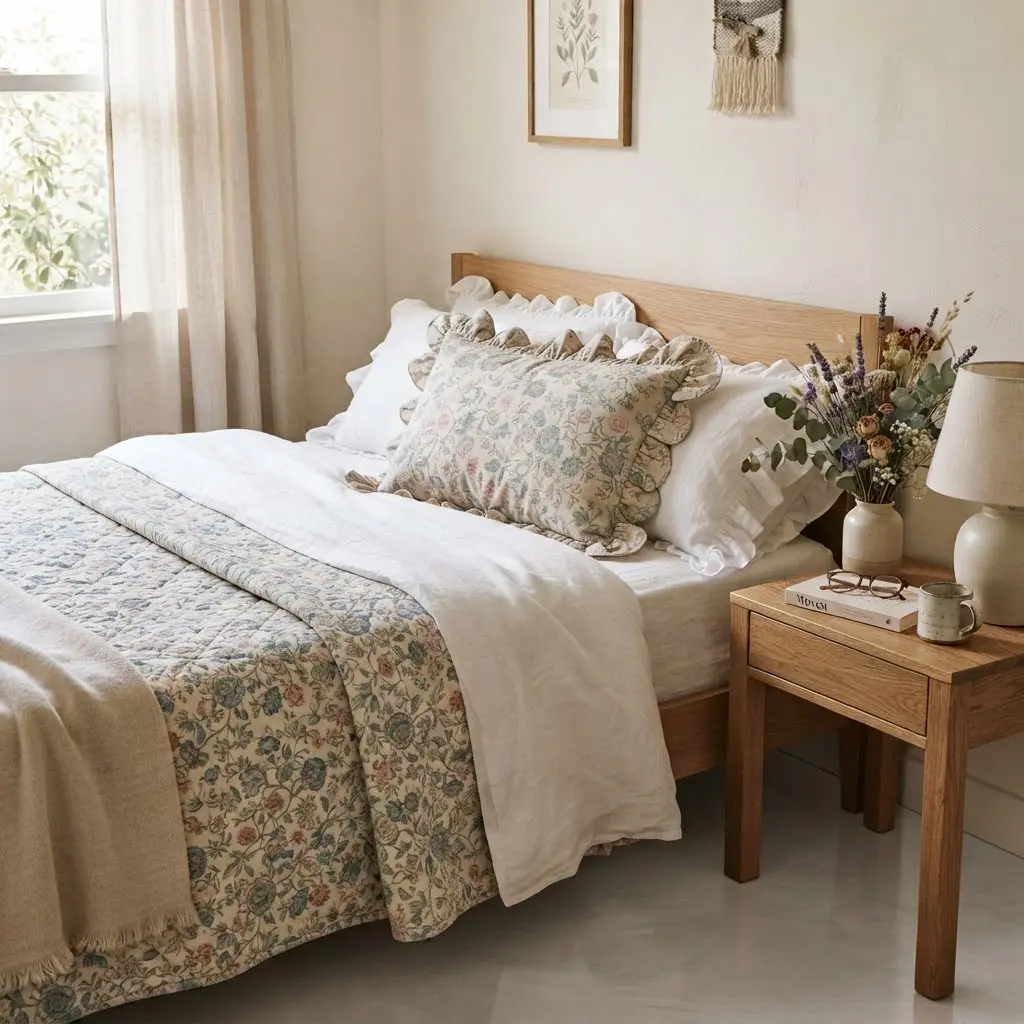
Soft florals, ruffled edges, and a slightly worn-in, vintage feel define this look from top to bottom. A floral quilt layered over plain white sheets, paired with a ruffled pillow sham, gives the whole bed a gentle, storybook quality that feels more collected than curated. Muted, slightly faded colors work far better here than anything bold or heavily saturated. It’s a romantic, lived-in style that feels like it came together naturally over time, not all at once.
6. Coastal Layered Bed
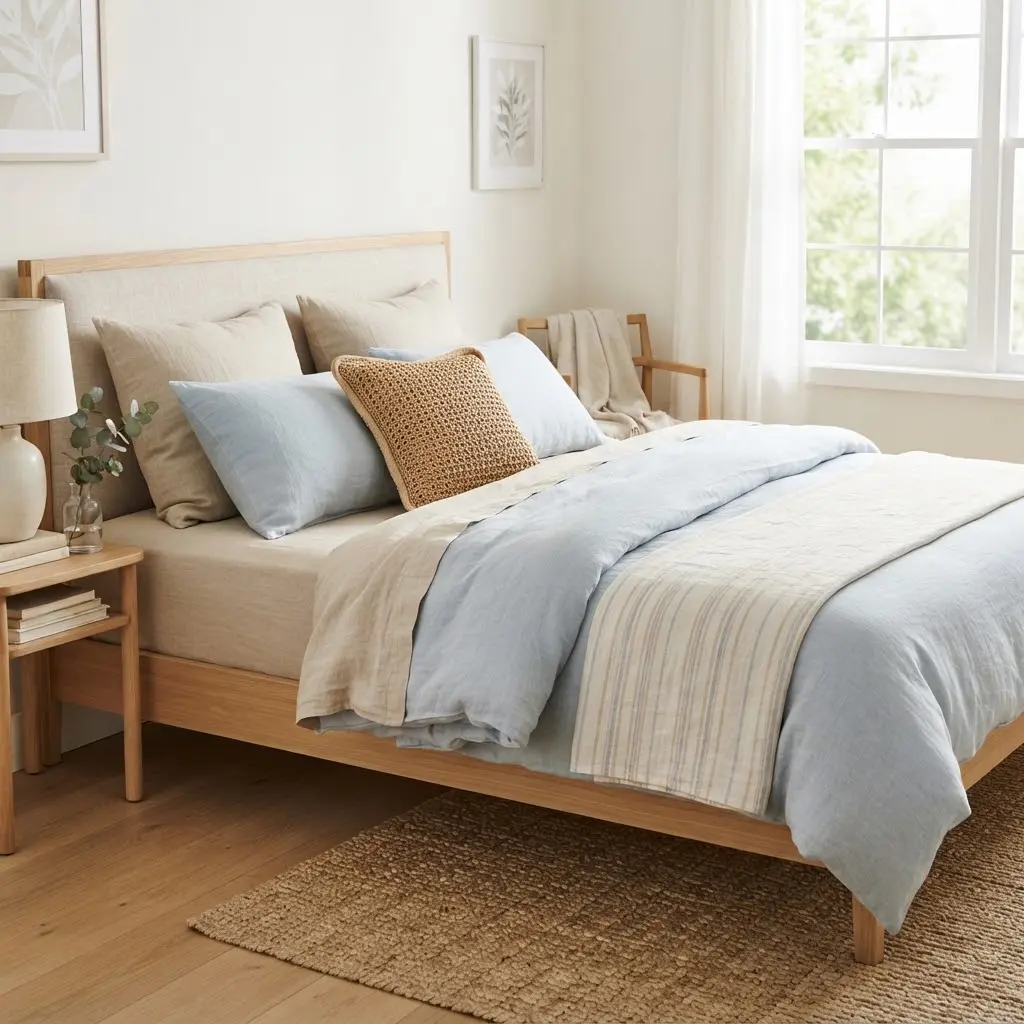
Light blues, sandy neutrals, and crisp white sheets set the foundation for a coastal bed, with the texture coming mostly from linen bedding and a woven rattan-textured accent pillow. Keep any patterns simple — subtle stripes work especially well here, while anything too busy tends to pull away from the airy, relaxed feel this style is going for. The overall goal is a bed that feels breezy and uncomplicated, like it genuinely belongs somewhere near the water even if it isn’t.
7. Moody Dark Academia Layered Bed
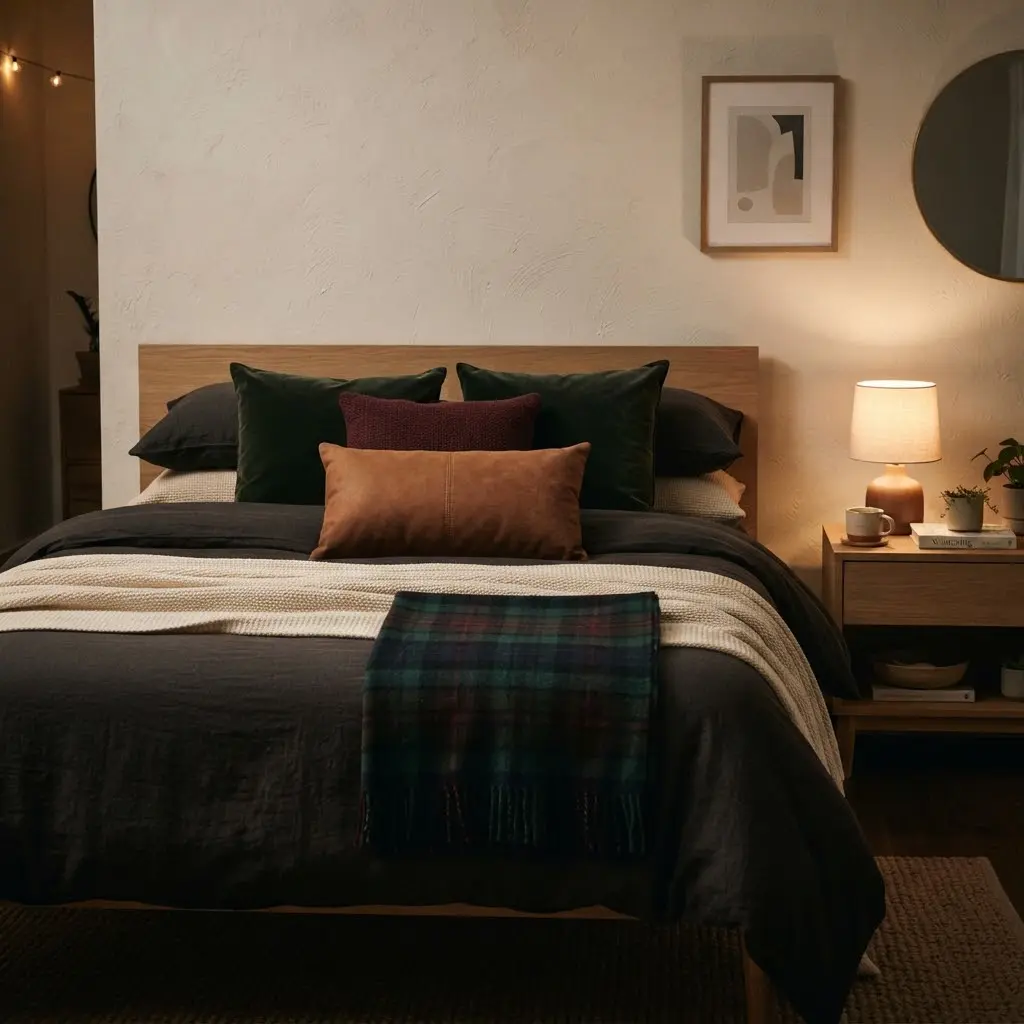
Deep greens, burgundies, and charcoal tones give this look its signature richness, often paired with a plaid wool-look throw folded neatly at the foot of the bed. A suede-look lumbar pillow adds one more layer of texture against the softer bedding underneath it. This style photographs beautifully in low, warm lighting, and it tends to work best in a bedroom that already leans a little vintage, academic, or literary in its existing decor and furniture.
8. Rustic Farmhouse Layered Bed
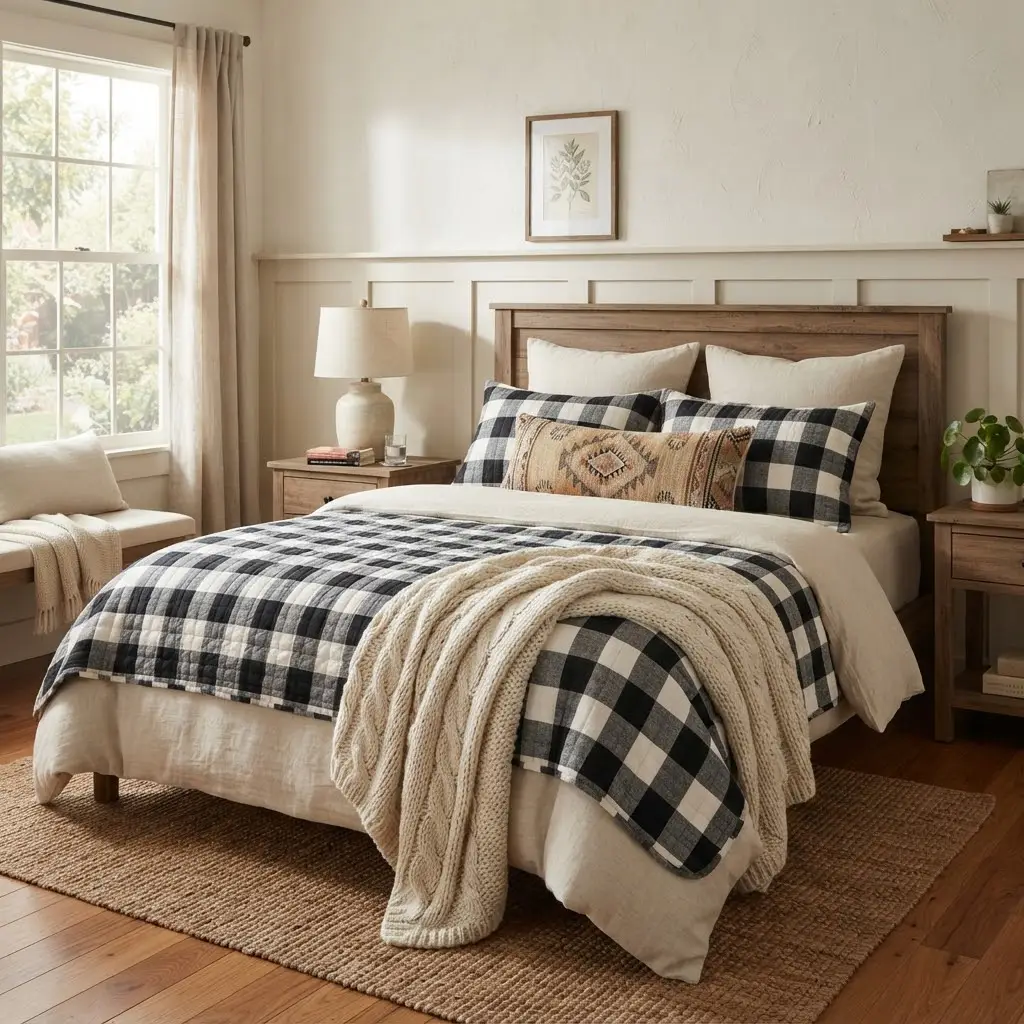
Buffalo check, cream and taupe tones, and a genuinely chunky knit throw give this bed its warm, lived-in character. Layer a quilted coverlet over a plain white duvet, then add a patterned lumbar pillow for a small touch of visual contrast against the neutral base. This style leans warm and welcoming rather than polished or formal, and it pairs especially well with wood furniture and other natural textures already present in a farmhouse-style room.
9. Japandi Layered Bed
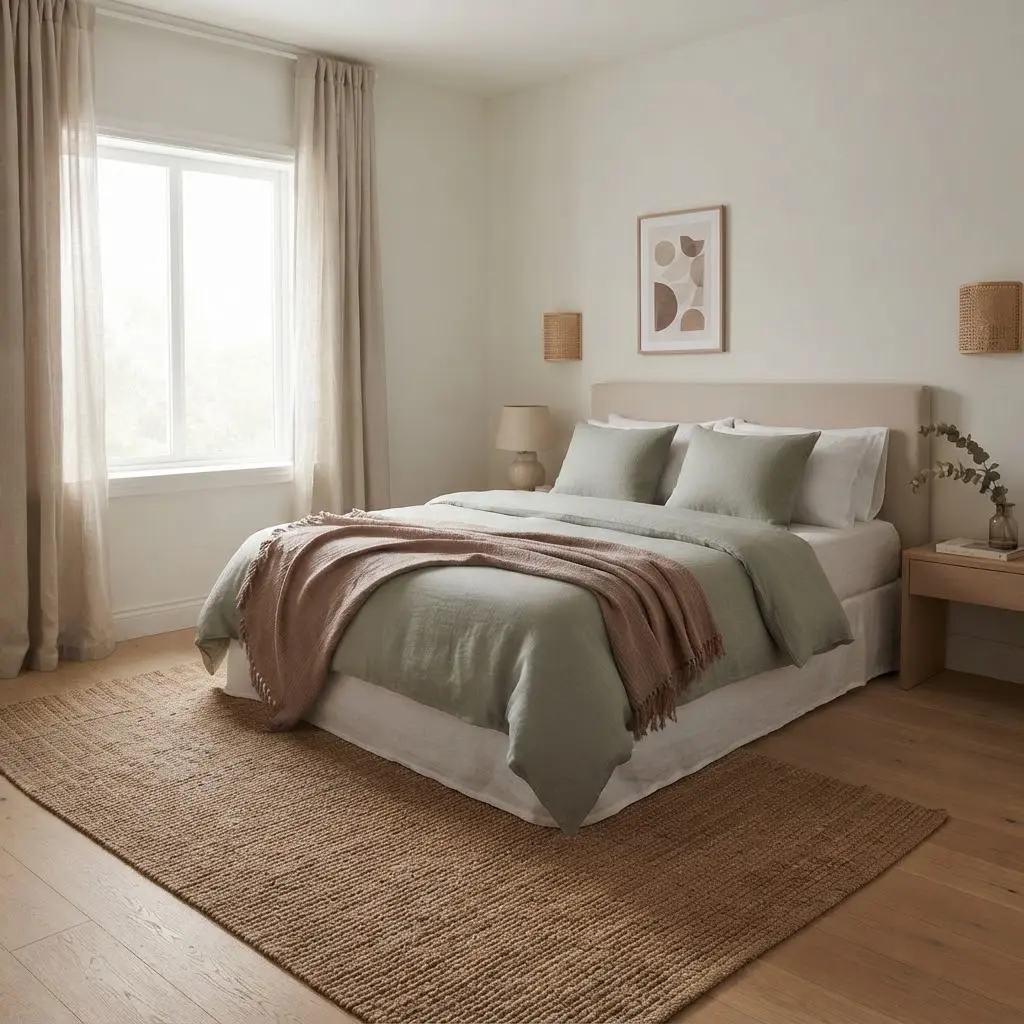
A blend of Japanese minimalism and Scandinavian warmth, this look leans on muted, earthy tones combined with clean lines and very little visible pattern. A single textured throw blanket and one or two simple pillows are genuinely enough here, since the restraint is the entire point of the style. It suits anyone who wants their bed to feel calm and deliberate rather than heavily layered with lots of individual decorative pieces competing for attention.
10. Winter Hygge Layered Bed
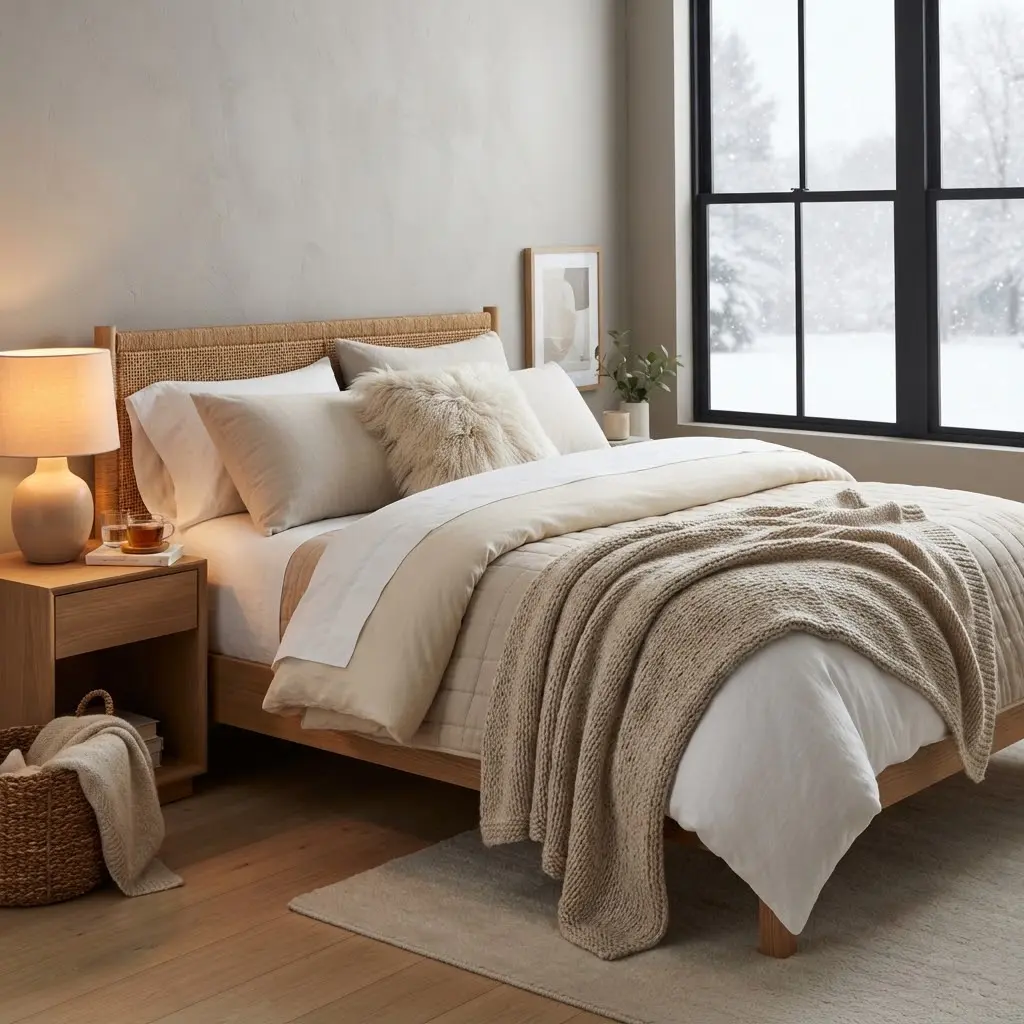
This is layering built entirely around warmth — a chunky knit throw, a faux fur pillow, and a genuinely substantial duvet in a soft, warm-toned cover that feels good to sink into. Flannel sheets underneath add one more layer of coziness that isn’t even visible but makes a real, noticeable difference at night. It’s the style built specifically for actually wanting to stay in bed a little longer, which makes it a natural fit for anyone chasing that exact hygge feeling.
11. Modern Neutral Layered Bed
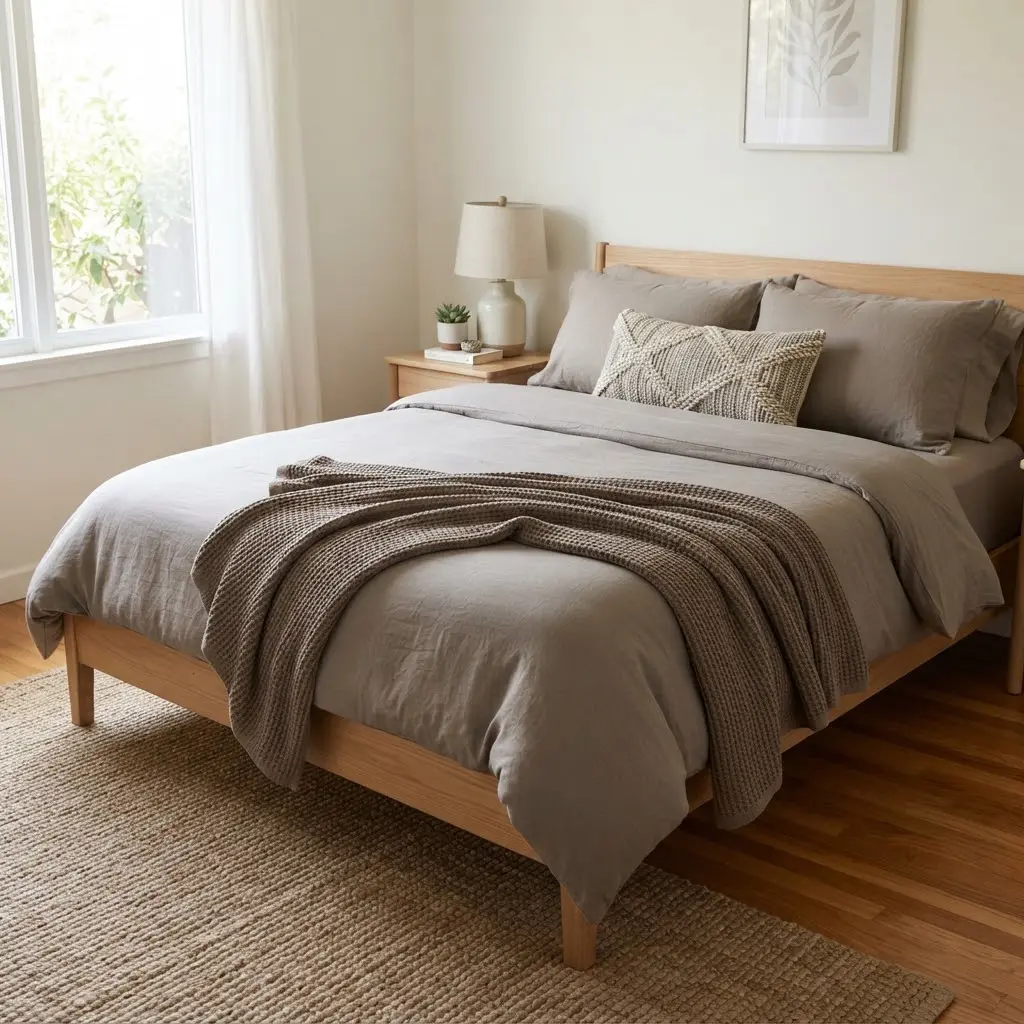
Taupe, warm gray, and soft beige tones layered together in varying textures create a bed that feels current without committing to any one specific trend that might fade. Mix a ribbed waffle-knit throw with a smooth duvet cover and one textured lumbar pillow for a bit of contrast. This style ages well since it isn’t tied to a particular aesthetic moment, making it a safe, versatile choice for a bedroom that needs to feel put-together for years, not just one season.
None of this actually requires buying an entirely new bedding set from scratch. Layering is really about working with what’s already there, arranged with a little more intention than usual — a folded blanket here, one extra pillow there. Once the basics are genuinely in place, switching between any of the looks above becomes mostly a matter of swapping a few key pieces, not starting over completely every single time the mood changes.
FAQs
How many pillows is too many for a layered bed?
Four to six total, including sleeping pillows, usually hits the sweet spot. Beyond that, a bed starts to feel more like a showroom than somewhere anyone would actually want to sleep.
Do I need a duvet cover, or can I just use a comforter?
A duvet cover is easier to layer with since it can be swapped out to change the whole look, but a comforter works fine too as long as it’s paired with a coverlet or throw on top for texture.
What’s the easiest layered style for a beginner to start with?
Scandinavian minimalist or modern neutral are the simplest to pull off, since they rely on just a few pieces and forgive small imperfections in folding or placement.
How often should bedding layers be washed?
The fitted and flat sheets should be washed weekly, while duvet covers, shams, and throws can typically go every two to four weeks depending on use.