You made something beautiful. A candle that smells like a rainy afternoon, or a Sunday morning, or something you can’t quite name but can’t stop burning. You packaged it carefully, photographed it the best you could, and posted it — and heard nothing back. No saves, no shares, maybe three likes from people who already know you.
That silence doesn’t mean your candles aren’t good enough. It means nobody found them yet.
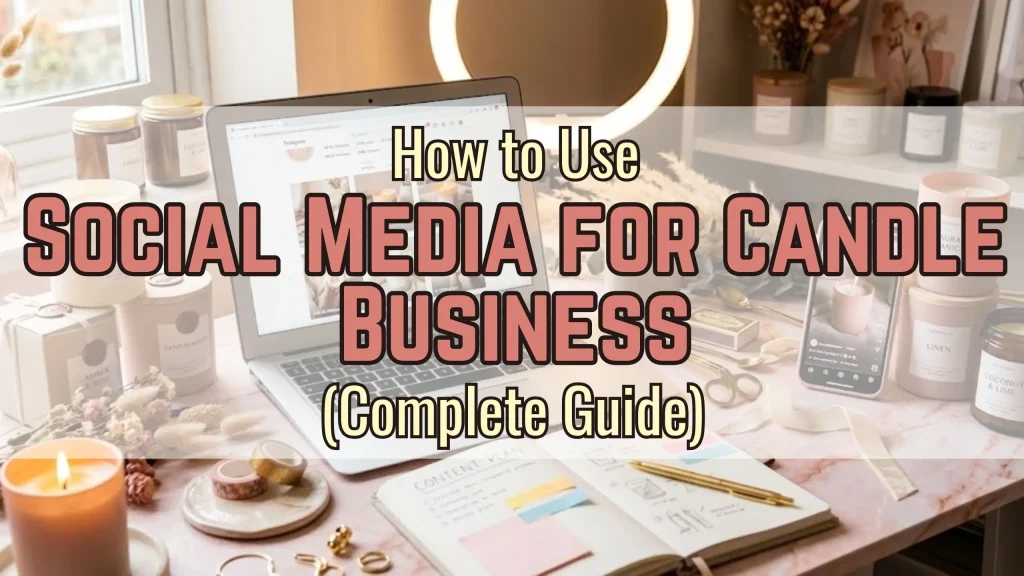
Using social media for candle business works differently than most people expect. It’s not about posting every day or having a perfectly curated feed. It’s about showing up in the right way, on the right platforms, consistently enough that the right people start to find you — and then keep coming back. This guide covers exactly how to do that, from the first post to a feed that actually converts.
Affiliate Disclosure: This article contains affiliate links which means we may earn a commission at no extra cost to you. You can check our affiliate disclosure page here.
Why Social Media Matters More for Candle Businesses Than Most
Candles are a sensory product — people can’t smell them through a screen. That makes the visual and emotional story told on candle brand social media the only selling tool available before a customer decides to buy. A candle brand that tells that story well on social media consistently outsells a better candle brand that doesn’t.
- Social media marketing for business is where most candle buyers discover new brands before ever visiting a website or market.
- A strong social presence builds trust before a purchase — customers who’ve followed a brand for weeks buy with more confidence than cold visitors.
- It’s the most cost-effective marketing available to a small candle business, requiring time more than money.
- Word of mouth now happens on social media — a shared post or a tagged story reaches more people than any in-person recommendation.
Which Platforms to Actually Focus On
Not every platform is worth the same investment for a candle business. Here’s where the time actually pays off.
Instagram — The Non-Negotiable Platform
Instagram is where candle businesses live. The visual format suits the product, the audience actively searches for home fragrance and lifestyle content, and the combination of feed posts, reels, and stories gives a brand multiple ways to show up in a single day.
- Feed posts build the brand’s visual identity and stay searchable long after posting.
- Reels reach new audiences who don’t follow the account yet — the discovery format.
- Stories keep existing followers connected and engaged between feed posts.
- Candle business Instagram ideas come to life most effectively here — from styled product shots to behind-the-scenes pour days to scent guide carousels.
- The shopping feature allows direct product linking, turning a post into a checkout in two taps.
Pinterest — The Long-Game Platform
Pinterest works differently from every other platform because content doesn’t disappear after 48 hours — a well-optimized pin can drive traffic for months or even years after it’s posted.
- Candle lifestyle content, home fragrance guides, and gift idea posts perform particularly well.
- Pinterest users are actively in buying mode more often than users on other platforms.
- Each pin links directly to a product or website, making it one of the highest-converting social platforms for how to sell candles online.
- One good pin takes minutes to create and can bring in traffic long after the business has moved on to other content.
TikTok — The Reach Platform
TikTok’s algorithm gives new accounts a fair chance at reaching large audiences in a way Instagram no longer does for small accounts, making it worth investing in for a candle business willing to show up on video.
- Behind-the-scenes candle making content performs exceptionally well — the process is visual and satisfying to watch.
- Honest, personal content about how to grow a candle business from scratch tends to build deeply loyal audiences.
- A single viral TikTok can drive more traffic to a candle business in one day than months of Instagram posts.
- The audience skews younger than Pinterest but is increasingly overlapping with the candle-buying demographic.
Facebook — Worth Maintaining, Not Prioritizing
Facebook’s organic reach for small businesses has declined significantly, but it’s still worth maintaining for a few specific reasons.
- Facebook groups for candle making and home fragrance are highly active communities worth being part of.
- The Facebook Marketplace and local selling features work well for candle businesses selling within a specific area.
- Running Facebook ads is one of the more affordable ways to advertise a candle business to a targeted local or national audience.
- An active Facebook page adds credibility to a business when customers search for it by name.
What Good Social Media for Candle Business Actually Looks Like
The biggest mistake candle businesses make on candle business social media is posting only product photos. A candle sitting on a marble surface is beautiful, but it doesn’t give anyone a reason to follow, save, share, or buy. Here’s what the content mix should actually look like.
Educational Content (30% of Posts)
Educational posts get saved more than any other type, and saves tell the algorithm the content is worth showing to more people.
- How to burn a candle correctly for the first burn.
- Why tunneling happens and how to fix it.
- The difference between soy, coconut, and paraffin wax.
- How to choose a candle scent for a specific mood or room.
- What fragrance load means and why it matters for scent throw.
Behind-the-Scenes Content (25% of Posts)
Behind-the-scenes content builds the trust that converts followers into buyers, because it shows the real person and real process behind the product.
- Pour day content — wax melting, fragrance blending, filling jars.
- Packaging orders and preparing for markets.
- Failed batches and what went wrong — honest content outperforms polished content consistently.
- New scent development and testing process.
- A day in the life of running a candle business online.
Product Content (25% of Posts)
Product content doesn’t have to feel like an ad when it’s styled and written well.
- Lifestyle shots showing the candle in a real home setting rather than a plain white background.
- Scent descriptions written in sensory, specific language rather than generic fragrance jargon.
- New product launches with a tease before the full reveal.
- Seasonal collections styled to match the time of year.
- Customer photos and tagged posts shared as social proof.
Engagement Content (20% of Posts)
Engagement content invites the audience to participate rather than just consume, which builds community and increases the reach of other posts.
- Polls asking followers to vote between two scents.
- Questions about candle habits — where do you burn candles most?
- This or that between two new products or packaging options.
- Caption contests or fill-in-the-blank posts.
- Asking followers what scent they want to see next.
How to Build a Consistent Posting Schedule
Consistency matters more than frequency on every platform. A brand that posts three times per week reliably outperforms one that posts daily for two weeks and then disappears.
- Start with three posts per week on Instagram — one carousel, one reel, one lifestyle photo.
- Post stories daily even on days without a feed post — stories require less production and keep the account active.
- Pin one new piece of content per day on Pinterest — repurposing Instagram content takes less than five minutes per pin.
- Batch content in one sitting rather than creating on the day of posting — one hour of batching can produce a week of content.
- Use a simple content calendar — even a handwritten weekly plan reduces the paralysis of deciding what to post each day.
How to Write Captions That Actually Sell
A beautiful photo with a weak caption is a missed opportunity every single time. Candle business social media content that converts tends to follow a few reliable patterns.
- Open with something specific, not generic — “This candle smells like the first cold morning of October” outperforms “our new fall scent is here”.
- Describe the scent in sensory, unexpected comparisons — not “warm and cozy” but “like the inside of a used bookshop on a rainy afternoon”.
- Tell a micro-story — even two sentences about why this scent was created gives it more weight than a product description.
- End with a question or a gentle invitation — “what would you be burning this with?” performs better than “shop now” as a closing line.
- Put the most important information in the first line — most people read the first sentence and nothing else unless it earns the scroll.
How to Grow a Candle Business Following From Zero
How to grow my candle business on social media from scratch is one of the most common questions new candle sellers ask, and the answer is almost always the same: consistency plus genuine engagement, repeated long enough for the algorithm to catch up.
- Engage genuinely with similar accounts before expecting them to engage back — comment on posts in the home fragrance and small business space with real thoughts, not emojis.
- Use reels as the growth engine — reels reach non-followers, feed posts serve existing followers.
- Collaborate with complementary small businesses — a candle brand and a coffee brand sharing each other’s content reaches two audiences instead of one.
- Show up on stories every single day — accounts that post stories consistently are rewarded with better feed post reach.
- Respond to every comment and DM in the early stages — the algorithm notices engagement rate, and a highly engaged small account often outperforms a disengaged large one.
- Post user-generated content whenever a customer tags the brand — it builds social proof and rewards the customer for sharing.
Hashtag Strategy That Still Works in 2026
Hashtags matter less than they did a few years ago but still contribute to discoverability when used correctly.
- Use a mix of large hashtags (1M+ posts), medium hashtags (100K–500K posts), and small niche hashtags (under 50K posts) rather than only the biggest ones.
- Candle-specific hashtags like #candlemaker, #soycandle, #handmadecandles still drive relevant traffic from active buyers.
- Location-based hashtags matter for candle businesses selling at local markets or within a specific region.
- Avoid using the same hashtag set on every post — varying hashtags signals fresh, relevant content to the algorithm.
- Research which hashtags competitors are using that are driving engagement rather than guessing from scratch.
How to Sell Candles Directly Through Social Media
How to sell candles online through social media has become significantly easier as platforms have built direct selling features into their core experience.
- Instagram Shopping allows products to be tagged directly in posts and reels, creating a checkout experience without leaving the app.
- Facebook Shop syncs with Instagram and gives the business a storefront on both platforms simultaneously.
- TikTok Shop is rapidly growing as a direct selling channel for product businesses, with the algorithm actively promoting products listed in the shop.
- Link in bio tools like Linktree or a personal website link give followers a single place to shop from any platform.
- Limited-time offers announced on stories create urgency that drives immediate sales from existing followers rather than waiting for website traffic.
Paid Advertising — When It’s Worth It and When It Isn’t
Knowing how to advertise a candle business through paid social doesn’t require a large budget — it requires spending what’s available in the right place at the right time.
- Running ads on content that’s already performing organically amplifies what’s already working rather than spending money to fix what isn’t.
- Instagram and Facebook ads run through the same ads manager, making it easy to run one campaign across both platforms simultaneously.
- Start with a small daily budget on a boosted post before moving to a full ad campaign — the results reveal a lot about the audience before committing more spend.
- Retargeting ads that show products to people who’ve already visited the website convert at significantly higher rates than cold audience ads.
- Ads work best for a candle business during peak gifting seasons — Valentine’s Day, Mother’s Day, and the Christmas run-up — when buyer intent is highest.
Common Mistakes Candle Businesses Make on Social Media
Knowing what not to do saves as much time as knowing what to do.
- Posting only product photos with no story, no education, and no personality behind them.
- Going silent for weeks and then posting every day hoping to make up for lost time.
- Using the same caption formula on every post until the candle brand social media account sounds like a broken record.
- Ignoring comments and DMs, which signals to both the algorithm and potential buyers that the brand isn’t active.
- Chasing follower count instead of engagement rate — a thousand genuine followers who buy convert better than ten thousand passive ones who don’t.
- Copying competitors’ content instead of developing a distinct brand voice and visual identity.
- Giving up before the algorithm has had enough consistent content to understand what the account is about and who to show it to.
Social media isn’t going to build your candle business overnight. But done consistently — even imperfectly, even slowly — it compounds into something real. The sellers who figure it out aren’t always the most talented makers or the ones with the biggest budgets. They’re the ones who kept showing up, kept learning what worked, and kept making content for the person on the other side of the screen who was quietly looking for exactly what they make.
That person is out there. Go find them.
FAQ
How many times a week should a candle business post on Instagram?
Three to four times per week on the feed is a reliable starting point, combined with daily stories. Consistency over frequency — three quality posts per week for six months will always outperform daily posting for two weeks followed by silence.
How long does it take to grow a candle business on social media?
Most candle accounts that post consistently and mix educational, behind-the-scenes, and product content start seeing meaningful growth between three and six months in. The early months feel slow because the algorithm is still learning the account — consistency through that period is what separates the accounts that break through from the ones that don’t.
Should a candle business use a personal account or a business account on Instagram?
A business or creator account is worth switching to even for a very new candle brand, since it unlocks analytics, the shopping feature, and the ability to run ads — all of which become important quickly as the account grows.
Is TikTok worth it for a candle business?
Yes, particularly for a new business without an existing audience, because TikTok’s algorithm gives new accounts a genuine chance at reaching large audiences in a way Instagram’s current algorithm doesn’t prioritize for small accounts. The trade-off is that TikTok requires video content, which takes more production effort than a static Instagram post.