Some interiors ask you to be careful around them.
Industrial interior design does the opposite. It invites you in with exposed brick and worn leather and the warm glow of Edison bulbs and says — sit down, stay a while, this place has seen things.
It is the style born from warehouses and factories and urban lofts that refused to be polished into something ordinary. And what makes it so enduringly compelling is exactly that refusal. It keeps the bones. It celebrates the imperfection. It turns the things other design styles would hide — the pipes, the beams, the raw concrete — into the most beautiful things in the room.
Industrial interior design is not just a look. It is an attitude.
And once you understand it, you will see it everywhere — and want it immediately.
Affiliate Disclosure: This article contains affiliate links which means we may earn a commission at no extra cost to you. You can check our affiliate disclosure page here.
What Industrial Interior Design Actually Is
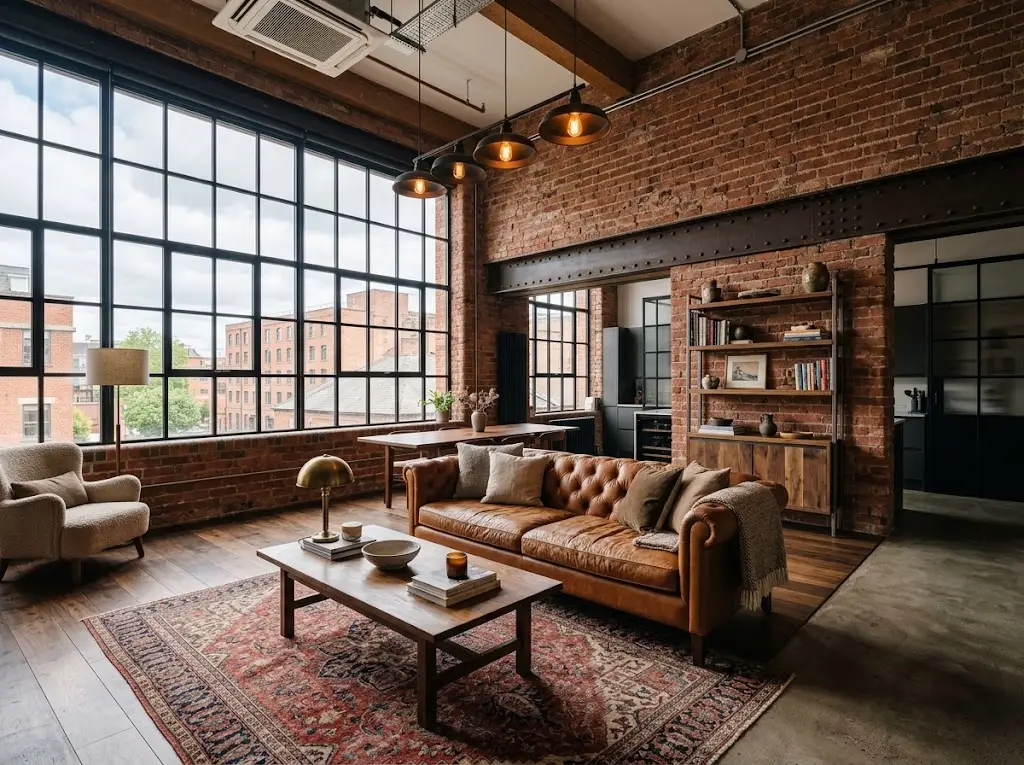
Industrial design as an interior aesthetic takes its inspiration from the converted factories, warehouses and loft spaces of cities like New York, London and Chicago.
These were buildings never designed to be homes. When designers and artists began moving into them in the late 20th century, they embraced what was already there — the raw brick, the steel beams, the concrete floors, the enormous windows — rather than covering it up.
The result was a style defined by:
- Honesty of materials — things look like what they are. Brick looks like brick. Steel looks like steel.
- Celebrating the unfinished — exposed pipes, raw plaster and visible structural elements are features, not flaws.
- The beauty of age — worn surfaces, patina and imperfection are welcomed.
- Scale and openness — industrial spaces feel generous and unconstricted.
- Warmth within rawness — the industrial interior aesthetic always balances cool raw materials with warm light and texture.
The Industrial Interior Palette
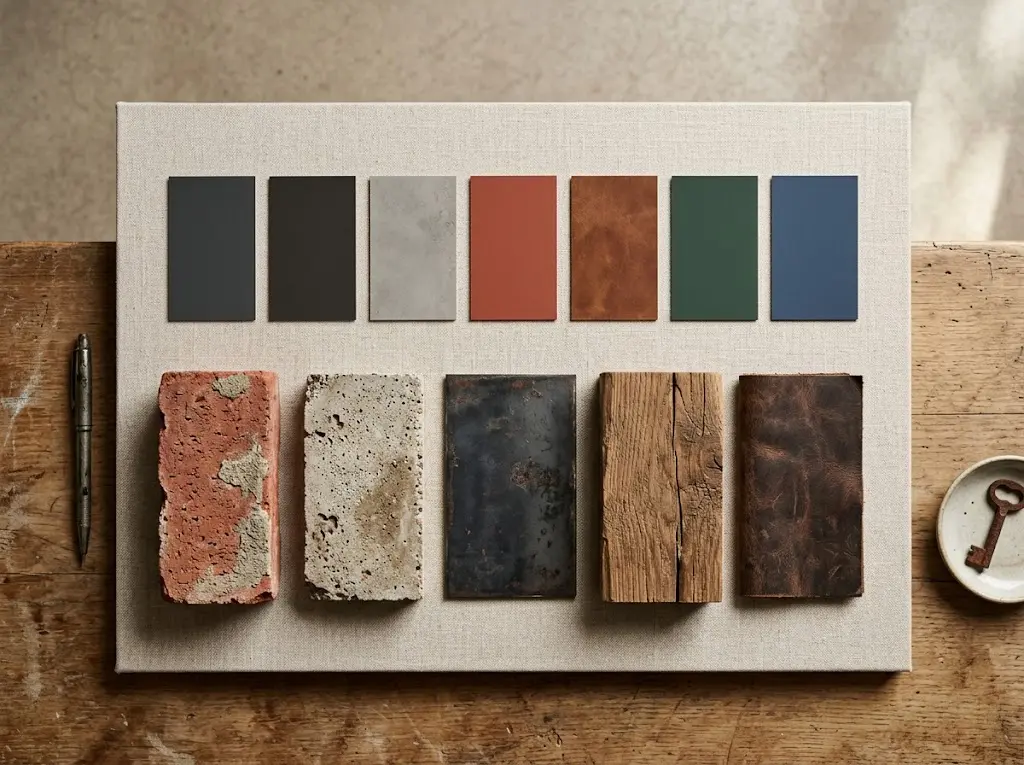
The industrial colour palette is dark, warm and deeply atmospheric.
- Charcoal and dark grey — the backbone of the industrial home design palette.
- Warm black — used on metal elements, window frames and furniture legs.
- Rust and aged brown — the warmth that stops the palette from feeling cold.
- Raw concrete tones — warm grey with a slight yellow or pink undertone.
- Exposed brick red and terracotta — the most distinctive colour in any industrial house design.
- Deep forest green or navy — occasional accents that feel at home against brick and steel.
One important note: industrial interiors use dark tones on walls and structural elements but balance them with warm light sources. The warmth of Edison bulbs against dark walls is one of the most beautiful contrasts in all of interior design.
The Materials That Define Industrial Style Decor
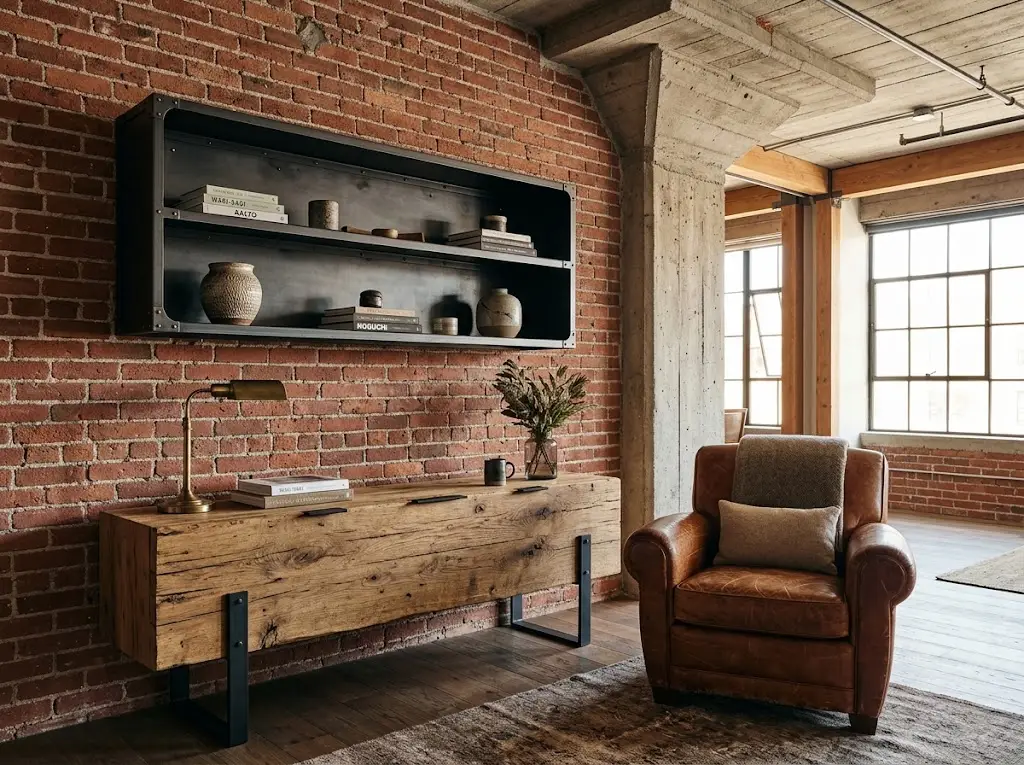
Materials are everything in industrial interior design. Get these right and the style takes care of itself.
Exposed brick is the single most defining material of the industrial interior. Whether original or added, it brings texture, warmth and history to any space.
Concrete — floors, walls, countertops — brings the raw urban quality that defines modern industrial home decor. Polished concrete floors in particular are a hallmark of the style.
Steel and iron — in shelving, window frames, furniture legs, light fittings and railings. The darker and more matte the finish the better.
Reclaimed wood — the essential counterpoint to metal and concrete. Worn, marked, honest wood brings warmth and humanity to an industrial space.
Leather — aged, worn and dark. A leather sofa in an industrial living room is one of the great furniture pairings in interior design.
Glass — large panes, steel framed, industrial windows that flood the space with light while maintaining the structural aesthetic.
Industrial Interior Design Room by Room
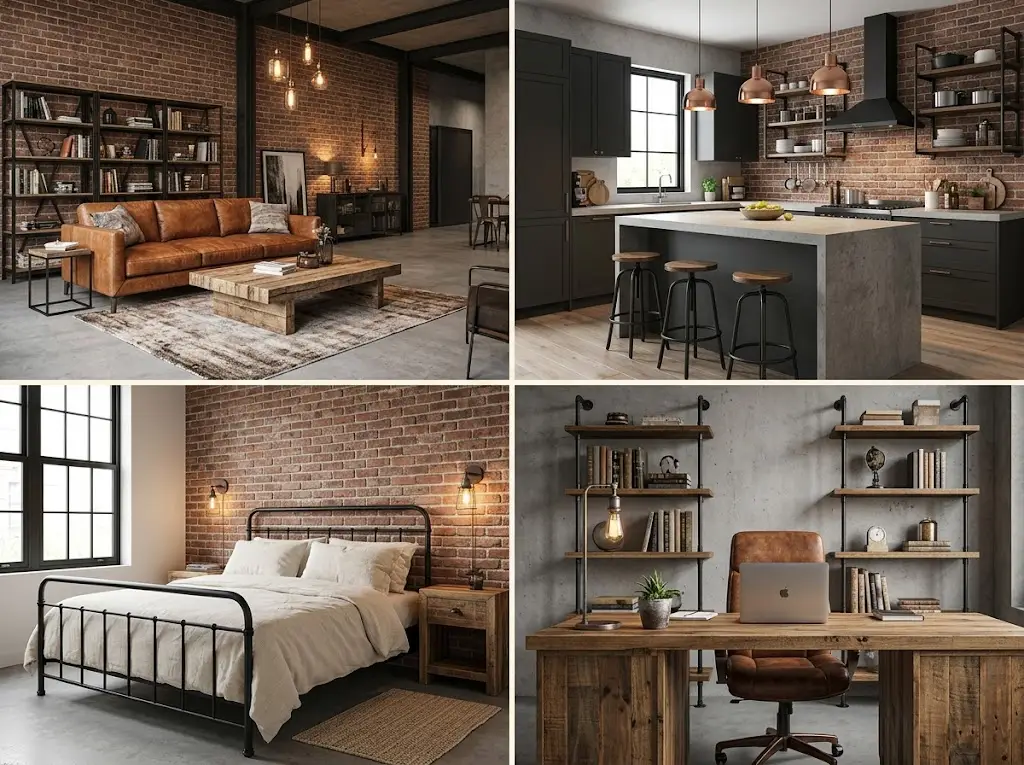
The industrial aesthetic works in every room — but it speaks differently in each one.
Living Room
The living room is where industrial interior design is at its most compelling.
- Dark leather sofa or deep grey velvet as the centrepiece.
- Exposed brick wall as the feature — real or brick effect panels.
- Steel pipe shelving running the length of one wall.
- Edison bulb pendant lights hanging low over the seating area.
- Reclaimed wood coffee table with visible grain and age.
- A large steel-framed window or mirror to reflect the light.
- One large abstract artwork in dark tones on a raw plaster wall.
The industrial living room should feel like the most interesting room you have ever been in.
Kitchen
The industrial kitchen is bold, functional and completely beautiful.
- Dark matte cabinets — charcoal, deep navy or black.
- Concrete or dark stone countertops.
- Open steel pipe shelving instead of upper cabinets.
- Copper or black pendant lights hanging low over the island.
- A deep butler sink in ceramic or brushed steel.
- Exposed brick or raw plaster as the splashback feature wall.
- Matte black taps and hardware throughout.
The industrial style home kitchen does not hide that it is a working kitchen. It celebrates it.
Bedroom
The industrial bedroom is dramatic without being uncomfortable.
- Dark walls — charcoal, deep grey or warm black.
- A metal bed frame in black or aged iron.
- Exposed brick behind the bed as the headboard wall.
- Edison bulb wall sconces as bedside lighting.
- Reclaimed wood as a bedside shelf or floating bedside table.
- Linen or cotton bedding in white or oatmeal — the softness is the contrast.
- A vintage industrial metal locker as wardrobe or storage.
The key in the bedroom is balancing the darkness of the walls and materials with the softness of the textiles. The industrial bedroom should feel dramatic and deeply restful at the same time.
Workspace
The industrial aesthetic was practically designed for a home office.
- A reclaimed wood or steel and wood desk.
- Steel pipe shelving covering an entire wall for books and storage.
- An exposed brick or raw concrete wall behind the desk.
- A vintage industrial desk lamp as the main light source.
- A worn leather desk chair.
- Cable management hidden inside steel pipe conduit — functional and on-brand.
The industrial home office feels serious, creative and completely unlike anywhere else you will work.
How to Bring Industrial Design Into Any Home
You do not need a converted warehouse to achieve an industrial interior aesthetic.
Start with one wall. An exposed brick effect wallpaper or brick slip tiles on a single chimney breast or feature wall transforms a room immediately and sets the industrial tone without a full renovation.
Change your lighting. Edison bulb pendant lights and matte black or copper fixtures are the fastest and most affordable way to shift a room toward an industrial interior design style. Lighting is where the atmosphere lives.
Add steel framed elements. A steel-framed mirror, a black metal shelving unit or a steel-legged dining table introduces the industrial material language without any structural work.
Choose dark hardware. Switching door handles, cabinet pulls and taps to matte black is one of the smallest changes with one of the biggest impacts on the overall feel of any modern industrial home decor scheme.
Layer in reclaimed wood. A reclaimed wood shelf, a worn wood coffee table or a live edge wooden board in the kitchen adds the warmth that stops industrial interiors from feeling cold.
Embrace imperfection. Industrial style decor actively welcomes the worn, the aged and the imperfect. A scratched leather sofa. A chipped ceramic. A rusted metal object. These are not flaws in an industrial home — they are the point.
Shop the Industrial Look
These are the pieces worth having when building an industrial interior — chosen for authenticity, quality and the raw beautiful character that defines this style.
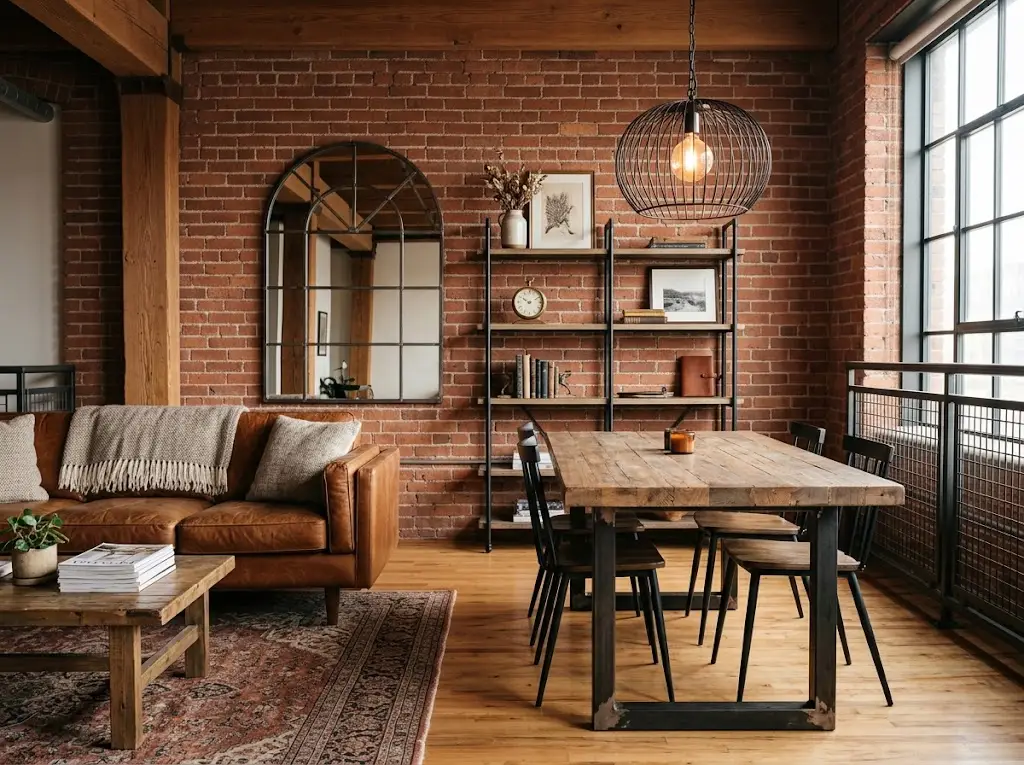
Furniture 🪑
The bones of a great industrial interior — pieces that feel like they belong in the space not placed into it.


Lighting 💡
The single most powerful element in any industrial interior — get the lighting right and everything else follows.

Decor 🏭
The finishing details that make an industrial interior feel considered and complete.


Industrial interior design rewards those who commit to it.
It is not a style you dip into halfway and achieve fully. The brick needs the steel. The steel needs the wood. The darkness needs the warm light. Every element earns its impact by working with every other element in the room.
But when it comes together — when the Edison bulbs glow against the brick and the leather settles into itself and the reclaimed wood holds everything warm — there is nothing quite like it.
Raw. Rugged. And ridiculously chic.
Exactly as promised.
FAQ
Can industrial interior design work in a small home or apartment?
Absolutely. The industrial aesthetic actually suits smaller urban apartments very well — it was born in city spaces after all. In a smaller home, focus on one or two key elements: a brick effect wall, black metal shelving and Edison bulb lighting will create a strong industrial feel without overwhelming the space.
How do I add warmth to an industrial interior?
Warmth comes from three places in an industrial interior aesthetic — reclaimed wood, warm lighting and soft textiles. Linen cushions and throws, Edison bulb light sources, a worn leather sofa and reclaimed wood surfaces all bring genuine warmth to what could otherwise feel cold.
Is industrial interior design expensive to achieve?
It does not have to be. Many of the defining elements of industrial style decor are affordable — Edison bulbs, matte black hardware, steel shelving units and brick effect wallpaper are all accessible price points. The bigger investment pieces — a leather sofa, a reclaimed wood dining table — are worth buying well and buying once.
Can I achieve an industrial look without exposed brick?
Yes. Brick is the most iconic element of the industrial interior design style but it is not the only one. Concrete effect walls or wallpaper, dark matte paint, steel framed elements and Edison bulb lighting create a strong industrial atmosphere even without brick. In a modern industrial home decor scheme, the material combination and the lighting do most of the heavy lifting.