
Two design philosophies. One bedroom.
On paper, Japanese minimalism and Scandinavian warmth should not fit together as naturally as they do. One values emptiness and restraint. The other values cosiness and human comfort. But the japandi bedroom ideas that come from putting them together are some of the most quietly beautiful interiors in contemporary design — because it turns out that both cultures were always reaching toward the same thing from opposite directions.
Peace. Honesty. A space that feels genuinely good to be in without trying to impress anyone.
Affiliate Disclosure: This article contains affiliate links which means we may earn a commission at no extra cost to you. You can check our affiliate disclosure page here.
Two Cultures, One Design Language
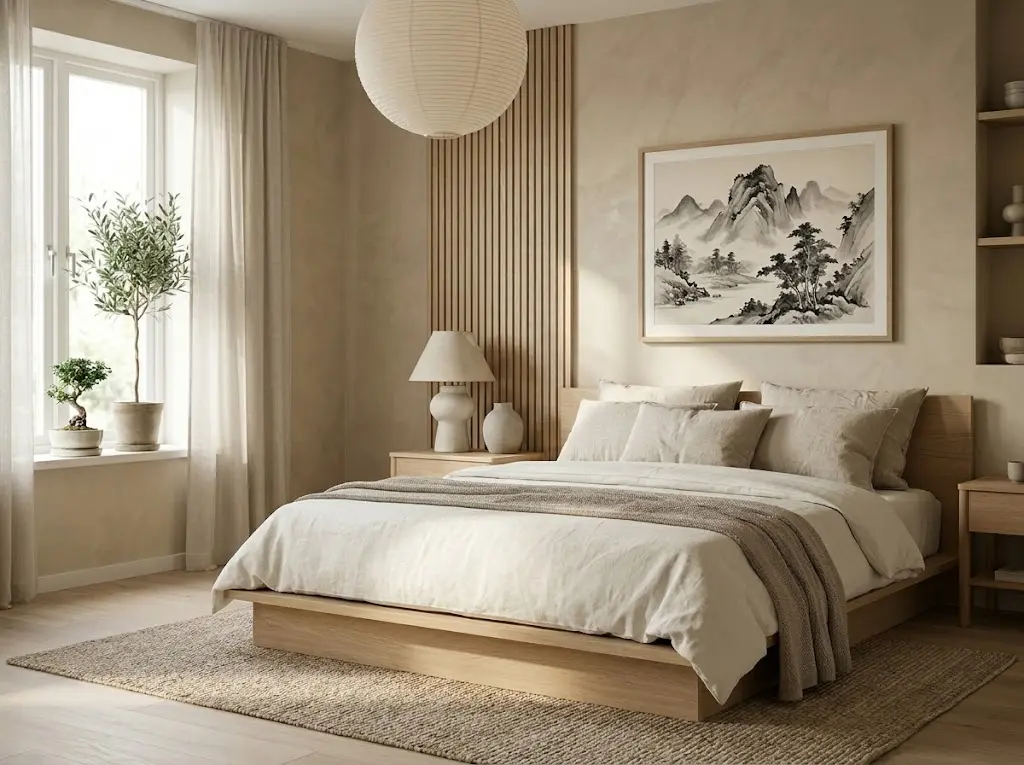
Japandi bedroom design did not come from a marketing brief. It came from people noticing that a Scandinavian home and a Japanese home had the same feeling despite looking completely different — and asking why.
The answer was the same values expressed through different materials:
- Japan brought wabi-sabi — the acceptance of imperfection, the beauty of the natural, the belief that a room should feel settled and unhurried.
- Scandinavia brought hygge — warmth, human comfort, the conviction that a home should feel genuinely good to live in every single day.
The japandi bedroom aesthetic sits exactly where those two meet. Natural materials, warm neutrals, considered emptiness, honest craftsmanship — and always the sense that nothing is there by accident.
14 Japandi Bedroom Ideas Worth Living With
Some of these are structural decisions. Some are the small details that make the whole room finally feel complete. Read through all 14 — your starting point is somewhere in here.
1. The Low Platform Bed in Pale Wood
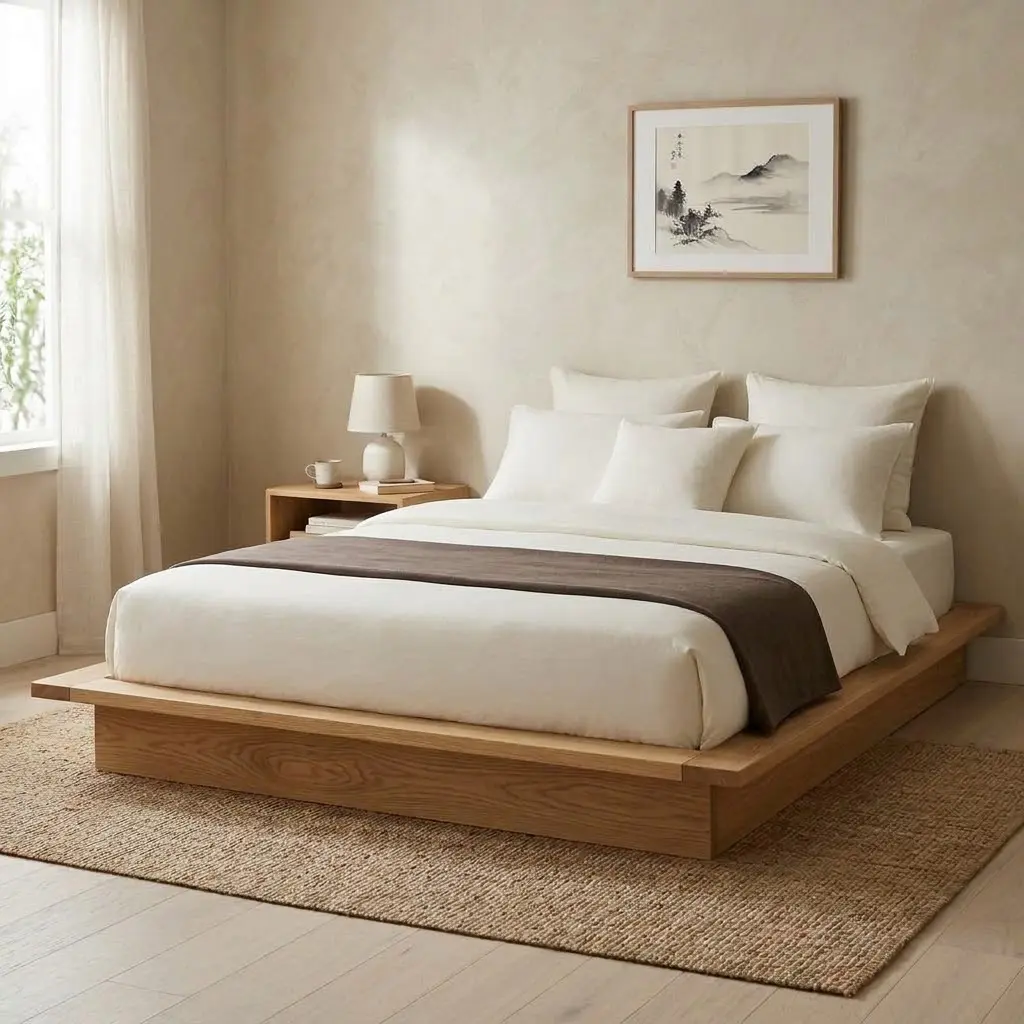
The bed in a japandi bedroom sits close to the ground — low enough to feel settled and unhurried rather than elevated and formal. A low platform bed in pale oak or ash with clean simple lines is the foundation from which every other japandi bedroom decision follows.
- Pale oak or ash — not dark walnut which reads more mid century than japandi.
- No headboard or a very simple one in the same wood.
- Clean horizontal lines with no decorative detail whatsoever.
- Pair with natural linen bedding in warm white or oatmeal.
2. Warm Neutral Walls in Clay or Limewash
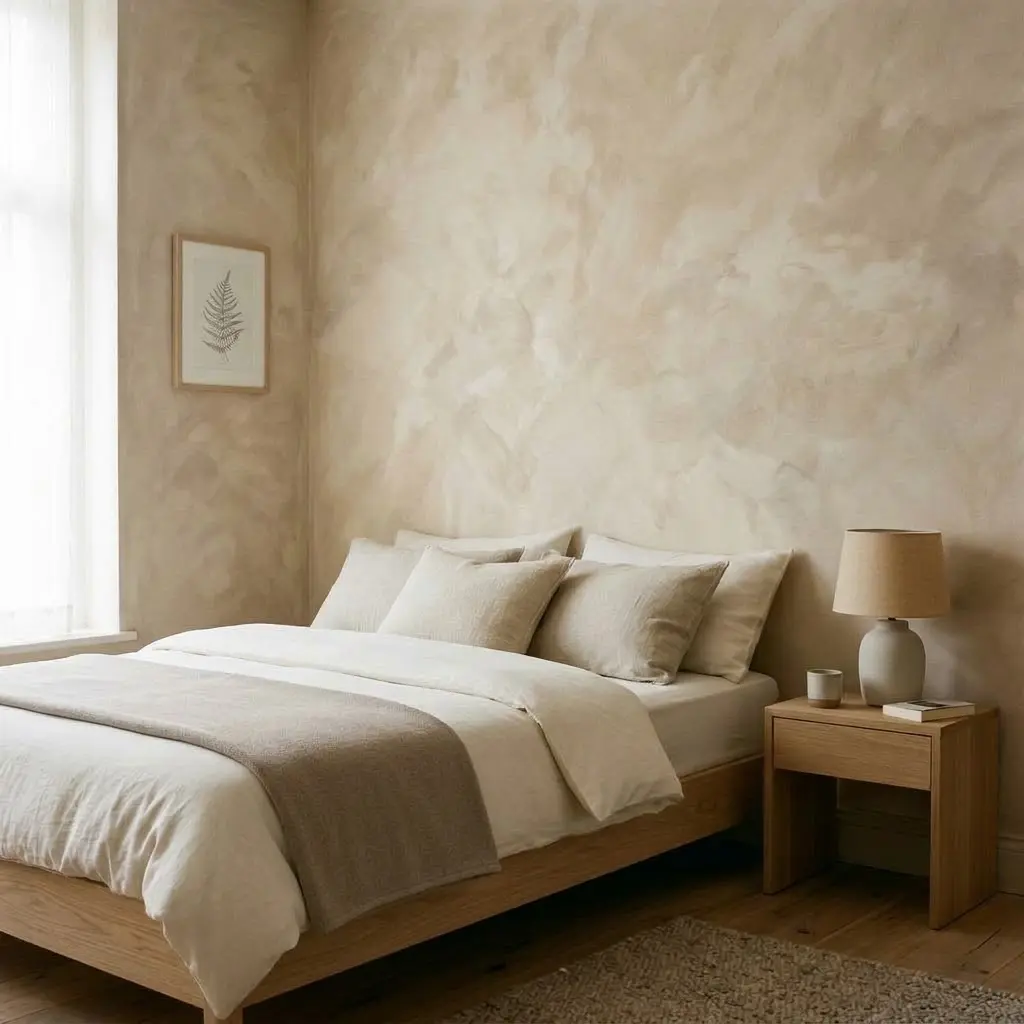
The japandi bedroom does not do bright white. It does warm white, warm greige, warm clay. The difference between a cold minimalist room and a warm japandi one is almost always the undertone of the wall colour — and limewash paint or clay paint achieves the soft mottled texture that gives the walls life without adding colour.
- Warm white with a yellow or pink undertone always over bright white.
- Limewash paint creates a softly mottled surface that shifts with the light.
- Clay paint in warm sand or pale terracotta on the feature wall behind the bed.
- The walls should feel warm from across the room before anything else is noticed.
3. A Single Ceramic Vase with One Stem
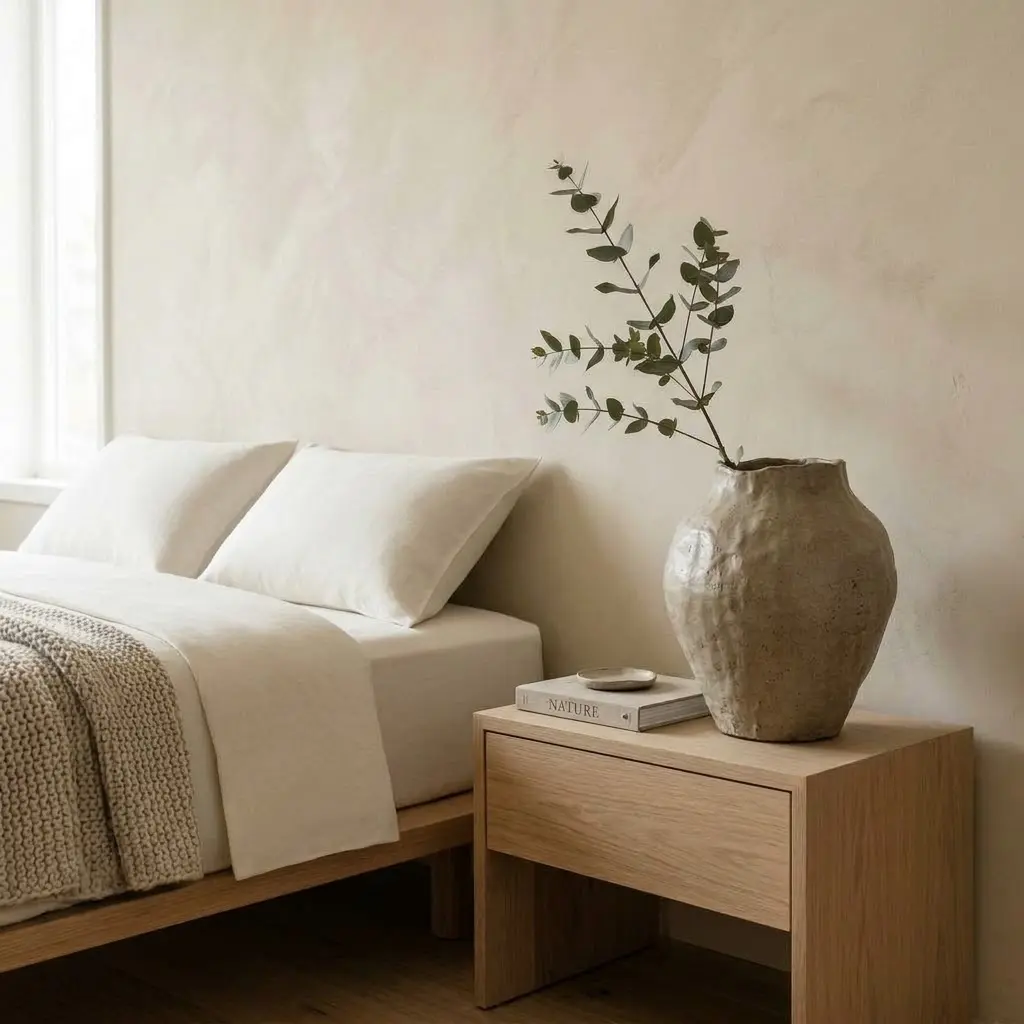
One ceramic vase in a natural matte finish on the bedside surface or the windowsill, holding a single dried stem or branch of eucalyptus. It is the object that makes the room feel inhabited rather than staged — and it is the most quietly Japanese detail in any japandi bedroom decor scheme.
- Matte ceramic in warm stone, warm white or soft terracotta.
- A single dried pampas stem, eucalyptus branch or large leaf.
- The vase should be beautiful enough to stand on its own without anything in it.
- One object on a bedside surface — the restraint is the point.
4. Shoji-Inspired Sliding Panels
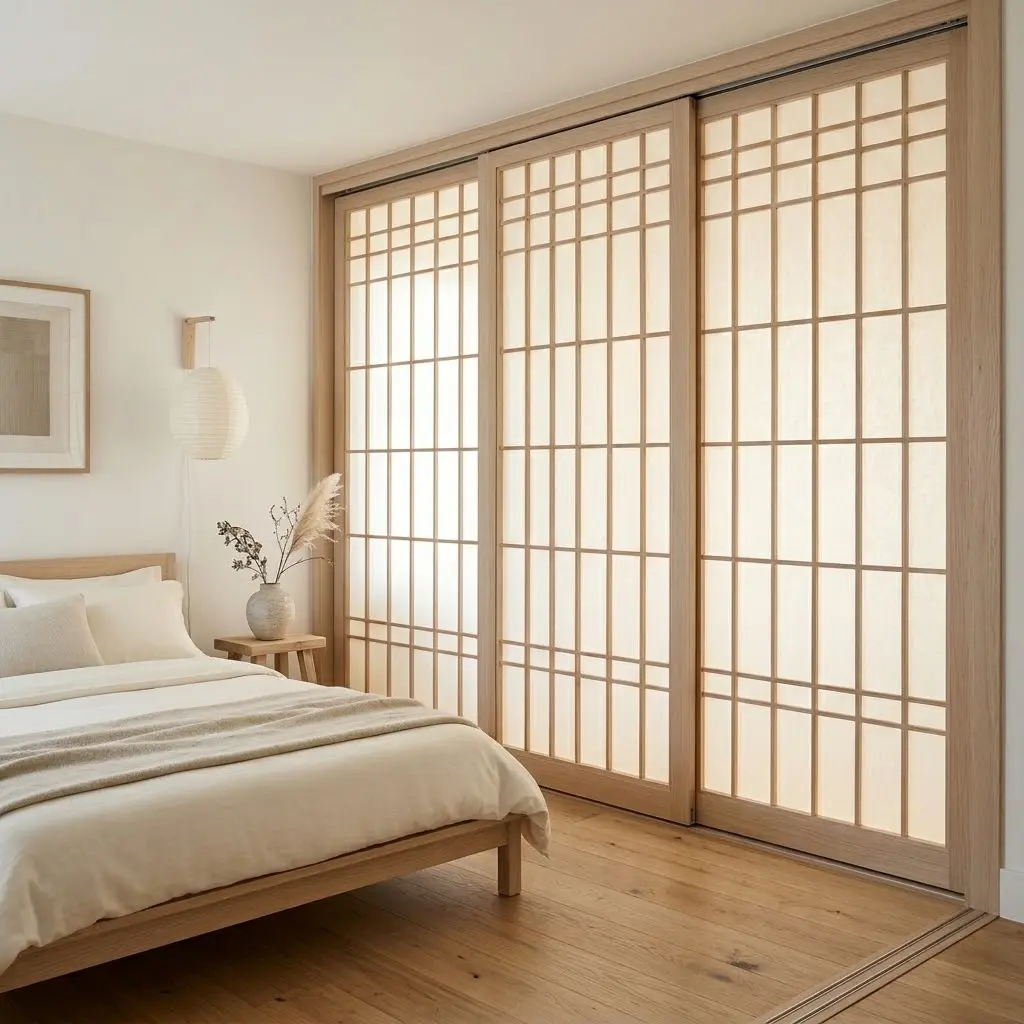
Shoji-inspired sliding panels in a simplified modern form — timber frame with translucent fabric or frosted glass — bring Japanese architectural language into the bedroom in a way that is both functional and deeply beautiful. In a Japanese home, the sliding shoji screen is the most elegant solution to privacy and light control ever designed.
- Natural oak or pale ash timber frame with translucent linen or frosted glass.
- Used as wardrobe doors, room dividers or window treatments.
- The translucent quality filters light softly rather than blocking it entirely.
- A sliding panel wardrobe in this style is one of the most functional japandi bedroom ideas.
5. Natural Linen Bedding Layered Simply
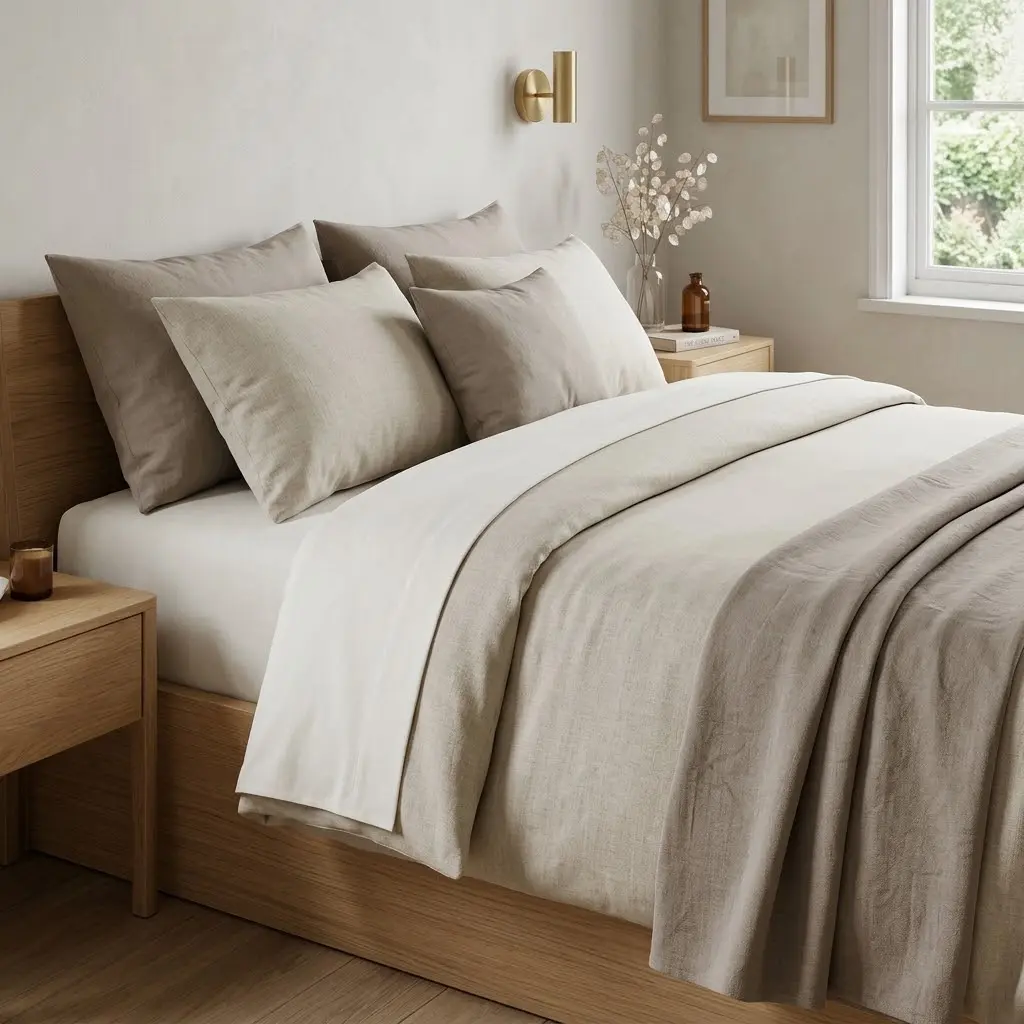
In a cozy japandi bedroom, the bed is made simply — not styled elaborately. Natural linen bedding in warm white, oatmeal or soft clay, layered with a linen or cotton throw at the foot, creates the understated comfort that sits at the heart of both Scandinavian and Japanese bedroom philosophy.
- Stonewashed linen reads more japandi than crisp hotel-style cotton.
- Warm white or oatmeal over cool bright white always.
- A chunky knit throw or linen blanket at the foot adds warmth without complication.
- Two plain cushions maximum — the bed should look rested in not styled.
6. A Wabi-Sabi Object on Every Surface
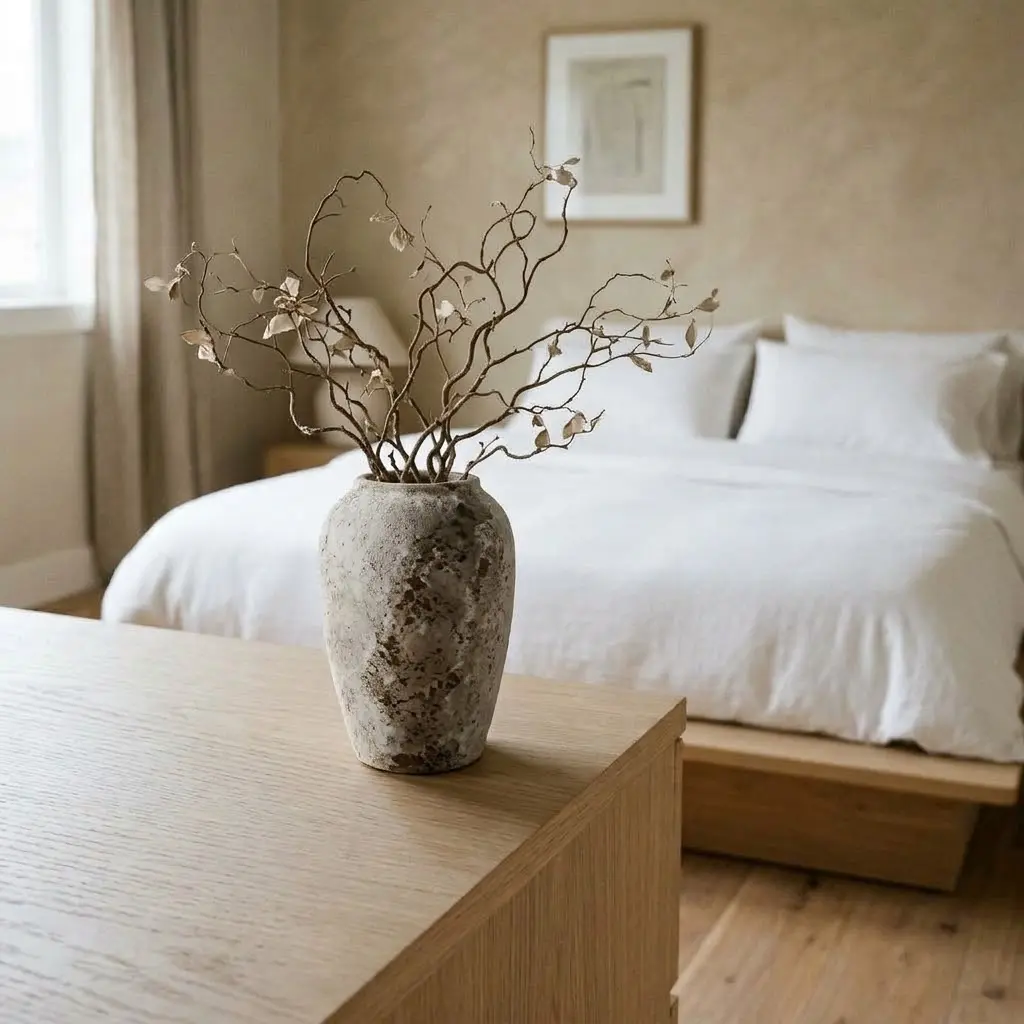
Wabi-sabi — the Japanese philosophy of finding beauty in imperfection — is the detail that separates a japandi bedroom that feels real from one that feels like a photograph. A hand-thrown ceramic bowl, a rough-edged stone object, a twisted driftwood piece on the dresser. Each surface should have one object that is beautiful precisely because it is not perfect.
- Hand-thrown ceramics where the making process is visible in the form.
- Natural objects — stone, wood, dried botanicals — that carry their origin honestly.
- One object per surface — never a collection, always a single considered piece.
- The imperfection should be genuine not manufactured to look imperfect.
7. Warm Ambient Lighting Only
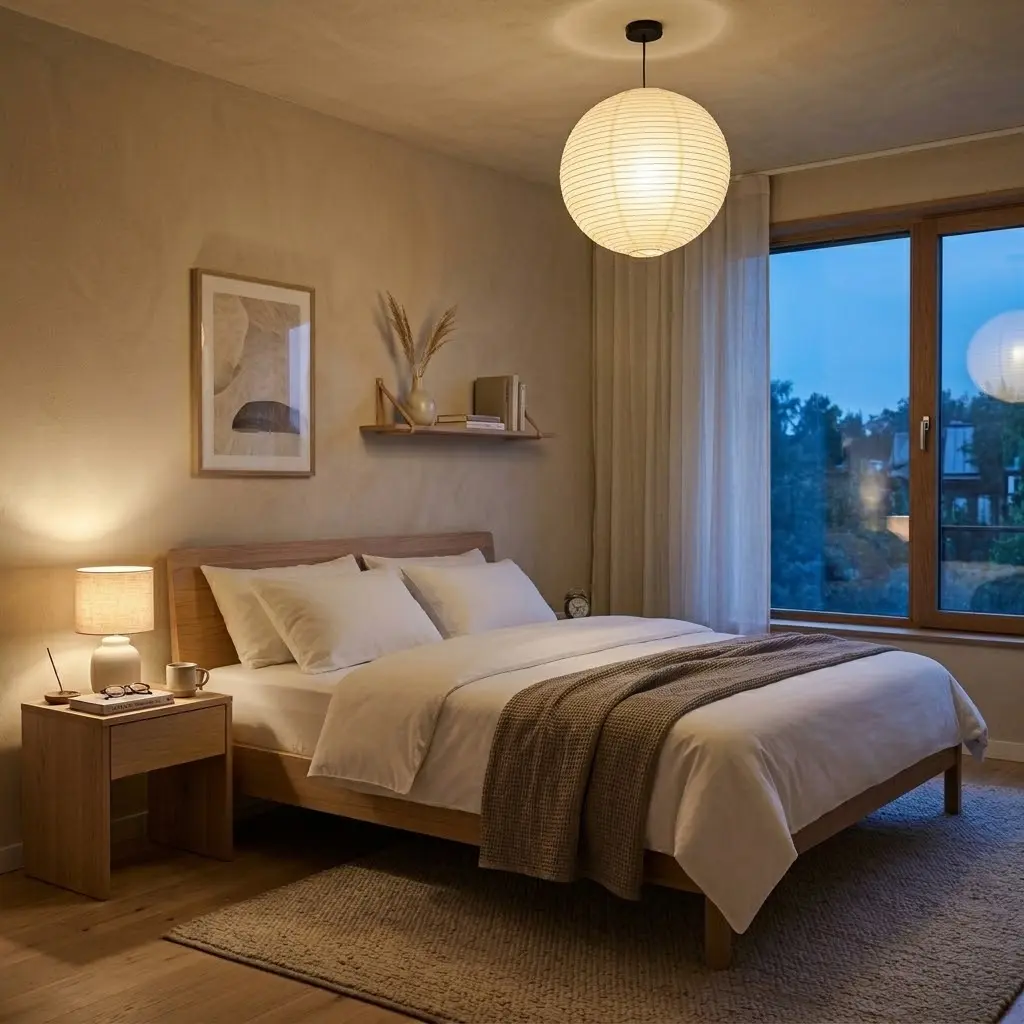
The japandi bedroom has no place for harsh overhead lighting. Warm pendant lights in natural materials — woven rattan, ceramic or handblown glass — hang low over the bedside area, and warm table lamps with linen shades provide the only other light source. The room should never be fully lit — only warmly illuminated.
- 2700K bulb temperature — the warmest available for bedroom use.
- A woven rattan pendant light introduces natural texture as well as warm light.
- Linen shade table lamps on each side of the bed create quiet symmetry.
- No overhead ceiling light — remove it entirely if possible and replace with pendants.
8. A Timber Slatted Feature Wall
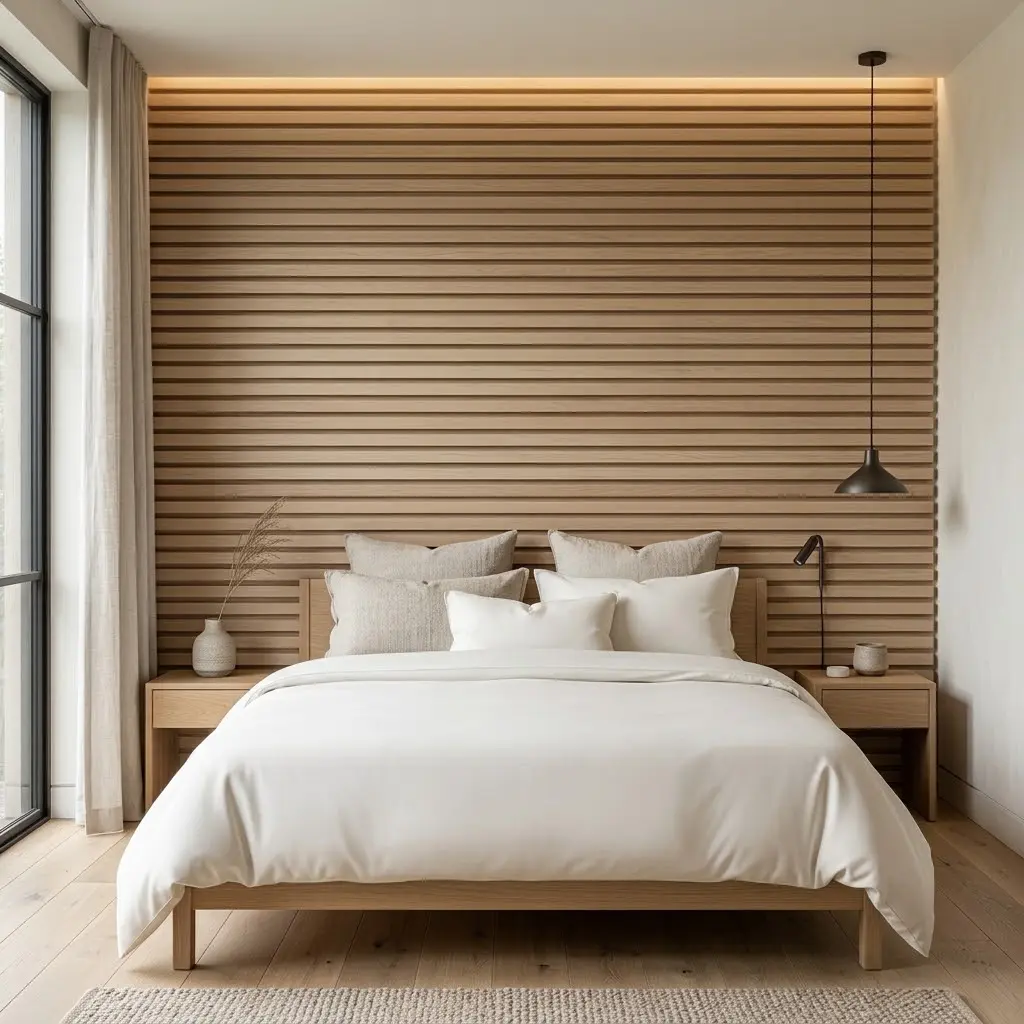
A timber slatted wall — thin horizontal or vertical wood strips in pale oak or warm ash — behind the bed introduces natural texture and warmth in a way that feels entirely at home in a japandi bedroom design. The gaps between the slats catch shadow differently throughout the day, making the wall quietly alive without demanding attention.
- Pale oak or ash — the grain and warmth of the wood is the whole point.
- Horizontal slats suit japandi proportions better than vertical in most bedrooms.
- LED strip lighting behind the slats creates a warm glow at night.
- The wall should feel organic and honest — not decorative for its own sake.
9. Built-In Storage That Disappears
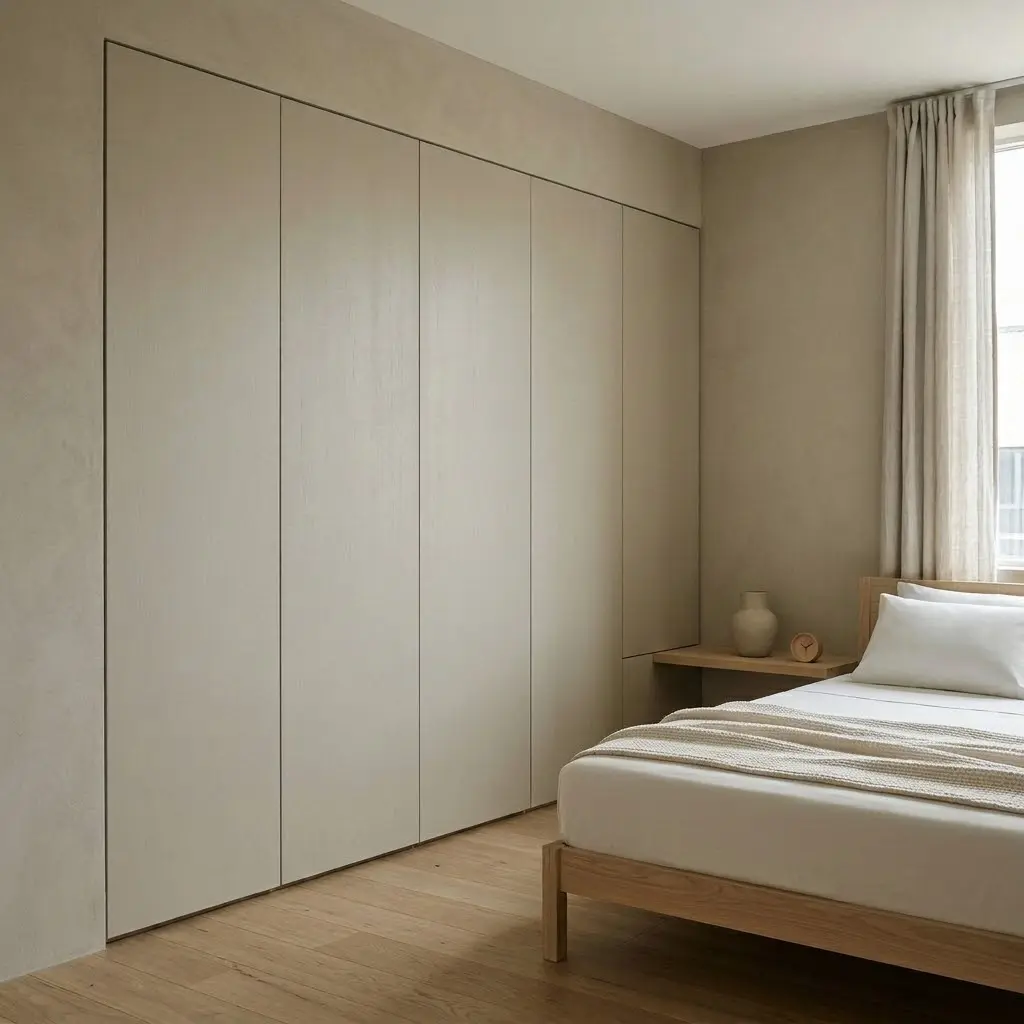
The japandi bedroom is serene in part because nothing is left out that does not need to be there. Built-in wardrobes painted the same tone as the walls disappear into the room rather than interrupting it. Handleless doors, no visible hardware, the same warm neutral throughout — storage that exists but never announces itself.
- Match the wardrobe door colour to the wall exactly.
- Push-to-open or recessed handle doors keep the surface completely clean.
- Integrated bedside storage within the wardrobe run eliminates the need for separate tables.
- The room feels significantly calmer when storage becomes part of the architecture.
10. A Handmade Ceramic Table Lamp
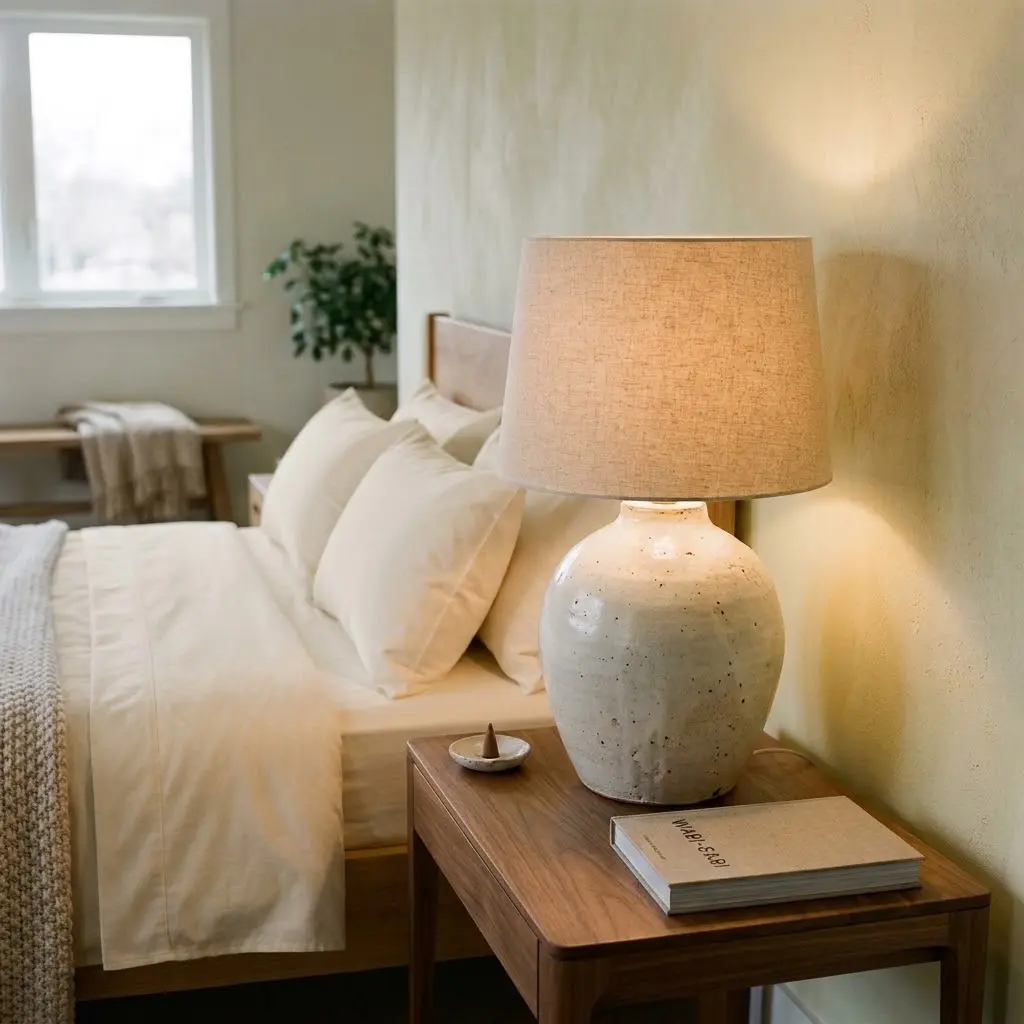
A ceramic table lamp — organic in form, matte in finish, warm in colour — is one of the most beautiful and most japandi-specific objects a bedroom can have. The visible marks of the making process, the slight irregularity of the form, the way the matte glaze catches warm light — these are qualities both wabi-sabi and hygge celebrate equally.
- Organic or slightly irregular form rather than perfectly cylindrical.
- Matte glaze in warm stone, soft terracotta or warm white.
- A linen or cotton drum shade in warm white keeps the light soft.
- One per side — the pair creates the quiet symmetry japandi bedroom design values.
11. Bamboo or Rattan Accents
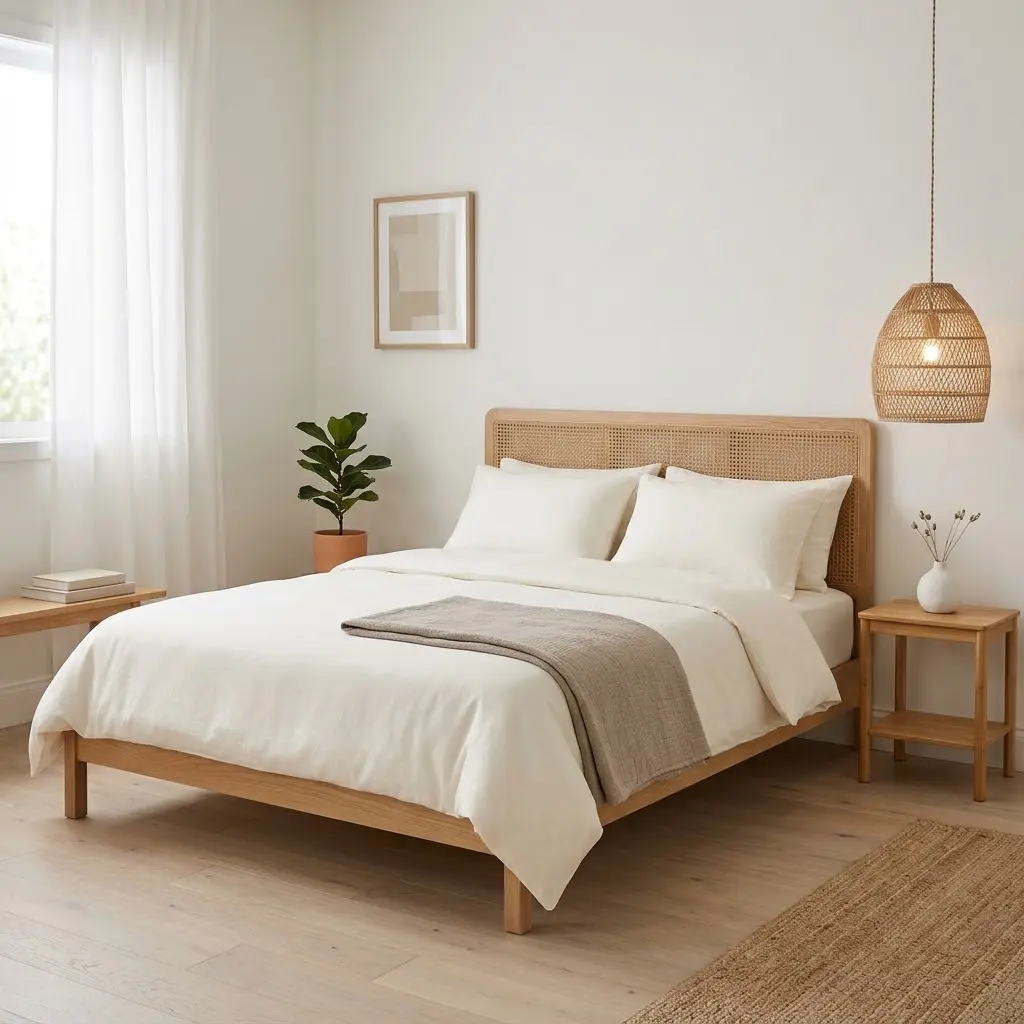
Bamboo and rattan travel easily between Japanese and Scandinavian design traditions — which makes them perfect for the warm japandi bedroom. A rattan pendant light, a bamboo side table, or a woven rattan headboard introduces organic texture without introducing colour or pattern that would complicate the calm palette.
- Natural undyed rattan and bamboo — no painted or lacquered versions.
- A rattan pendant light above the bedside area works as both light and texture.
- A rattan tray on the dresser surface keeps styling contained and considered.
- One or two rattan pieces — enough to read as intentional, not so many it becomes a theme.
12. A Simple Meditation or Stillness Corner
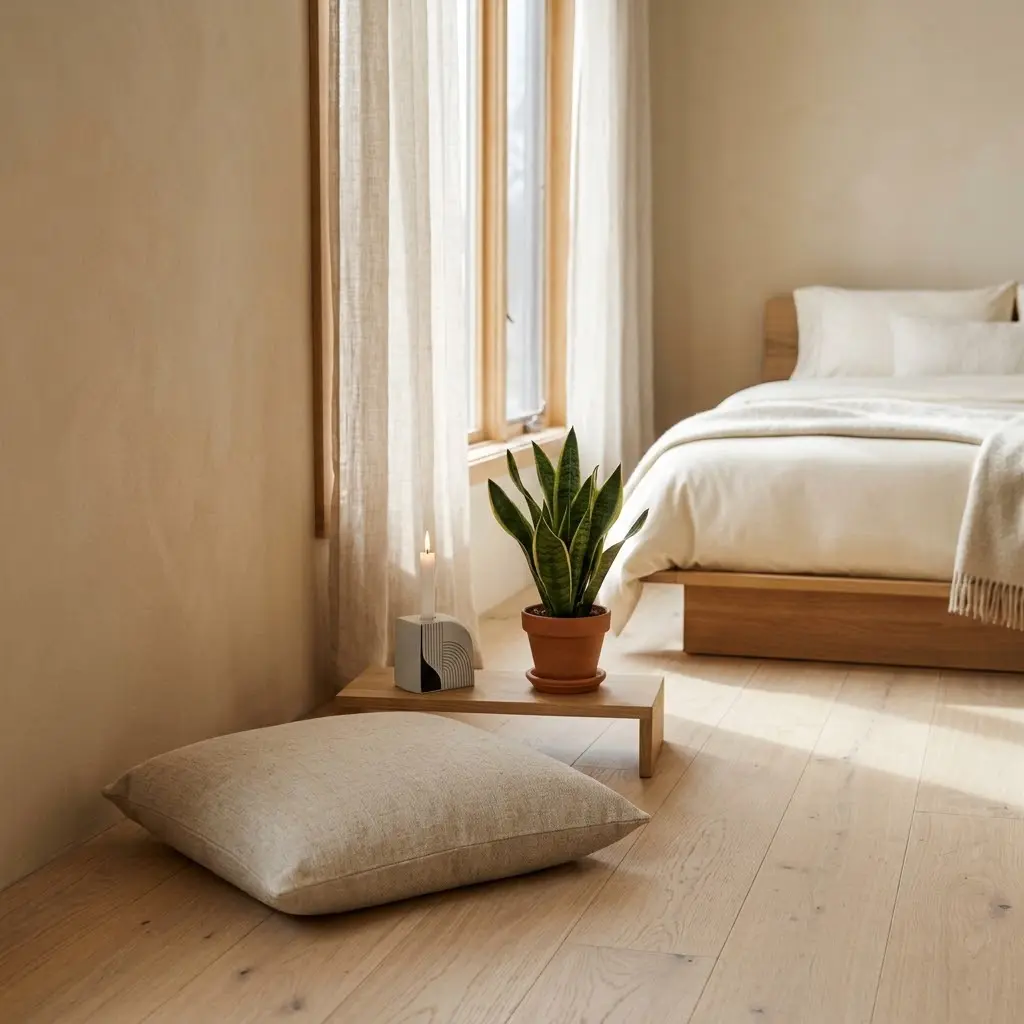
One corner of the bedroom left deliberately simple: a linen floor cushion, a low shelf with a ceramic candle and one small plant, enough space to sit quietly. The Japanese concept of ma — meaningful empty space — is what makes this idea so specifically japandi. The corner that exists not to hold things but to hold space.
- A zabuton meditation cushion or simple linen floor cushion in a natural tone.
- A low shelf or tray with a soy wax candle in a ceramic vessel and one plant.
- Natural window light is the right light for this corner — no artificial source needed.
- The stillness corner should be the calmest point in an already calm room.
13. Sheepskin and Wool Layered on the Floor
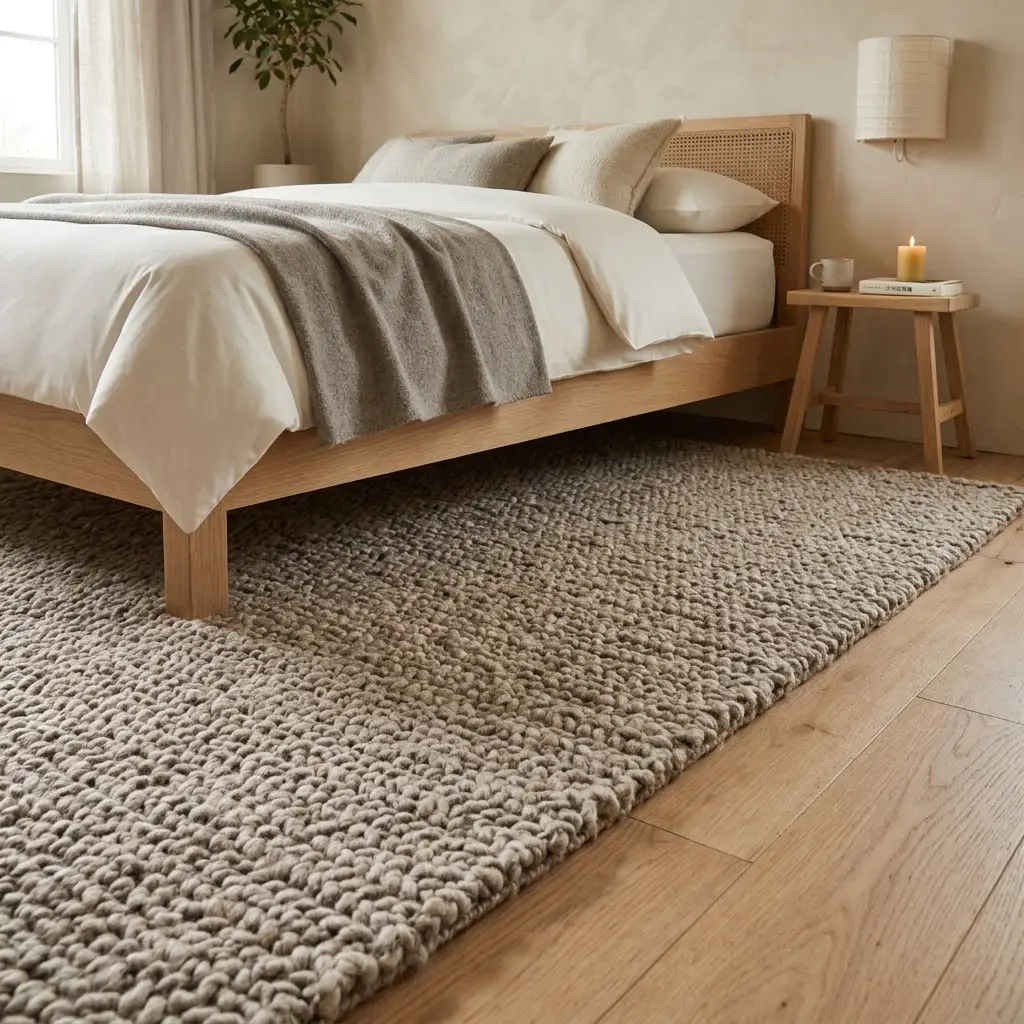
A natural sheepskin beside the bed, or a wool rug in a warm neutral laid over pale wood floors, brings the hygge warmth of Scandi design into a japandi bedroom without disrupting the quiet material palette the style depends on. In a Scandinavian bedroom, bare feet should never land on cold floor — and japandi agrees completely.
- Natural sheepskin beside the bed — the first thing feet touch in the morning.
- A large wool rug in warm greige or oatmeal over pale wood floors.
- Natural undyed wool rather than synthetic alternatives.
- The floor layer should add warmth without adding colour or pattern.
14. One Large Piece of Japanese-Inspired Art
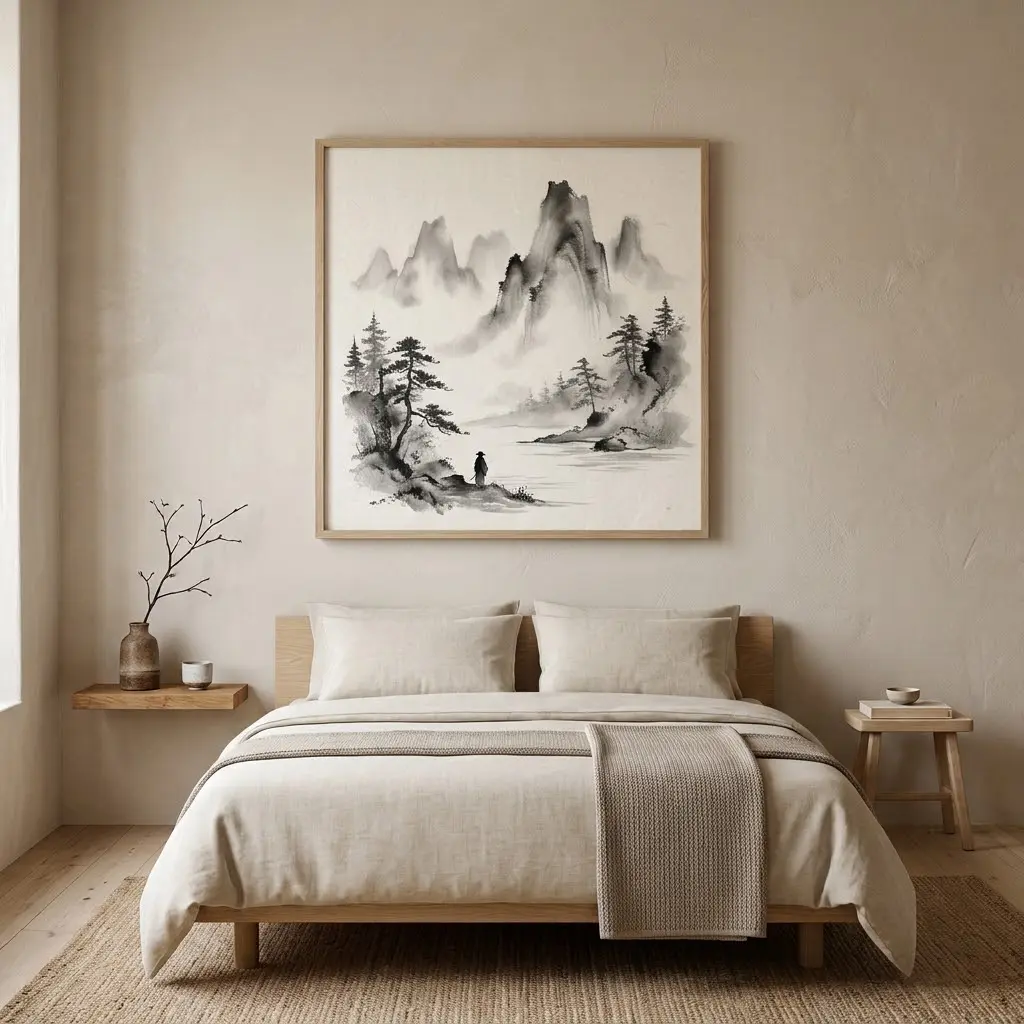
The japandi bedroom earns its final layer through one considered piece of art — not a gallery, not a collection, one large work that communicates something the rest of the room cannot say through materials alone. A large ink brush painting, an abstract landscape in earthy tones, or a framed Japanese botanical print in a simple pale oak frame completes the room without competing with it.
- One large format piece always over several smaller ones in this context.
- Ink brush, abstract landscape or botanical print in warm earthy or monochrome tones.
- A simple pale oak or natural wood frame — no black, no gold.
- Position above the bed or on the wall opposite where it can be seen from the bed.
Some bedrooms try to say too many things at once. The japandi bedroom says one thing — quietly, completely and with total conviction.
That everything in a room should be honest. That materials should look like what they are. That empty space is not something to be filled but something to be valued. That warmth and restraint are not opposites — they are, when handled well, exactly the same thing.
These 14 japandi bedroom ideas are not two styles competing in one room. They are one philosophy, expressed in two voices, arriving at the same beautiful answer.
FAQ
What is the difference between japandi and minimalist bedroom design?
Minimalism prioritises emptiness and reduction for their own sake. Japandi prioritises honesty and warmth — the room is edited, but what remains is always warm, natural and human. A japandi bedroom feels lived-in in a way that cold minimalism does not.
What colours define a japandi bedroom?
Warm whites, oatmeal, soft clay, warm greige, muted sage and pale terracotta. Always warm undertones — never cool or bright white. The palette is narrow and cohesive with no strong colour used anywhere.
What materials are most important in a japandi bedroom?
Pale oak, ash and bamboo for furniture. Natural linen and wool for textiles. Handmade or matte ceramic for objects. Stone and dried botanicals for styling. Every material should be natural, honest and slightly imperfect in the way natural materials always are.
Can japandi work in a small bedroom?
Very well. The low furniture, neutral palette and deliberate use of empty space make small rooms feel significantly larger. Built-in storage that disappears into the walls and floating shelves instead of bedside tables give the floor breathing room that compact spaces depend on.