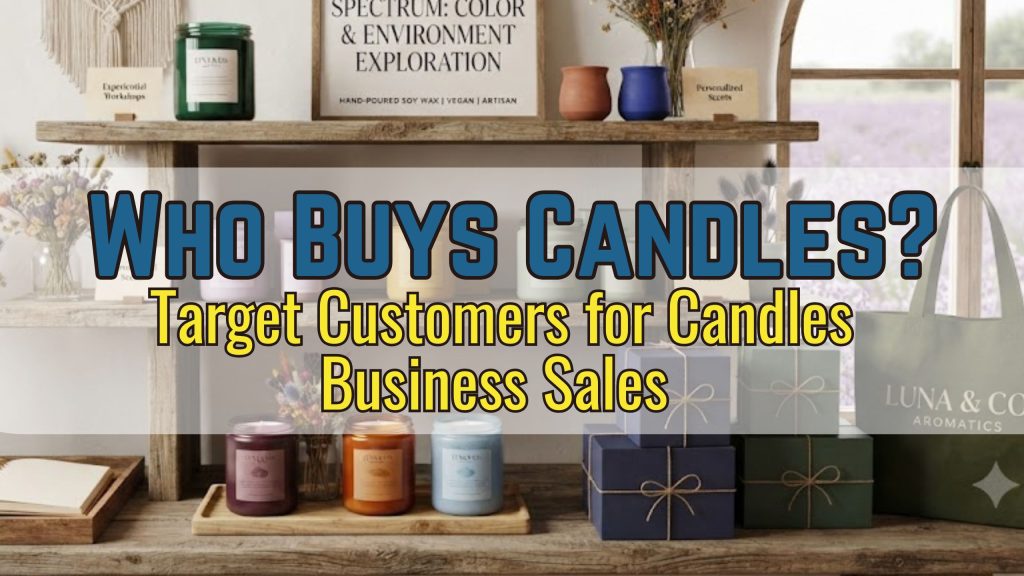
Understanding your target customers for candles is the single most important thing you can do for your candle business — and it is the thing most people skip entirely when they are starting out. They make a product they love, photograph it beautifully, post it online, and then wonder why nobody is buying. The product is rarely the problem. The problem is that they are talking to everyone, which in practice means they are reaching nobody.
The candle market is enormous — worth billions globally and still growing — but enormous markets are won by the businesses that get specific, not the ones that stay vague. Knowing exactly who your customer is, what they care about, what they are willing to spend, and where they spend their time online is what separates a candle business that quietly fizzles out from one that builds a real, loyal following.
This article breaks down the real buyer profiles in the candle market — not generic demographics, but the actual people, their motivations, their habits, and crucially, how to reach them. Whether you are just beginning to think about your candle business niche or you are already selling and looking to sharpen your focus, this is where clarity starts.
Affiliate Disclosure: This article contains affiliate links which means we may earn a commission at no extra cost to you. You can check our affiliate disclosure page here.
Why Knowing Your Target Customers for Candles Changes Everything
Most candle business for beginners advice focuses on the product — which wax to use, which wicks to buy, how to get a good scent throw. Very little of it focuses on who is actually going to buy what you make. That is a fundamental gap, because every decision you make about your product, your pricing, your packaging, and your candle business branding should flow directly from a clear picture of your customer.
When you know your target audience, everything gets easier and more effective.
Your product decisions become clearer: A customer buying candles as luxury self-care gifts wants something that looks expensive and smells sophisticated. A customer buying candles for their yoga studio wants something clean, grounding, and minimalist. These are different products, different price points, different packaging — and without knowing who you are making for, you end up making something that satisfies neither.
Your marketing stops being guesswork: When you know your ideal customer profile, you know which platforms they use, which words resonate with them, which aesthetics stop their scroll, and which values make them choose you over the brand next to you.
Your brand builds real loyalty: People do not return to candle brands because the candle was nice. They return because the brand felt like it was made for them. That feeling only happens when a business has been genuinely specific about who it is speaking to.
This is not about excluding people. It is about being so clearly right for someone that they feel found.
The Real Target Customers for Candles — And How to Reach Them
1. The Self-Care Seeker
The largest single buyer group in the candle market — and the one most candle businesses accidentally try to serve without ever properly understanding.
This customer buys candles as part of a deliberate ritual. The bath. The wind-down. The Sunday afternoon that is specifically carved out from the rest of the week. For them, a candle is not décor and it is not fragrance — it is permission. Permission to stop, to be present, to give themselves something that is just for them.
Who they are:
- Predominantly women, 25–45
- Often in demanding jobs or caregiving roles
- Highly active on Instagram and Pinterest
- Motivated by mood, ritual, and the feeling of a product rather than just its function
What they spend: Comfortably £15–£40 on a candle they consider a treat. Will pay more for packaging that feels like a gift to themselves.
What wins them over:
- Scent storytelling — not just “vanilla and amber” but what that scent evokes, what moment it belongs to
- Beautiful, considered packaging that makes the unboxing feel like a small occasion
- Brand language that understands exhaustion and the need to restore
How to reach them: Instagram reels showing the ritual, not just the product. Pinterest boards built around the mood your candles create. Email marketing that reads like a note from a friend who gets it.
2. The Home Décor Enthusiast
This customer does not think of themselves as a candle buyer. They think of themselves as someone who curates their space — and candles are part of that curation.
For the home décor enthusiast, a candle is a design object first and a fragrance product second. They are drawn to vessels that work as permanent fixtures in a room — interesting ceramics, architectural shapes, muted or deliberately bold colourways that sit within a considered interior palette. When the candle burns down, they keep the vessel.
Who they are:
- Mix of genders, 28–50
- Highly visual — active on Instagram, Pinterest, and increasingly on TikTok through home décor content
- Willing to invest in objects that elevate their space
- Often buy multiples — one to use, one to gift, one to style on a shelf unlit
What they spend: £25–£60 without hesitation if the vessel is exceptional. Price resistance is low when the aesthetic is right.
What wins them over:
- The vessel design — this is often more important than the fragrance
- Limited edition colourways and seasonal releases that make collecting feel intentional
- Photography that shows the candle living inside a real, beautiful space
How to reach them: Interior design hashtags and communities. Collaborations with interior designers or home stylists. Styling your product photography inside real interiors rather than flat lays.
Candle business tip: If this is your target audience, your vessel is your product. The wax and fragrance need to be excellent — but the ceramic, glass, or concrete it lives in is what makes the sale.
3. The Gifter
Possibly the most commercially valuable customer in the candle market — because they buy repeatedly, seasonally, and in multiples.
The gifter does not buy candles for themselves. They buy candles because candles are one of the safest, most reliably appreciated gifts in existence — and they have figured that out. This is the customer who buys a candle when they are invited to dinner, when a friend has a baby, when a colleague leaves, when they need a thank you that feels considered without requiring them to know the recipient’s taste in any specific way.
Who they are:
- Broad age range — 25–60
- Often time-poor, decision-fatigued, and looking for something that looks expensive and feels thoughtful without requiring extensive research
- Motivated heavily by packaging, gifting presentation, and perceived value
- Frequently return to the same brand once they have found one that works
What they spend: £20–£50 for personal gifts. £15–£30 for professional or hostess gifts. Will pay a premium for gift wrapping, gift messaging, and beautiful presentation without hesitation.
What wins them over:
- Gift-ready packaging that does not require additional wrapping
- Clear gifting language on your website and social — “the perfect gift for” copy works directly on this buyer
- Gift sets and bundles that solve the decision for them
- Fast, reliable shipping — gifters are often buying under time pressure
How to reach them: Google search ads around gifting seasons — Mother’s Day, Christmas, Valentine’s Day. Pinterest gift guides. A dedicated gifting section on your website with occasion-based navigation.
Small business tip: Build a gift wrapping option into your checkout from day one. For the gifter, this is not a nice extra — it is often the deciding factor between buying from you or going elsewhere.
4. The Wellness and Mindfulness Community
A fast-growing segment of the candle market — and one with unusually strong brand loyalty once you earn it.
This customer sits adjacent to the self-care seeker but is motivated by something more specific — they are actively building a practice. Meditation. Breathwork. Journalling. Yoga. For them, a candle is not just mood — it is a cue. It signals to their nervous system that a particular kind of time is beginning. The scent becomes part of the practice itself, which means they return to the same candle repeatedly and are deeply resistant to switching.
Who they are:
- Women and men, 25–50
- Active in wellness communities online and in person — yoga studios, meditation apps, breathwork circles
- Values-driven buyers — they care deeply about ingredients, sourcing, and what a brand stands for
- Likely to read ingredient lists and ask questions before buying
What they spend: £20–£45 for a candle they consider part of their practice. Will pay significantly more for something that feels genuinely aligned with their values.
What wins them over:
- Clean, transparent ingredients — natural wax, phthalate-free fragrance, cotton wicks, clearly stated
- Intentional scent storytelling tied to specific mental states — grounding, clarity, release, focus
- A brand that feels like it shares their values, not just their aesthetic
- Partnerships with yoga studios, wellness practitioners, or mindfulness platforms
How to reach them: Pinterest wellness content. Instagram with genuine mindfulness messaging, not just aesthetics. Wholesale relationships with yoga studios and wellness spaces are particularly powerful for this segment.
5. The Occasion and Event Buyer
Often overlooked by small candle businesses — and one of the highest volume opportunities in the entire market.
This customer is not buying a candle. They are buying a component of something bigger — a wedding, a corporate event, a baby shower, a product launch, a branded gifting campaign. They need candles in quantity, they need them to be consistent, and they need them to be customisable. When you serve this customer well, a single relationship can represent more revenue than dozens of individual retail sales.
Who they are:
- Wedding planners and brides
- Event coordinators
- Corporate marketing and HR teams buying branded gifts
- Hospitality businesses — hotels, spas, restaurants — buying for atmosphere or retail
What they spend: Highly variable — but order values are typically £200–£2,000+ and repeat buying is common once a relationship is established.
What wins them over:
- Custom labelling and personalisation options
- Minimum order quantities that are accessible for small events (not just bulk wholesale)
- Reliability and consistency — colour, scent, and finish must be identical across an order
- A professional, straightforward process for custom quotes
How to reach them: Wedding industry directories and bridal fairs. LinkedIn for corporate gifting outreach. A dedicated wholesale and events page on your website with a simple enquiry form.
Candle business tip: Even if you are a one-person operation, having a clear custom and wholesale offer makes you accessible to this market. You do not need a factory — you need a process and a professional presentation.
6. The Eco-Conscious Consumer
One of the fastest-growing segments in the candle market — and one with the highest tolerance for premium pricing when values are clearly communicated.
This customer is not just buying a candle. They are making a statement about what they refuse to support — petroleum-based products, synthetic chemicals, unsustainable supply chains, excess packaging. They have done the research, they know what greenwashing looks like, and they are not fooled by vague “natural” claims without substance behind them.
Who they are:
- Broad age range but skewing younger — 22–40
- Highly educated about ingredients and supply chains
- Active in sustainability communities online
- Vocal advocates when they find a brand they genuinely trust — powerful word of mouth
What they spend: £18–£50 for a candle with genuine credentials. Will pay above market rate for verified ethical sourcing, plastic-free packaging, and transparent ingredient lists.
What wins them over:
- Specific, verifiable claims — not “natural” but “100% coconut wax, phthalate-free fragrance oils, FSC-certified wooden wicks, recycled glass vessels”
- Packaging that reflects the values — recycled materials, minimal plastic, compostable wrapping
- A brand story with genuine substance — why you source what you source, who you source it from
- Refill programmes and vessel return schemes
How to reach them: Sustainability-focused communities on Instagram and Reddit. Content marketing around ingredient transparency and sourcing. PR in sustainable lifestyle publications and blogs.
Candle business branding note: Authenticity is not optional for this buyer. One greenwashing misstep and they are gone — and they will tell people. Get the substance right first, then communicate it.
How to Use These Profiles to Build Your Candle Business
Reading through these profiles, you may already feel a pull toward one or two of them. That pull is useful information. The candle business niche that works long-term is rarely the one that seems most logical — it is the one that genuinely excites you, because that excitement comes through in every product decision, every piece of copy, and every interaction with a customer.
Start with one primary profile. Trying to serve all six of these buyers simultaneously from the beginning will produce a brand that resonates with none of them. Pick the one that fits most naturally with what you make and how you want to communicate, and build everything — product, packaging, pricing, photography, platform — around that person first.
Your secondary audience will find you. A self-care brand done exceptionally well will attract gifters naturally, because gifters are always looking for brands that feel considered. An eco-conscious brand with beautiful packaging will attract home décor enthusiasts. Specificity does not limit your market — it anchors your brand in a way that allows it to grow outward from a clear centre.
Revisit these profiles as you scale. The ideal customer profile that gets your business off the ground may not be the primary audience you serve at scale. As you gather real data — who is actually buying, what they are saying in reviews, what questions they ask before purchasing — let that information refine your understanding of who your customer really is.
Products and Tools Worth Having for Your Candle Business
Whether you are just starting out or refining a business that is already running, these are the tools that make the biggest practical difference to how professionally and efficiently you operate.
A Professional Label Printer— custom labels are one of the fastest ways to make a small candle business look genuinely professional. A dedicated label printer gives you the flexibility to test different designs, produce small runs affordably, and update your branding without minimum order commitments from external printers. For a candle business for beginners, this is one of the earliest investments that pays for itself.
Kraft and Recycled Packaging Supplies — for eco-conscious and gifting audiences particularly, packaging is part of the product. Kraft boxes, recycled tissue paper, compostable void fill, and minimal plastic wrapping communicate your values before the customer has even opened the box. Buying in bulk from a specialist packaging supplier significantly reduces per-unit costs as you scale.
A Postal Scale — accurate postage is one of those small business tips that sounds mundane and saves real money. Overestimating postage on every order adds up to a meaningful cost over a year. A reliable postal scale connected to a shipping platform lets you charge accurately and choose the most cost-effective service for every order size.
Product Photography Lightbox or Ring Light — consistent, well-lit product photography is the single biggest visual differentiator between candle businesses that look professional and those that do not. A lightbox for clean white-background shots and a ring light for lifestyle photography gives you the tools to produce content that matches the quality of brands spending far more on photography.
Candle Business Accounting Software — from the very first sale, tracking income and expenses properly is non-negotiable. Purpose-built small business accounting software makes tax preparation straightforward, shows you your real margins per product, and gives you the financial clarity to make confident decisions about pricing, stock, and growth.
A Heat Gun — for wax seal stamping on packaging, custom gift wrapping details, and label finishing, a heat gun gives you a level of handmade detail that resonates particularly strongly with gifting and self-care buyers. Small finishing touches like this are often what turns a first-time buyer into a repeat customer and a repeat customer into someone who recommends you to everyone they know.
You can find specialist candle business supplies through dedicated craft and candle making retailers, packaging suppliers, and small business tool stores. For labelling and packaging in particular, comparing a specialist supplier against a general marketplace often reveals significantly better quality and more sustainable options at comparable prices.
Your target customers for candles are not an abstract marketing exercise — they are real people with specific needs, specific aesthetics, and specific reasons for choosing one brand over another. The candle businesses that build something lasting are the ones that get genuinely curious about those people, stay close to what they care about, and build every decision around serving them well. Start there, and the rest of the business becomes considerably clearer.
Related: