What to do with leftover candle wax is one of those questions that seems small until you realise how much wax you have been quietly throwing away. The last inch of a tunnelled pillar. The cloudy pool at the bottom of a jar you cannot burn anymore. The wax melts that have lost their scent but still have plenty of life left in them. Most people scrape it out and bin it — and most people are throwing away something genuinely useful without ever realising it.
Leftover candle wax is not waste. It is raw material. Whether it came from a luxury soy candle, a beeswax pillar, or a bag of wax melts sitting forgotten at the back of a drawer, there is almost always something worth doing with it — something that saves you money, reduces what you send to landfill, and in several cases produces something more beautiful than what you started with.
Affiliate Disclosure: This article contains affiliate links which means we may earn a commission at no extra cost to you. You can check our affiliate disclosure page here.
The ideas below range from the satisfyingly practical to the genuinely creative. Some take five minutes. Some are proper little projects. All of them are better than the bin.
Before You Start — How to Collect and Melt Leftover Wax Safely
Before getting into what to do with leftover candle wax, it is worth knowing how to handle it correctly — because melting wax the wrong way is both ineffective and a genuine fire risk.
Collecting Your Wax
Place finished jar candles in the freezer for an hour. The wax contracts as it cools and pops away from the glass cleanly, coming out in a single piece with almost no effort. For pillar candles and wax melts, simply gather the remnants and store them together in a heatproof container.
One important rule: keep wax types separate where possible — soy with soy, paraffin with paraffin. They have different melting points and behave differently when combined.
Melting Your Wax
Always use a double boiler method — a heatproof pouring jug sitting inside a saucepan of gently simmering water. Never melt wax directly on a hob flame or in a microwave. Wax is flammable above its flash point and direct heat raises that risk significantly.
Temperature to aim for: 60–80°C for most household candle waxes
Equipment tip: keep a dedicated pouring jug for wax only — wax residue is almost impossible to remove from cookware and will ruin anything you cook in it afterwards
11 Genius Ideas for What to Do With Leftover Candle Wax
1. Remelt It Into Brand New Candles
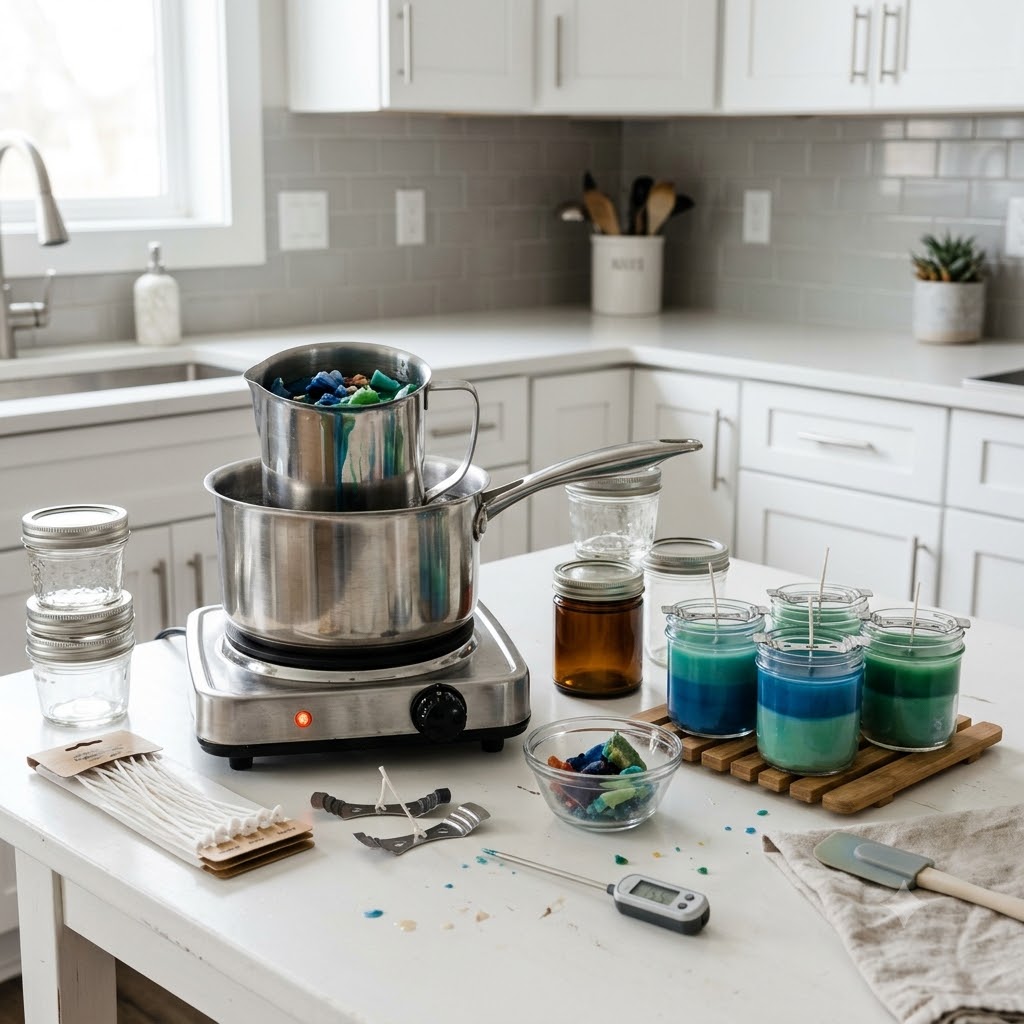
The most satisfying thing you can do with leftover wax — and the one most people never actually try.
Gather your wax remnants, melt them down, drop a fresh cotton wick into a clean glass jar or tin, and pour. It is genuinely that simple. The results are often more interesting than the candles you started with.
Works best with: soy, coconut, or beeswax remnants kept by type
Scent tip: warm scents blend beautifully together — vanilla, amber, sandalwood, cinnamon. Fresh scents do too — linen, citrus, eucalyptus. Mixing both families tends to produce something that smells confused rather than complex
If scent has faded: add a few drops of a single essential oil to pull everything into one coherent direction before pouring
This is the most rewarding candle wax ideas diy project you can do with almost no equipment beyond what you already own.
2. Make Your Own Wax Melts
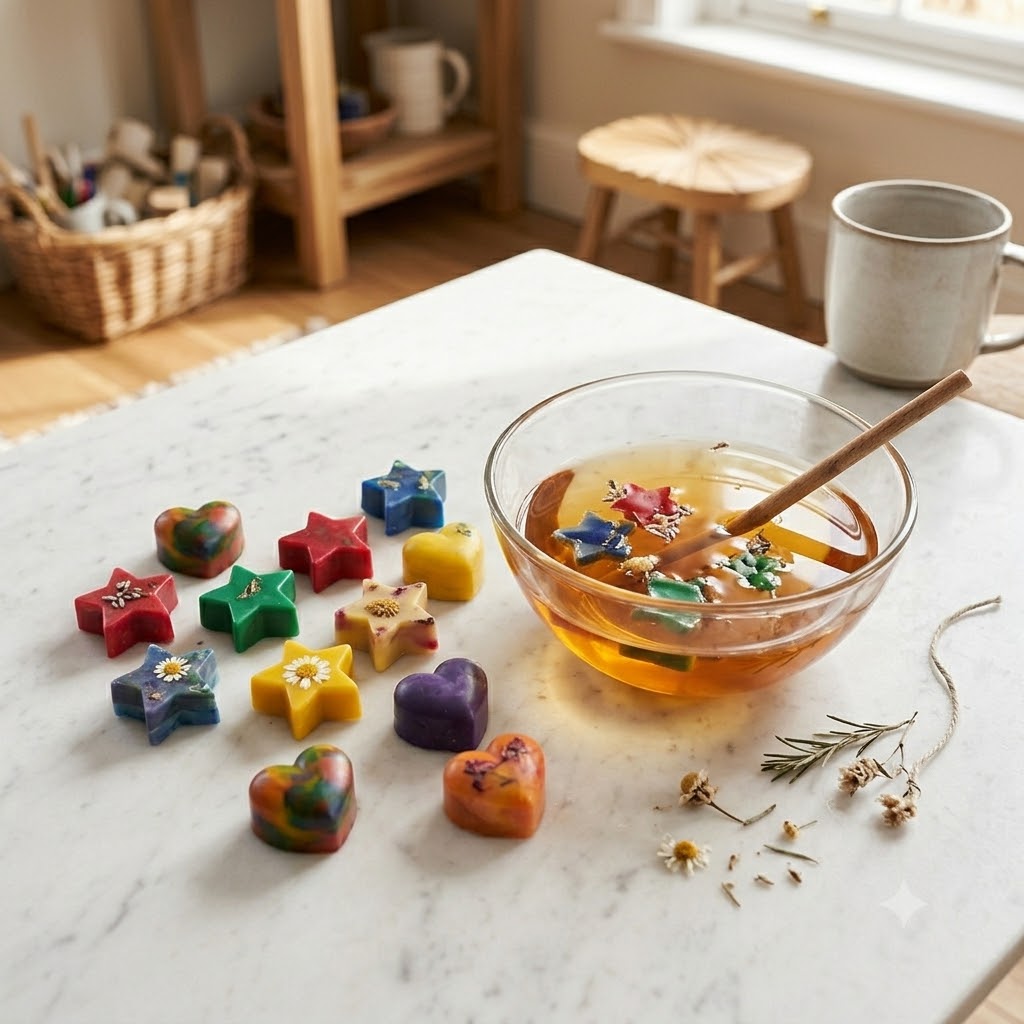
All the fragrance, none of the wick — and an almost effortless way to reuse candle wax diy style.
Melt your leftover candle wax, add a little extra fragrance if needed, and pour into a silicone ice cube tray, a clamshell mould, or a muffin tin lined with paper cases. Once set, pop them out and use them in any electric or tealight wax warmer.
Best wax for this: any scented wax remnant — the fragrance is fully preserved in the wax even after the candle itself is unusable
Mould ideas: novelty silicone moulds in seasonal or decorative shapes make these look genuinely artisanal
Gift potential: a small bag of handmade wax melts costs almost nothing to produce and looks far more considered than it has any right to
3. Use It as a Natural Wood and Furniture Polish
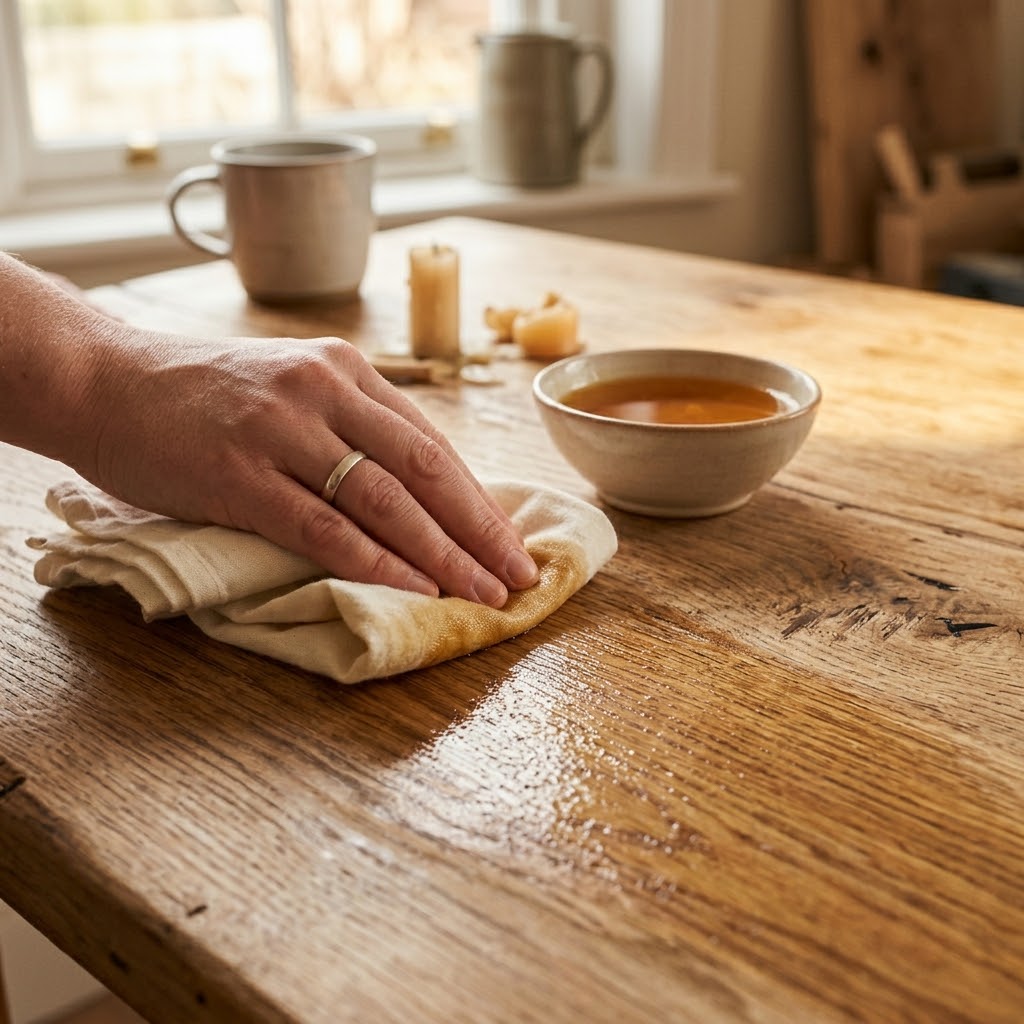
One of the most surprising leftover candle wax ideas — and one of the most immediately useful.
Beeswax and natural wax remnants make an exceptional wood conditioner. Warm a small amount until just soft enough to apply, rub it into unsealed wooden furniture, chopping boards, wooden utensils, or hardwood floors with a soft cloth, then buff to a gentle shine.
What it does: fills micro-scratches, conditions dry wood, leaves a subtle protective layer that repels light moisture
Finish to expect: not a high-gloss commercial polish — something better. A soft natural lustre that makes wood look genuinely alive
Important: use unscented wax only for chopping boards and kitchen utensils — scented wax will transfer fragrance to your food
This is the kind of leftover wax crafts idea that quietly replaces a product most people buy without thinking.
4. Waterproof Canvas, Thread, and Outdoor Fabric
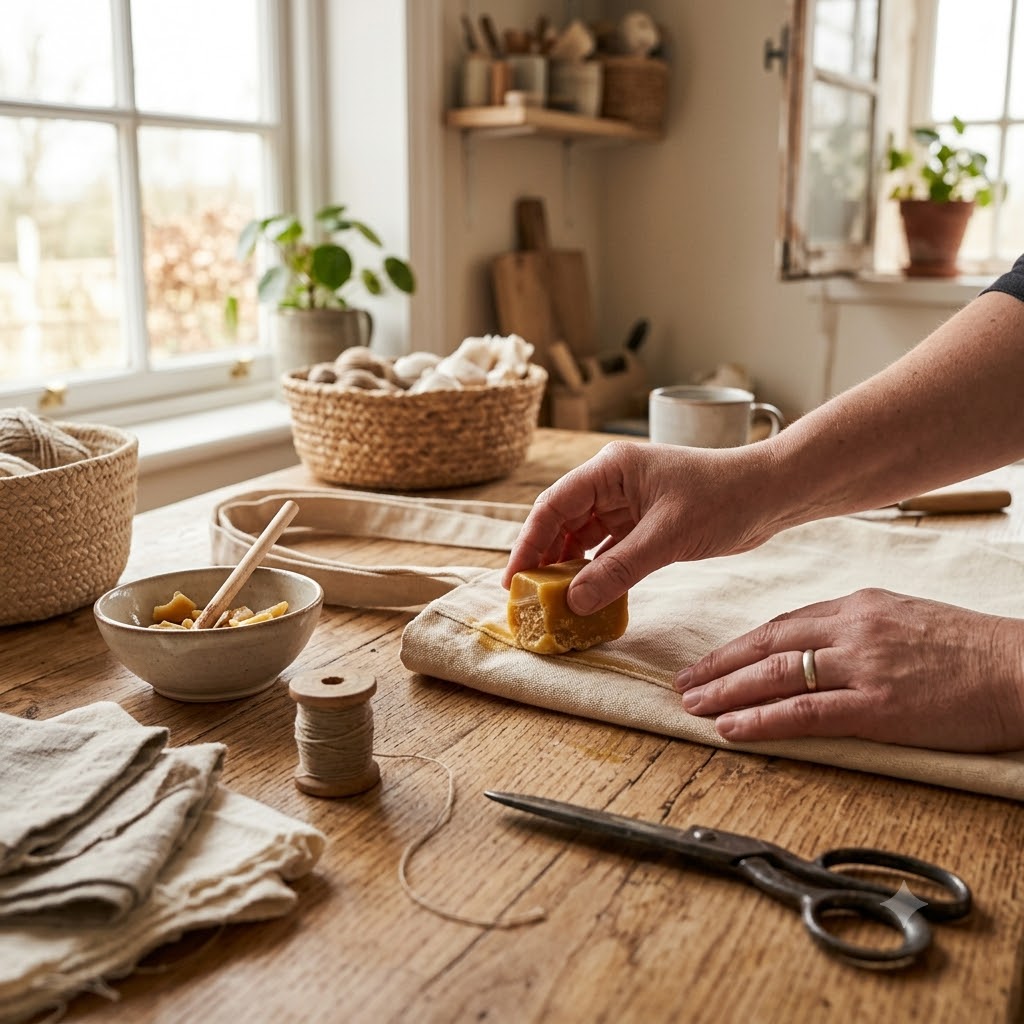
Wax has been used as a natural waterproofing agent for centuries. Your candle remnants are perfectly suited for exactly this.
Rub a solid piece of leftover candle wax directly onto canvas bags, fabric shoes, tent seams, or outdoor cushion covers. Apply gentle heat with a hairdryer to work the wax into the fibres. The result is a genuinely water-resistant finish that repels light rain and moisture.
Also works brilliantly for:
- Running thread across wax before sewing — makes it stronger and tangle-resistant
- Rubbing along wooden drawer runners — makes stiff drawers slide almost frictionlessly
- Coating screw threads before driving them into hardwood — significantly easier to turn
5. Create Wax Fire Starters
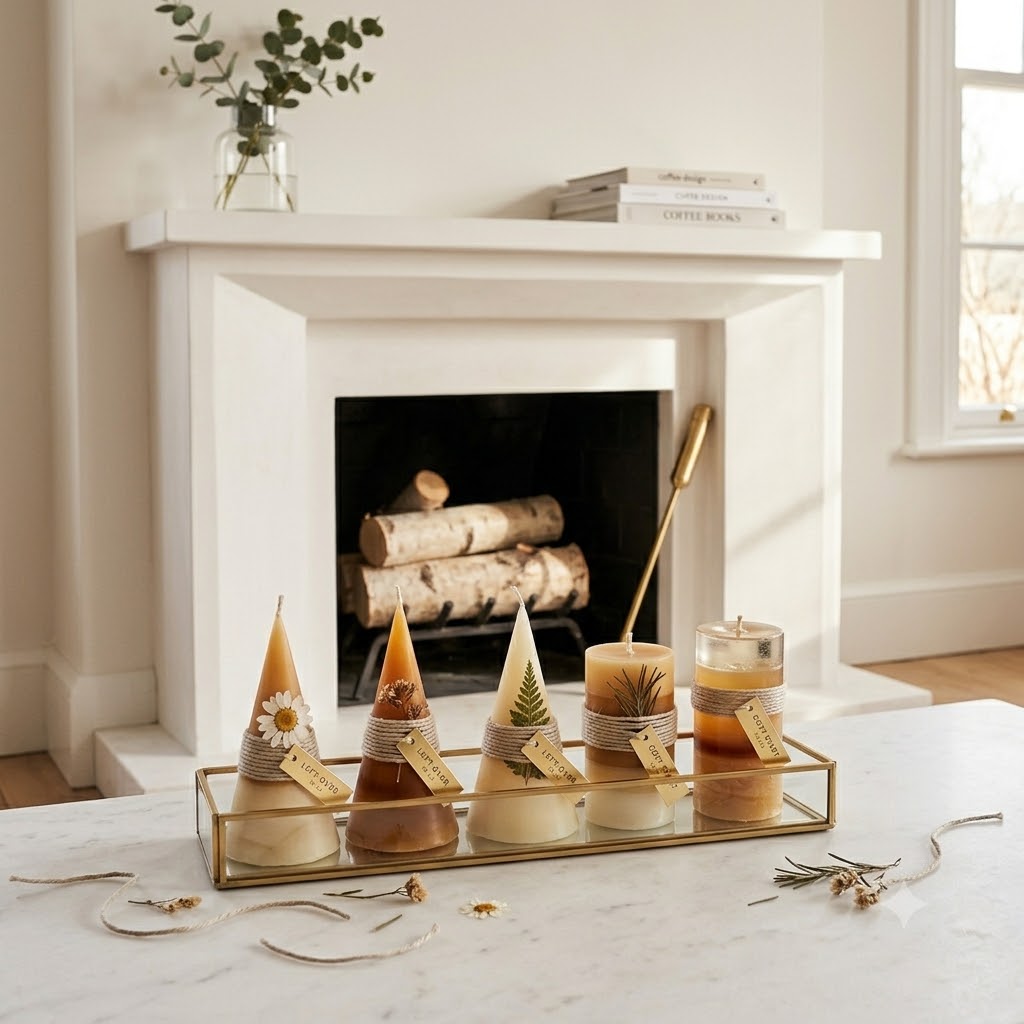
Two things you would otherwise throw away — old candle wax and cardboard packaging — turned into something genuinely useful.
Fill the cups of a cardboard egg carton with sawdust, wood shavings, dried citrus peel, or dried herbs. Melt your leftover candle wax and pour it over each cup until the dry material is saturated. Allow to set, then cut or tear the cups apart individually.
What you get: self-contained fire starters that light easily and burn steadily for several minutes
Best use: fireplaces, wood burners, and barbecues — particularly effective for getting charcoal to a consistent temperature without chemical accelerants
Gift idea: a small tin of homemade fire starters is a genuinely thoughtful gift for anyone who heats their home with a wood burner
This is one of the most satisfying upcycling ideas diy in this entire list.
6. Make Wax Crayons for Kids

Coloured candle remnants plus a silicone mould equals an afternoon project children absolutely love.
Melt coloured leftover candle wax, sort by colour or combine deliberately for marbled effects, and pour into silicone moulds in fun shapes — stars, hearts, animals, letters. Allow to set fully before removing.
What makes them special: chunkier and slightly softer than commercial crayons, which makes them easier for small hands to grip and use
Safety note: use only unscented or very lightly scented wax, and always ensure the wax is free of metal wick cores before involving children
The best part: the reveal when the moulds are peeled away — genuinely thrilling for small people
A brilliant leftover wax crafts weekend project that costs nothing and produces something children are genuinely proud of.
7. Lubricate Squeaky Hinges, Zips, and Stiff Mechanisms
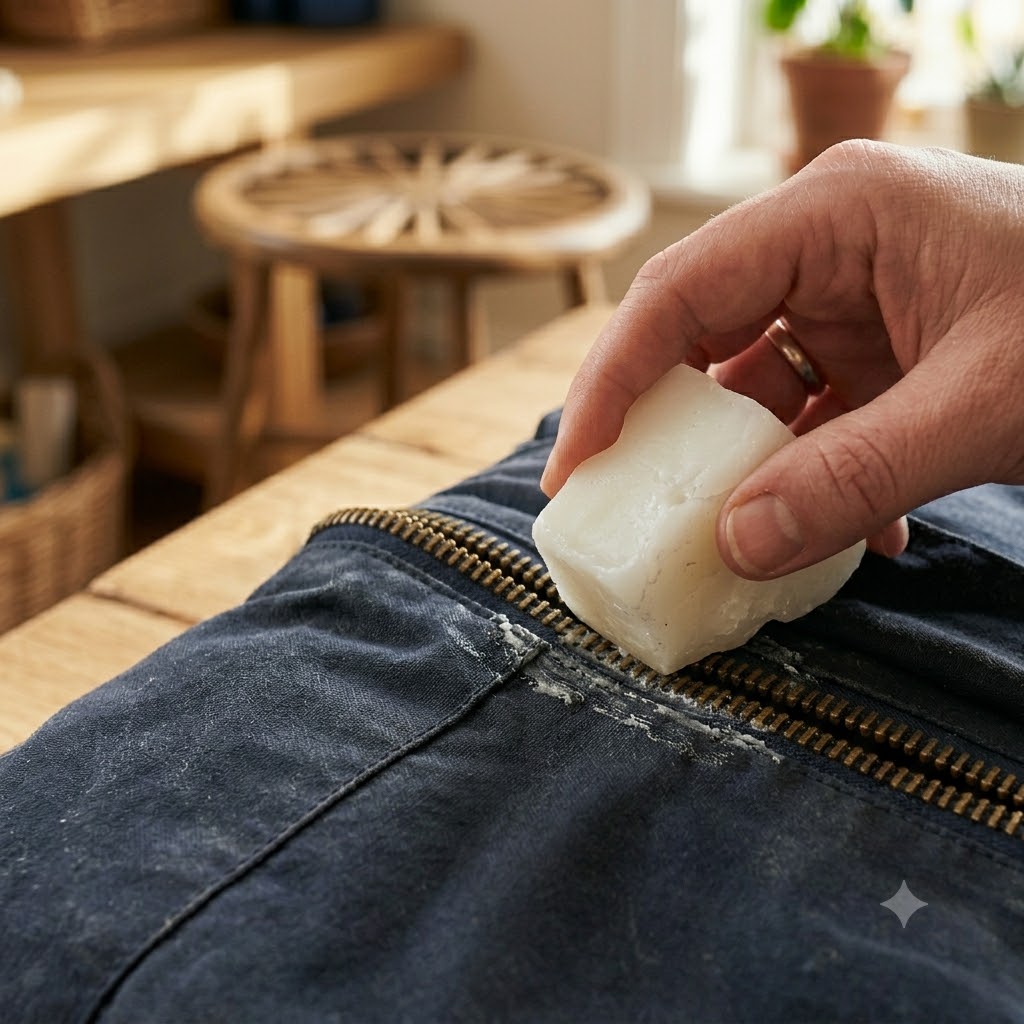
Possibly the most underrated entry on this entire list — and the one you will use most often once you know about it.
Rub solid candle wax leftover directly onto any household mechanism that has started making its presence known. A squeaky door hinge. A stiff zip on a jacket or bag. A window that sticks. A screw that will not drive cleanly into hardwood.
Why wax beats oil-based lubricants:
- Does not attract dust
- Does not drip or leave stains on fabric or paintwork
- Does not go rancid over time
- Completely dry — no residue, no mess
How to apply: rub directly onto the mechanism, work it open and closed a few times to distribute evenly. Done.
Keep a small block of leftover wax in your toolkit. It will earn its place faster than almost anything else in there.
8. Make Wax Drawer Sachets and Wardrobe Fresheners
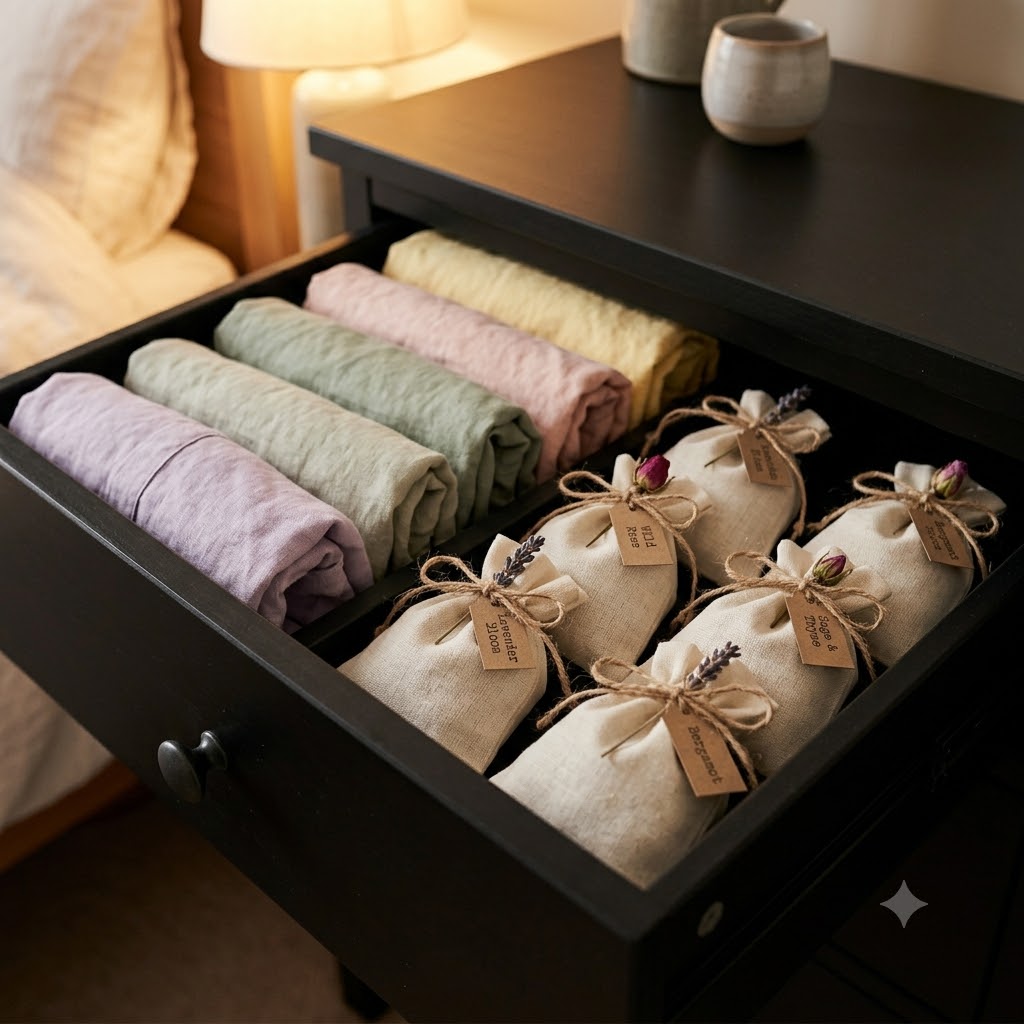
One of the most elegant leftover candle wax diy projects — and one that produces something genuinely beautiful.
Melt your scented wax remnants, add a little extra fragrance oil or essential oil if the scent has faded, and pour into small muslin bags or folded parchment paper parcels. As the wax sets inside the fabric it creates a slow-release scent sachet that outperforms any commercial drawer freshener.
Where to use them: sock drawers, linen cupboards, wardrobes, shoe racks, gym bags
Longevity: weeks to months of gentle fragrance release — far longer than dried flowers or spray fresheners
Presentation tip: small linen pouches tied with twine look like something from an artisan gift shop and cost almost nothing to make
This is the kind of what to do with leftover wax from candles idea that quietly becomes a permanent part of how you run your home.
9. Wax-Dip Dried Botanicals for Home Décor
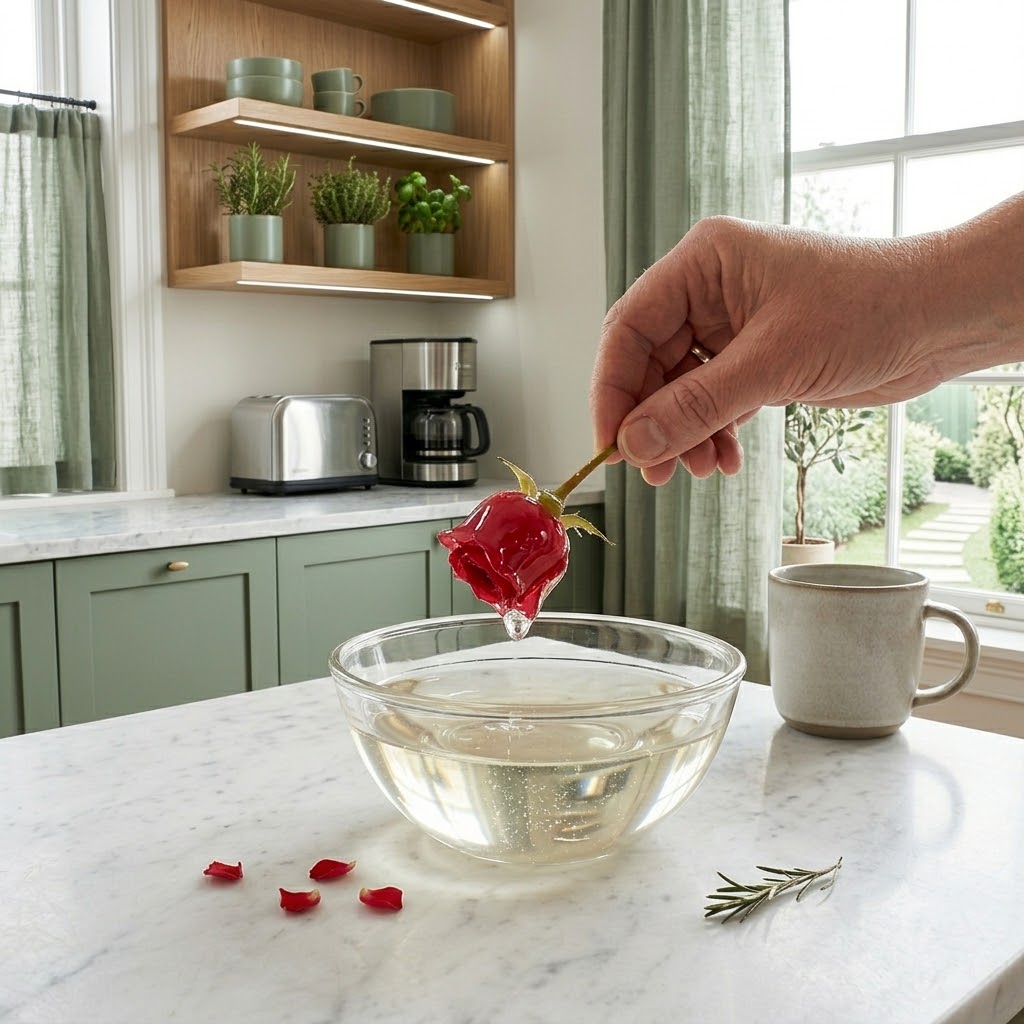
Simple process, extraordinary results — this one genuinely surprises people every time.
Dip dried flowers, leaves, seed heads, or botanical stems into melted candle wax and allow the excess to drip off before hanging upside down to set. The wax coats each piece in a thin translucent layer that preserves shape, adds lustre, and significantly extends their life.
Best wax for this: clear or very lightly tinted — the wax should enhance the botanical, not mask it
What to make: vase arrangements, wreath elements, table centrepieces, shallow bowl displays
Wax to use: this is a perfect application for how to recycle old candles in beautiful colours — the wax gets a second life as part of something equally considered
The finished pieces look like they came from a high-end florist. They came from your recycling bin.
10. Condition and Restore Leather Goods
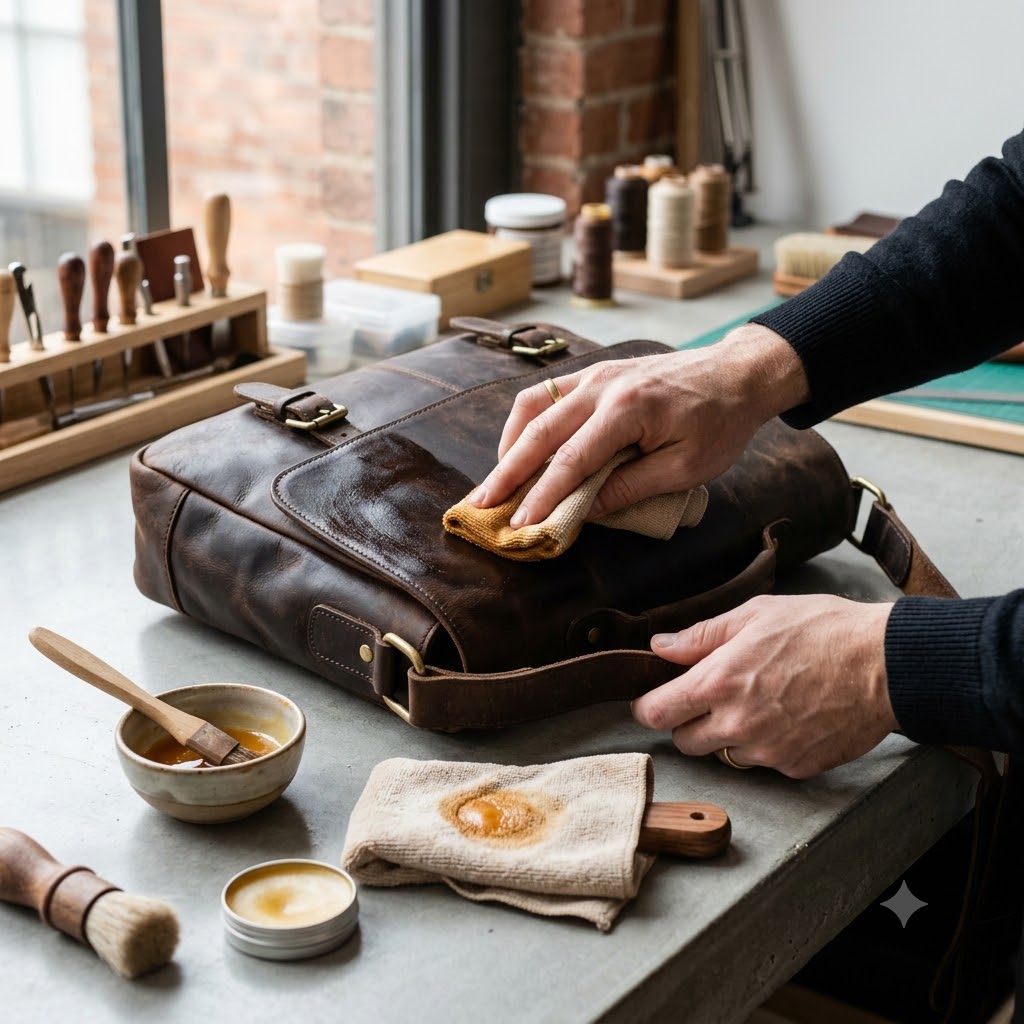
One of the most quietly impressive things leftover wax can do — and one most people have never considered.
Natural wax — particularly beeswax remnants — is one of the best conditioning agents you can apply to leather. Shoes, belts, bags, leather jackets, wallets, even sofas respond remarkably well to a thin application of melted or softened wax worked gently into the surface with a soft cloth.
What it does to leather:
- Conditions dry, cracked surfaces and restores suppleness
- Creates a natural water-resistant barrier without clogging the leather’s pores
- Adds a subtle, non-greasy sheen that looks genuinely expensive
- Significantly slows future cracking and wear
How to apply: warm the wax until just soft — not fully melted — and work it into the leather in small circular motions. Allow to absorb for a few minutes then buff with a clean dry cloth.
11. Make Wax Luminaries
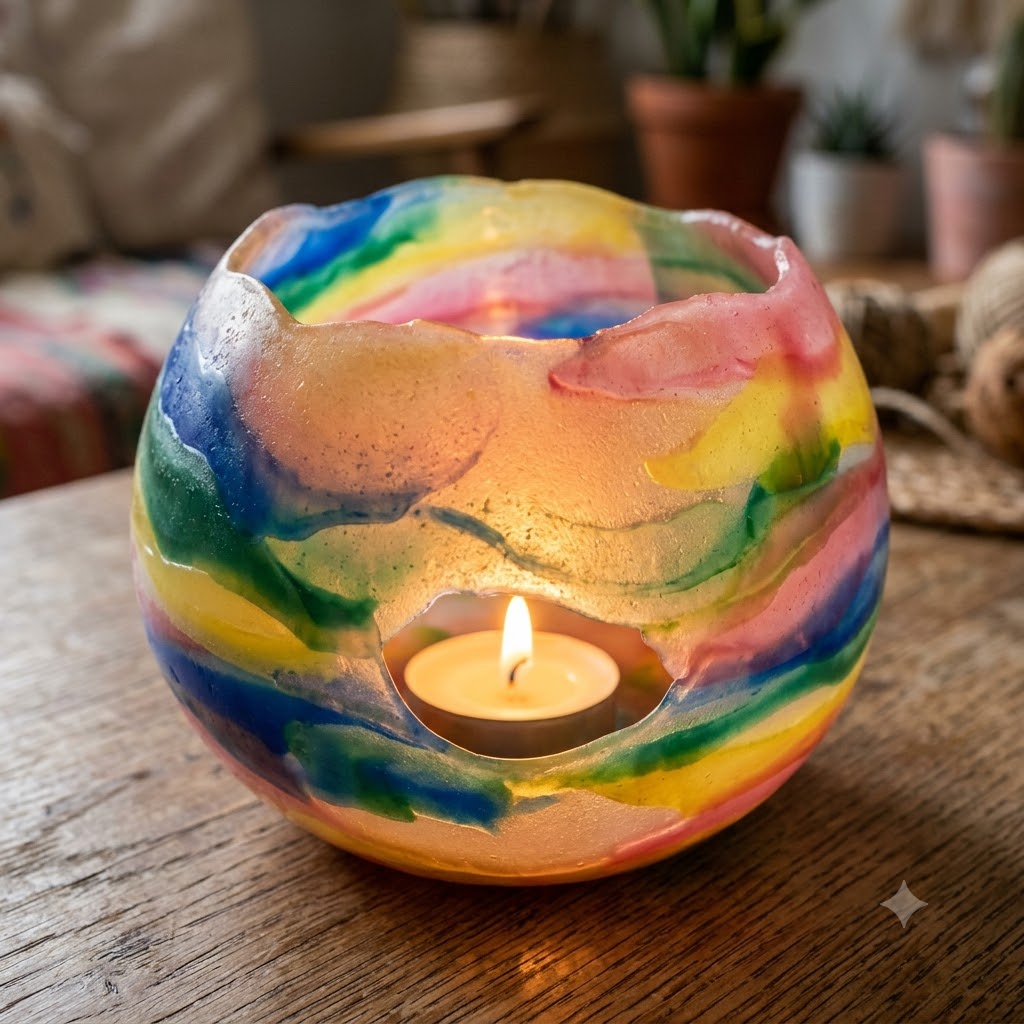
The showstopper of all leftover candle wax diy projects — and far simpler than it looks.
A wax luminary is a translucent wax shell that holds a tealight inside, casting warm glowing light through its walls. They are stunning on dinner tables, beautiful in windows, and extraordinary as handmade gifts.
How to make one:
- Inflate a balloon to the size you want your luminary
- Hold it by the knot and dip the lower two thirds into melted wax
- Allow each layer to set before dipping again — repeat until the shell is 4–5mm thick
- Once fully cooled, pop the balloon and peel it away from inside
What you get: a perfectly formed, organically shaped wax vessel that glows like nothing else when a tealight is placed inside
Best wax for this: lightly tinted or naturally coloured wax — the colour glows through the shell beautifully when lit
This is what to do with leftover wax from candles at its most creative, most rewarding, and most impressive.
Products Worth Having for Your Leftover Wax Projects
All of the ideas above can be done with equipment you likely already own — but a few small additions make the process significantly easier and the results noticeably better.
A Dedicated Wax Pouring Jug — a heatproof jug with a handle and proper pouring spout is the single most useful piece of equipment for any leftover candle wax reuse project. Controlled pours into small moulds and jars make every project cleaner, faster, and far less messy.
A Candle Making Thermometer — knowing your wax temperature precisely prevents overheating, improves the surface finish of poured projects, and makes every candle wax ideas diy result more consistent. A clip-on format that attaches to the side of your jug is the most practical option.
Silicone Moulds in Assorted Shapes — silicone releases set wax cleanly with no greasing or preparation, making it the best all-round choice for wax melts, crayons, decorative shapes, and small candles. An assorted shape pack gives you flexibility across every project on this list.
Pre-Tabbed Cotton Wicks — if you are remelting leftover candle wax into new candles, having wicks ready to go means you can pour the moment your wax hits temperature. Buy an assorted size pack to match different jar diameters without guessing.
Small Muslin Drawstring Bags — for the wax sachet project, natural muslin bags are the perfect vessel. They allow scent to diffuse through the fabric while containing the wax neatly — and they look genuinely beautiful in a linen cupboard or presented as a gift.
A Wax Seal Stamp Kit — if the jar sealing idea appeals, a proper stamp kit takes it from functional to genuinely beautiful. Stamped wax seals on homemade jams, gift wrapping, and handmade candles look artisanal and considered — and they use up small amounts of melted candle wax in the most satisfying way possible.
You can find all of these at craft supply retailers, candle making specialist stores, and through independent sellers on Etsy — where you are also far more likely to find silicone moulds in shapes that general retailers simply do not carry.
Once you know what to do with leftover candle wax, you will never look at the bottom of a finished candle the same way again. The wax sitting in those jars is not the end of something — it is almost always the beginning of something better.
Related: