Most dinner party table settings follow the same tired formula — a white cloth, one centerpiece, a couple of candles, done. It looks fine, but it never looks like something worth stopping to photograph. The 13 settings below are built in full layers, the way a stylist would actually build a table: linens, place settings, glassware, lighting, and a centerpiece that isn’t an afterthought, all pulling from one deliberate color story instead of a single generic idea repeated thirteen times.
Affiliate Disclosure: This article contains affiliate links which means we may earn a commission at no extra cost to you. You can check our affiliate disclosure page here.
What Separates a Styled Table From a Magazine-Worthy One
A table that looks editorial almost always has more going on than it seems at first glance — layered textures, a lighting plan, and small unexpected details tucked between the obvious pieces. None of the settings below stop at “add a centerpiece and a few candles.” Each one builds a full scene, so copying just one element still leaves you with a table that looks intentional.
1. The Dark Academia Library Table
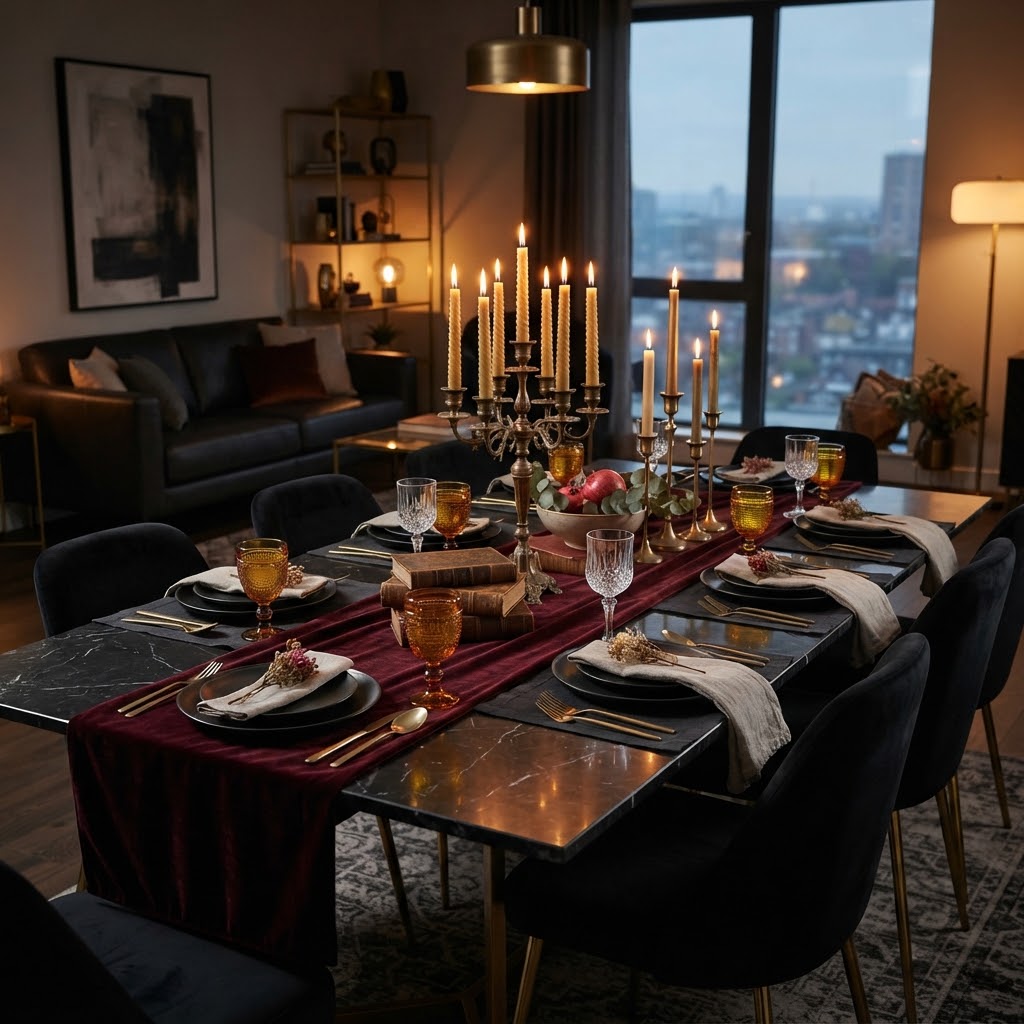
This one leans fully into moody, literary drama. Build the base with a deep burgundy velvet table runner, then layer in a brass candelabra as the anchor centerpiece, flanked by short stacks of leather-bound books at staggered heights so the table has real vertical rhythm instead of sitting flat. Pour into amber glass goblets rather than clear crystal — the tint catches candlelight and throws warm color across the table linens as the night goes on. Finish with a scattering of dried bay leaves and a few unlit taper candles in mismatched brass holders tucked between place settings, so even the negative space on the table feels considered.
2. The Scandinavian Tonal Minimalist Table
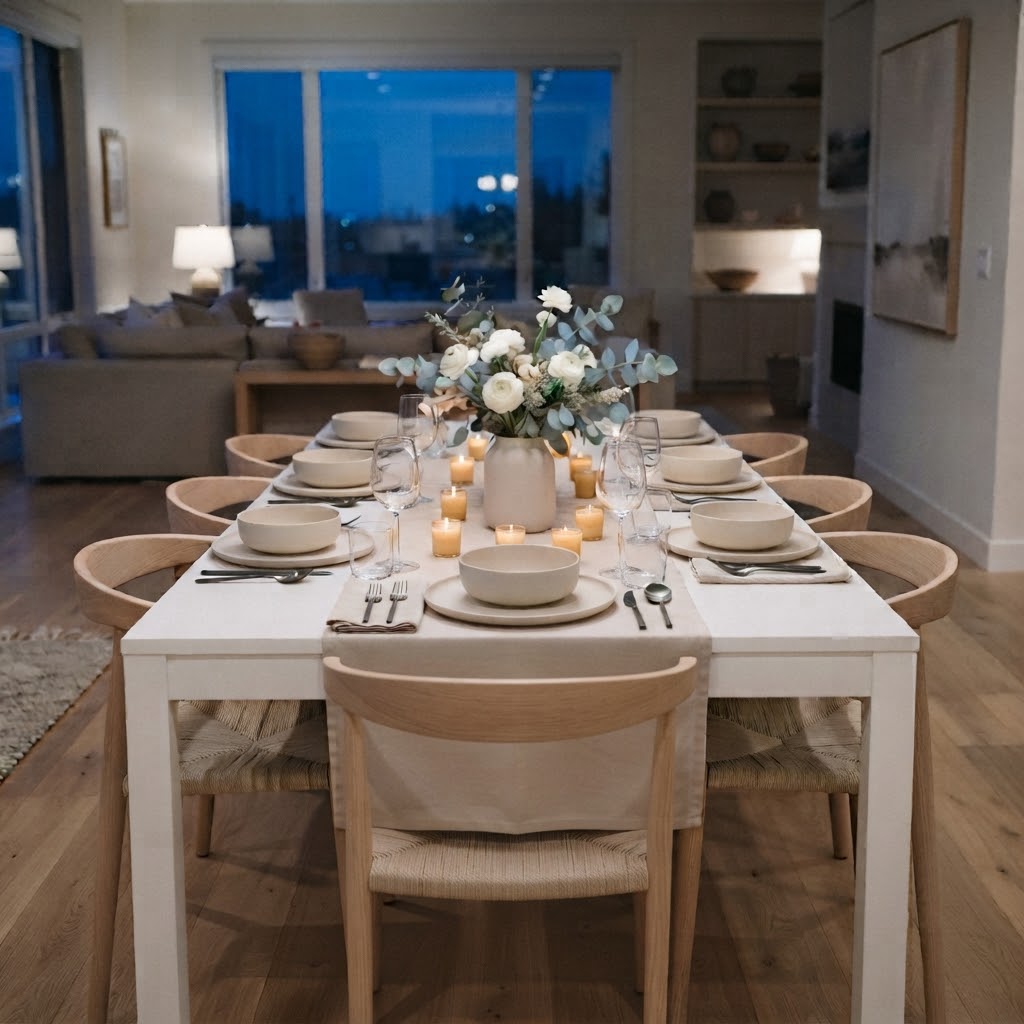
Everything here sits inside one narrow tonal range — bone, oat, and pale ash wood — so texture, not color, does all the work. Start with a raw linen table runner left slightly rumpled rather than pressed flat, then set matte stoneware dinnerware with a visible hand-thrown edge instead of anything perfectly uniform. Add a low, asymmetrical arrangement of white ranunculus and pale eucalyptus in a single ceramic vessel, placed off-center rather than dead-center down the table. Scatter a handful of unlit beeswax votives at varying heights nearby — the point of this table is restraint executed with real precision, not a lack of effort.
3. The Jewel Tone Maximalist Table
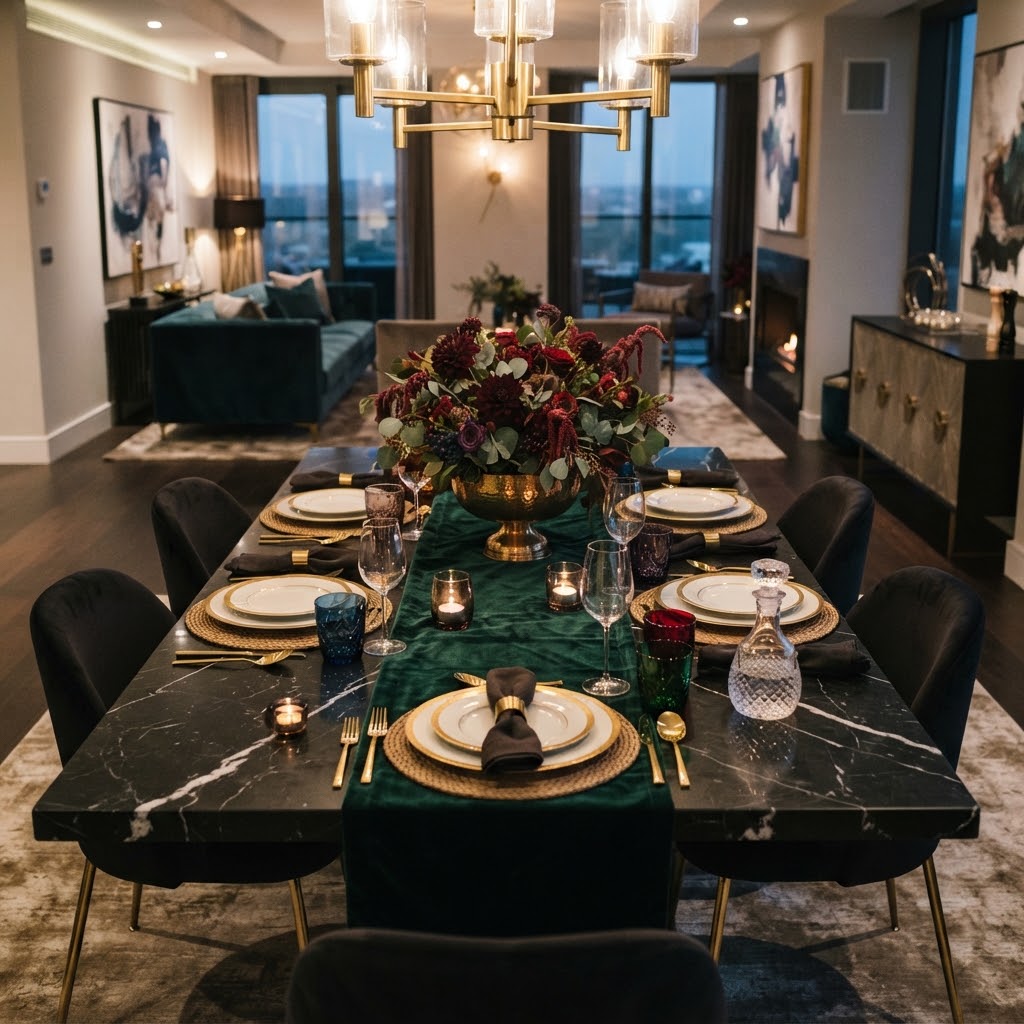
This is a full commitment to saturated color, built in deliberate layers rather than one bold gesture. Start with a deep emerald velvet table runner, then mix jewel-toned glass tumblers across the table in two or three different colors rather than matching sets, so the glassware itself becomes part of the color story. Layer in a cluster of dark, moody florals — deep burgundy dahlias, dark ranunculus — in a brass compote bowl, and finish with gold-rimmed dinnerware to tie the metallics together. Low, warm lighting is essential here; this table is built to glow, not to be seen under bright overhead light.
4. The Botanical Garden Runner Table
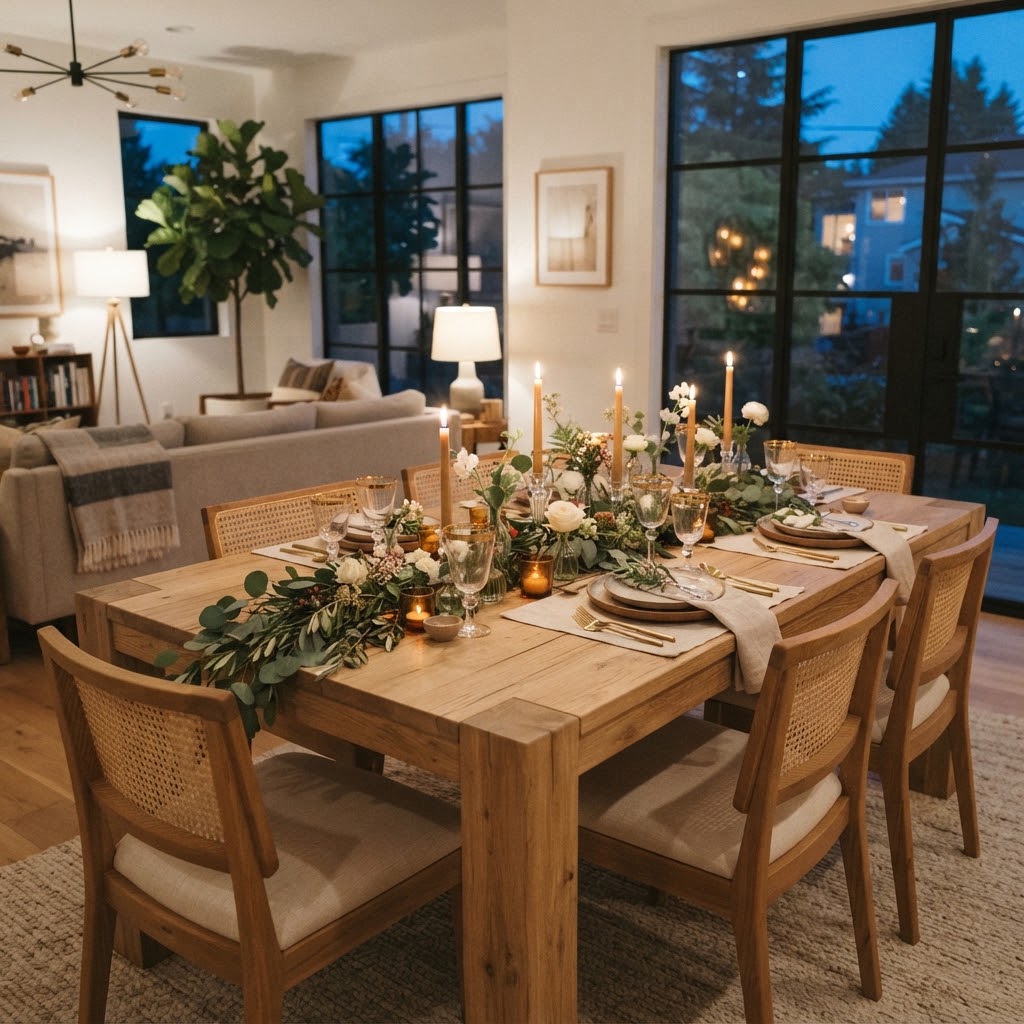
Instead of a single centerpiece, this table builds an entire trailing garden down its length. Lay a eucalyptus and olive branch garland directly on the linen, unbroken from one end of the table to the other, then tuck glass bud vases with single stems — ranunculus, sweet pea, a stray herb sprig — throughout its length at irregular intervals so it reads as grown, not arranged. Add a scattering of loose petals directly on the linen between vases, and finish with slim taper candles in glass candlestick holders placed low enough that guests can still see across the table. This is one of the more elaborate elegant dinner party ideas here, and it holds up beautifully for a longer guest list since the garland never blocks a single sightline.
5. The Black and Gold Art Deco Table
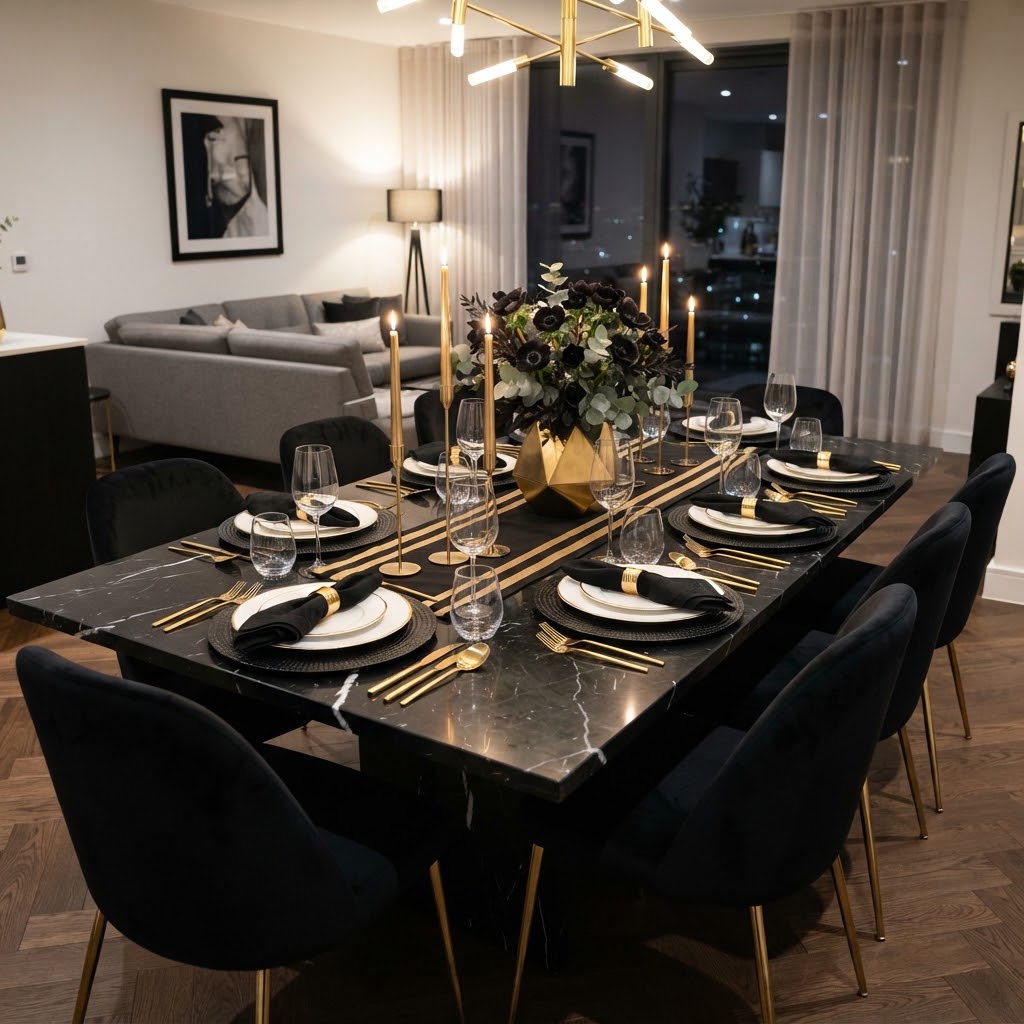
Sharp geometry and metallic contrast define this one from the base up. Start with black charger plates beneath crisp white dinnerware, then add gold-rimmed glassware and a set of gold taper candlesticks in three varying heights clustered slightly off-center rather than perfectly spaced. Layer in a thin black-and-gold striped table runner beneath the place settings, and finish with a small arrangement of black anemones in a geometric gold vessel. The drama here comes entirely from contrast and precision — every element earns its place, and nothing extra gets added just to fill space.
6. The Terracotta Mediterranean Feast Table
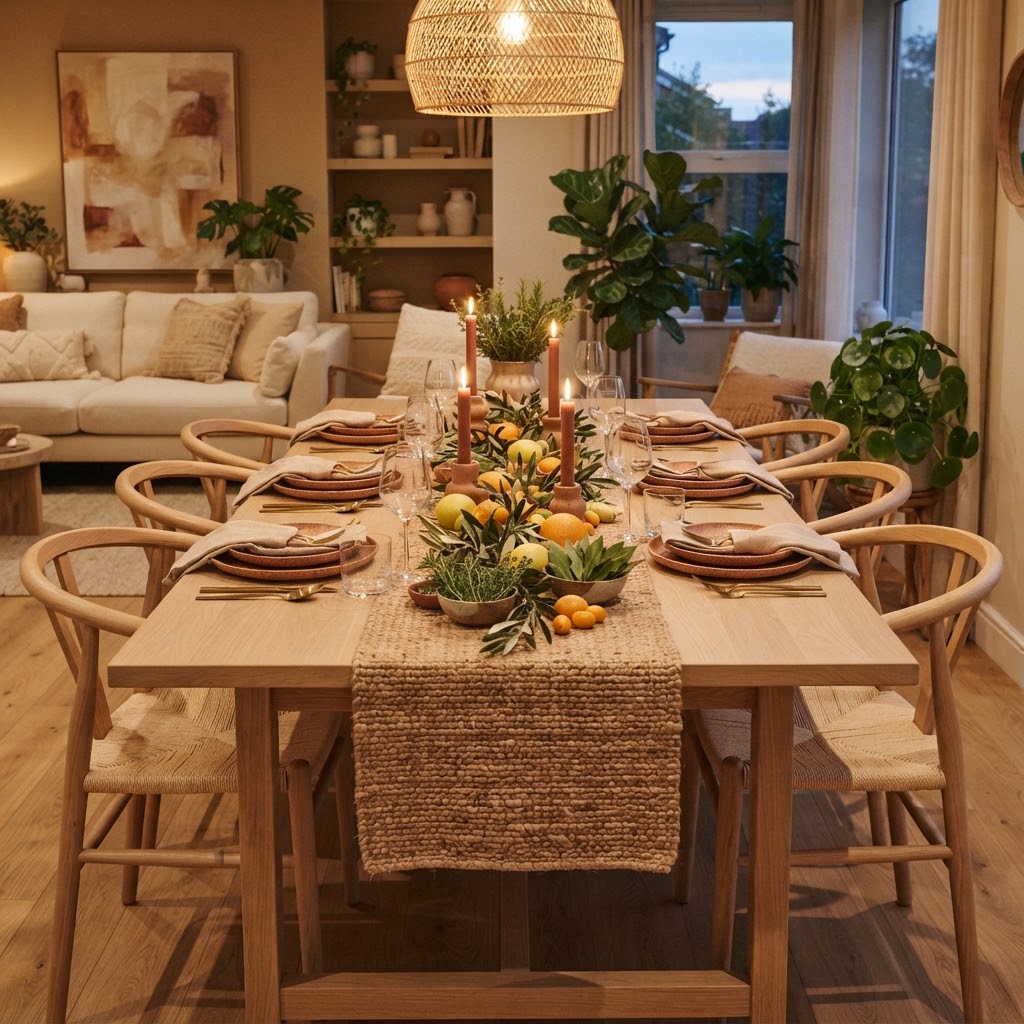
This table is built to feel like it was set outdoors under string lights, even indoors. Start with a handwoven jute runner, then layer ceramic terracotta plates with hand-painted rims if you can find them. Down the center, build a loose, abundant spread rather than a single arrangement: whole citrus, olive branches, a few uncorked wine bottles, and a shallow ceramic bowls of fresh herbs, all placed as if the meal itself is part of the display. Finish with a cluster of low terracotta taper candles at the table’s center. This is one of the most practical dinner party table settings for a larger, family-style gathering, since the abundant centerpiece doubles as part of the actual meal.
7. The All-White Textural Table
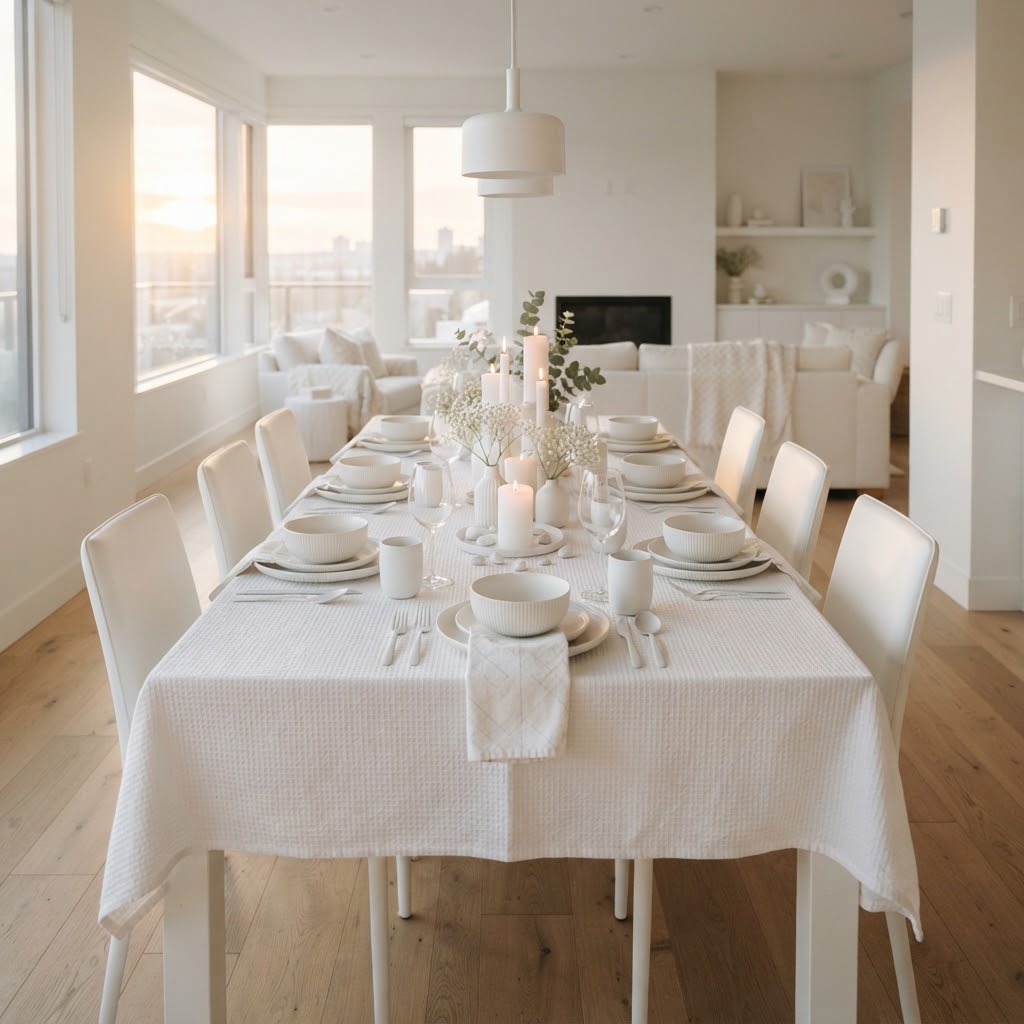
Every element stays white here, which means texture has to do all the visual work instead of color. Layer a waffle-weave linen tablecloth under ribbed ceramic dinnerware, then add a cluster of white pillar candles in five or six varying heights running down the center rather than one uniform row. Tuck in a few sprigs of white astilbe or baby’s breath in small matte white bud vases between the candles, and finish with linen napkins tied simply with raw cotton string. The proof that a monochrome dinner tablescape can still feel rich is entirely in the mix of matte, ribbed, glossy ceramic, and warm wax texture working together.
8. The Autumn Harvest Copper Table
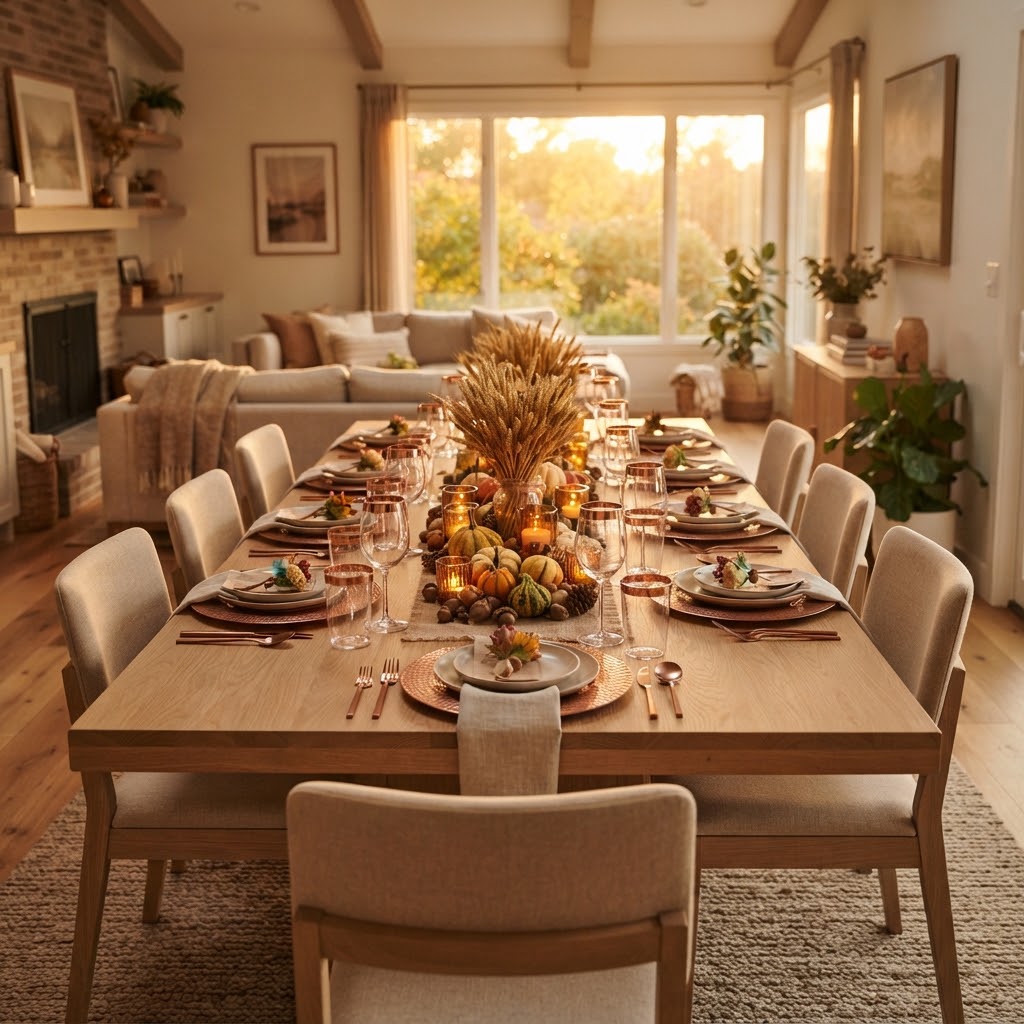
Copper and rust tones carry warmth here without tipping into anything overly seasonal or costume-like. Anchor each place setting with a hammered copper charger, then build a loose centerpiece of dried wheat stems, small ornamental gourds, and a scattering of dried orange slices directly on the linen rather than confined to a vase. Add copper-rimmed glassware and a cluster of unlit amber glass votive holders at varying heights down the table. This setting genuinely holds up from early autumn through the start of winter, since the copper tones read as warm rather than strictly tied to one season.
9. The Coastal Riviera Table
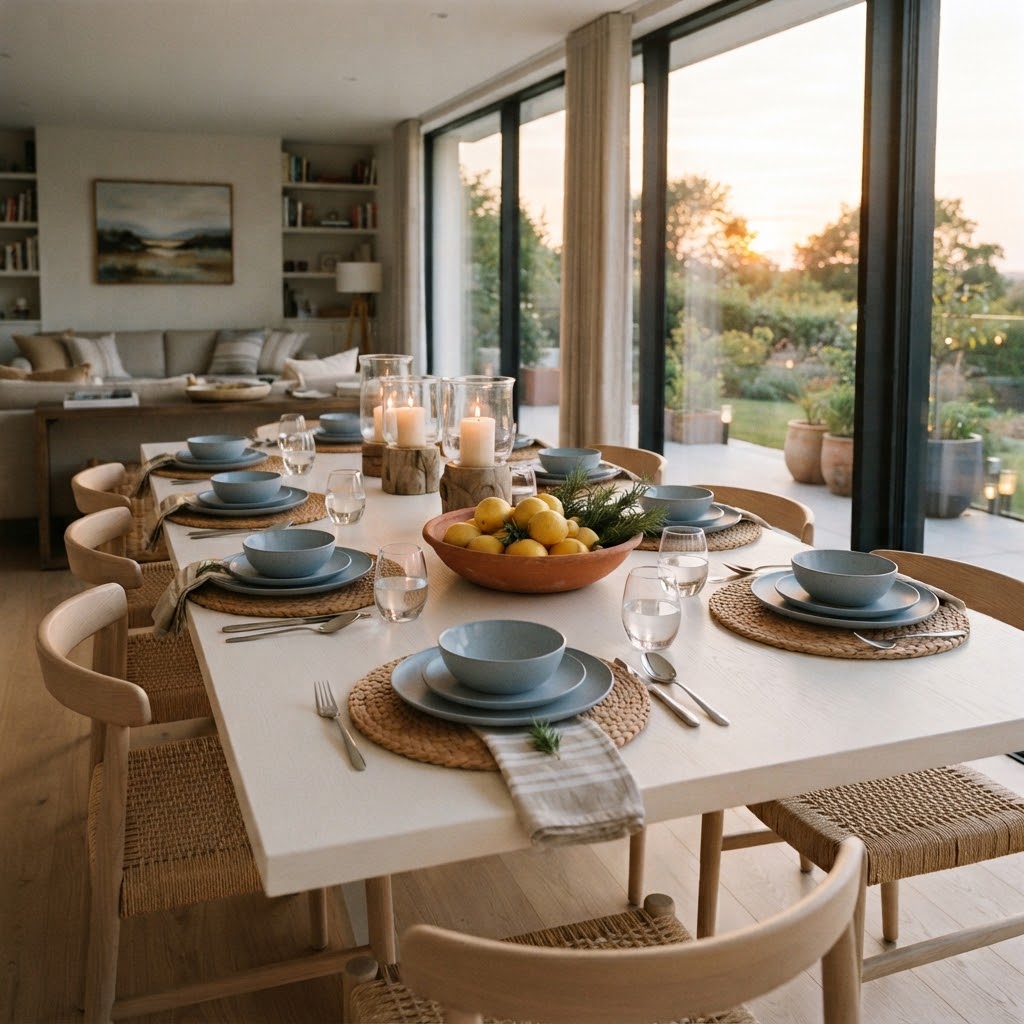
Crisp navy and white carry this one, built for a warm-weather dinner with real polish rather than a beachy theme. Pair striped linen napkins with blue-rimmed dinnerware, and build the centerpiece from a shallow terracotta bowl filled with whole lemons and trailing rosemary sprigs, placed slightly off-center. Add unlined glass hurricane candle holders down the table, and finish with woven rattan placemats underneath each setting for texture. The whole table should feel like it was set for a long lunch that turned into dinner, unhurried and layered rather than staged.
10. The Pastel Spring Garden Table
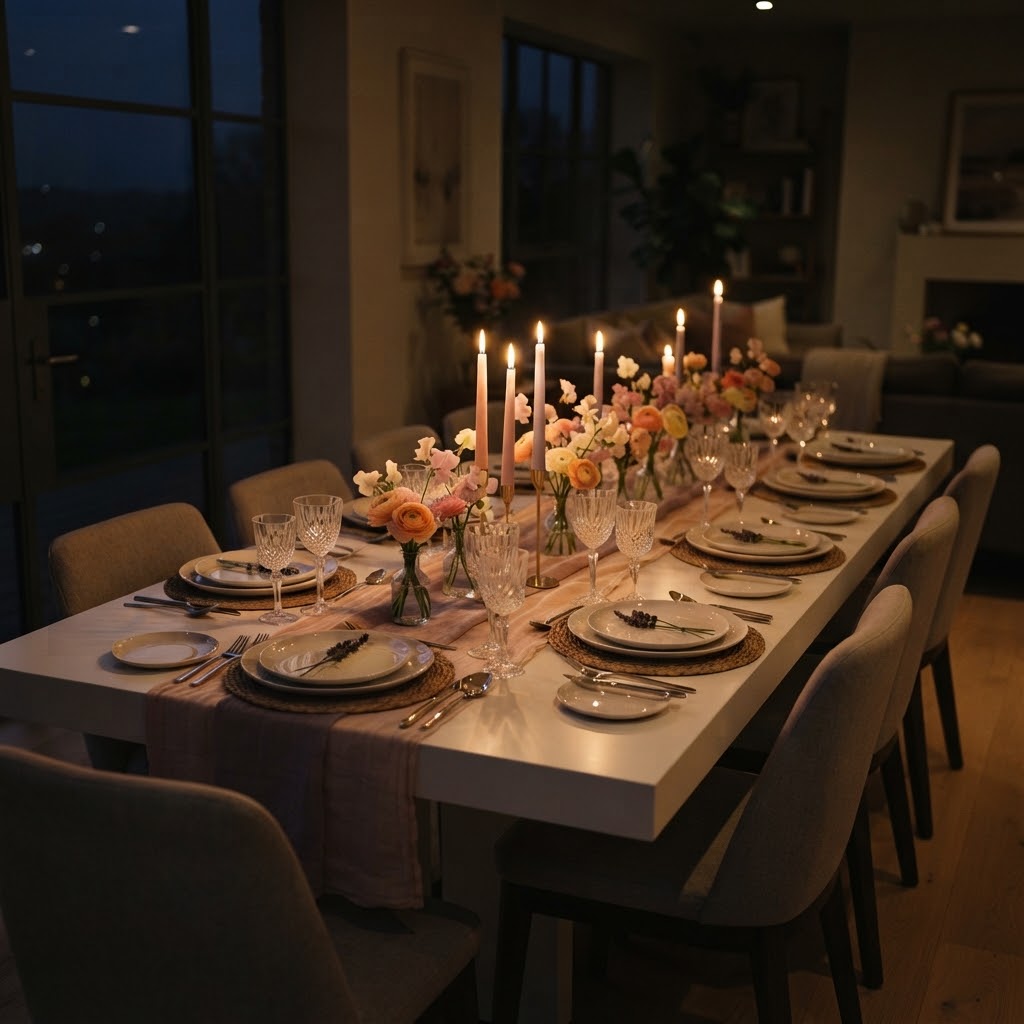
Soft pink, lavender, and sage come together without tipping sweet, mostly because of how sparingly each color is used. Start with a pastel linen runner, then set white dinnerware with a single sprig of lavender laid across each plate as a place setting detail. Build the centerpiece from ranunculus and sweet pea spread across several small glass bud vases rather than one large arrangement, spaced unevenly down the table’s length. Finish with pastel-hued taper candles in slim brass holders. This spread-out floral approach is one of the more elevated hosting essentials to master, since it uses fewer total stems than a single large centerpiece while still covering significantly more visual ground.
11. The Industrial Modern Table
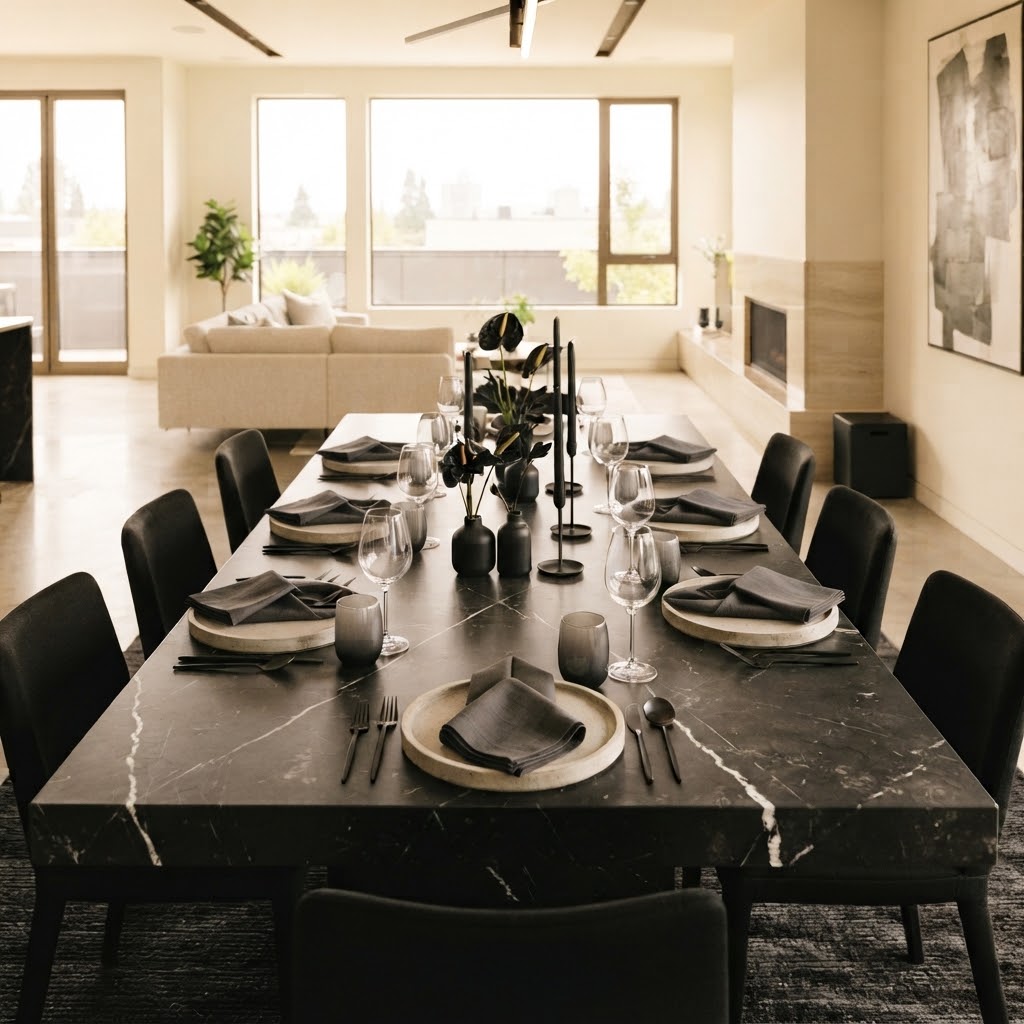
Cool, architectural, and deliberately underdecorated in the best way. Start with concrete-look chargers and matte black flatware, then add a single gray linen napkin, folded structurally rather than draped loosely. Keep the centerpiece minimal but precise: a single dark stem — thistle, black calla lily, dried protea — in a small matte black vessel at each place setting instead of one shared centerpiece. Add a scattering of unlit black taper candles in mismatched matte holders. The entire table works because of restraint and material contrast, not abundance, so resist the urge to add anything extra once it’s set.
12. The Parisian Bistro Candlelit Table
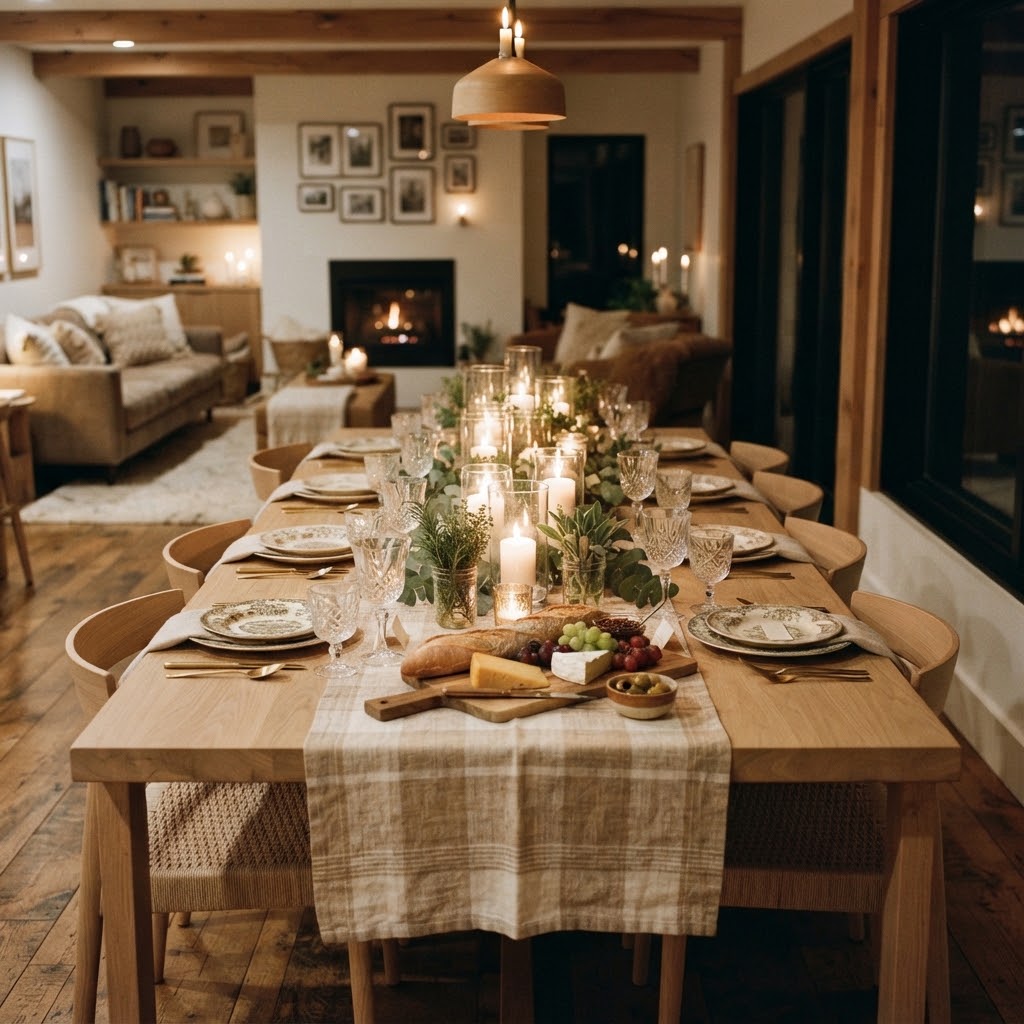
Low, warm, flickering light drives this entire setting from the moment guests sit down. Build the base with a simple checkered linen tablecloth, then cluster glass hurricane candle holders of varying heights densely down the center — more than feels necessary, which is exactly the point. Add a few sprigs of fresh herbs in small glass jars between the candles, mismatched vintage-style wine glasses, and a loose baguette or cheese board left directly on the table as part of the display. This is the most candlelit dinner party table setting on the entire list, and it’s built specifically for smaller, more intimate gatherings where mood matters more than formality.
13. The Disco Glam Metallic Table
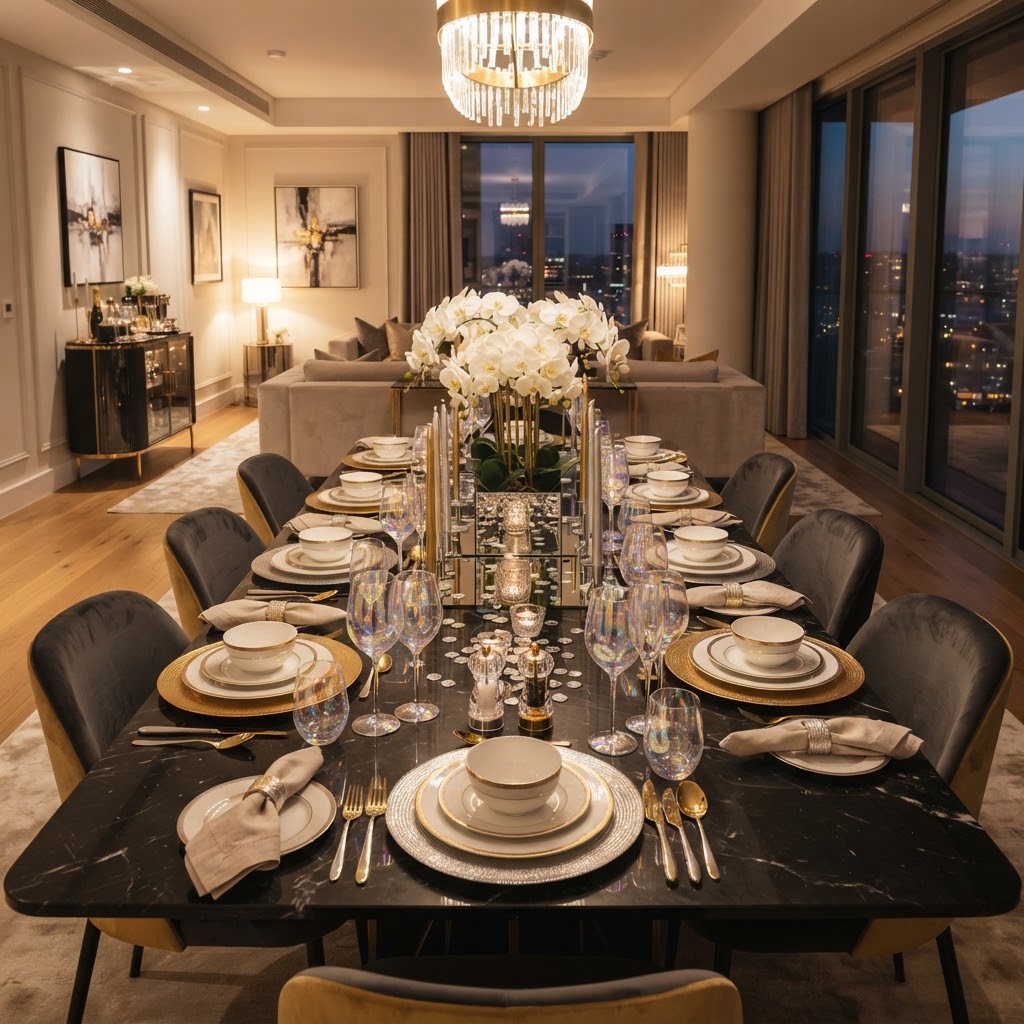
Built for a livelier, celebration-style occasion rather than a quiet weeknight dinner. Mix metallics deliberately — gold and silver charger plates alternating around the table, paired with iridescent glassware that catches light constantly through the evening. Add a low centerpiece of white orchids in a mirrored vessel, so the reflection doubles the sparkle already coming from the glassware. Finish with a scattering of unlit metallic taper candles in mismatched holders and a scatter of small mirrored confetti directly on the linen. This is the boldest table on the list, and it earns that boldness through layered metallics rather than one single shiny element trying to carry the whole look.
The best dinner party table settings share one thing in common: a clear color story carried through every single layer, from linens to glassware to the smallest candle holder, instead of one nice centerpiece surrounded by mismatched decisions. None of these thirteen tables need a professional stylist to pull off — they need a plan before the shopping starts, which is really the difference between a table that looks thrown together an hour before guests arrive and one that looks like it belongs somewhere far nicer than your dining room.
Related Articles:
- 15 Ways: How to Make Your Home Look Expensive on a Tight Budget
- How to Layer Lighting Like a Pro: The Ultimate Guide
- 15 Mantel Decor Ideas That Look Designer Styled
FAQ
How do I choose a color theme for a dinner party table setting?
Start with the season or occasion first, then narrow to two or three core colors and one metallic accent at most. Tables with too many competing colors tend to look busy rather than styled, even when every individual piece is beautiful on its own.
What’s the easiest way to make a dinner table look more elegant without spending a lot?
Focus on layering texture instead of buying an entirely new set of everything — a runner, varied candle heights, and mixed glassware do more visual work than one expensive centerpiece ever will.
How many candles should be on a dinner party table?
More than feels necessary, in odd numbers and varying heights, almost always looks better than a single matched row. A dense cluster down the center creates real ambiance in a way a few scattered candles can’t.
Can these dinner party table settings work for smaller tables?
Yes, most scale down easily. Reduce the number of decor elements proportionally rather than shrinking them individually, and keep the color story intact so the table still reads as fully considered even with fewer pieces on it.