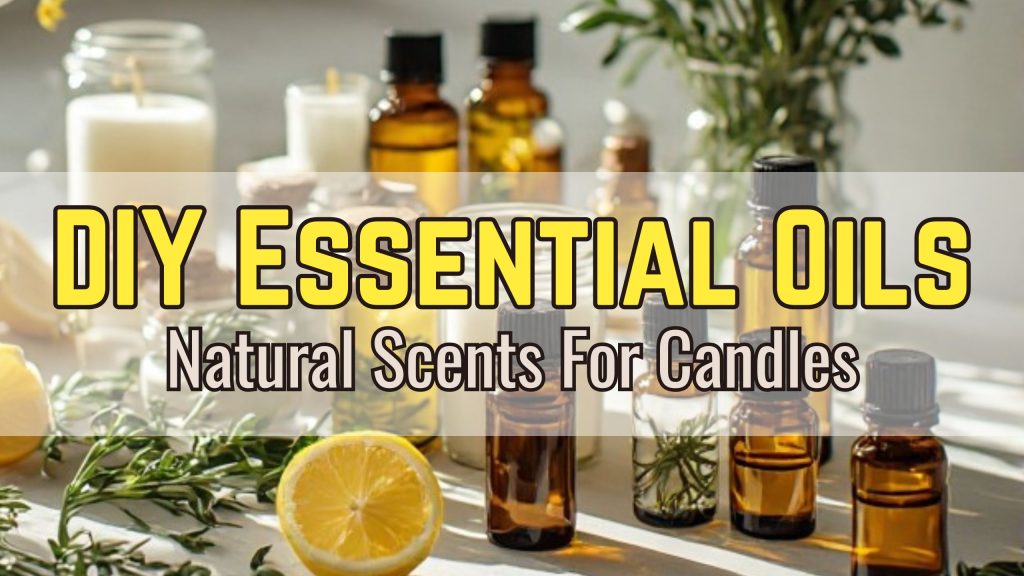
Most articles about how to make essential oils at home are actually teaching you how to make infused oils — herbs soaked in carrier oils like olive oil or almond oil. And while those smell lovely, they don’t work in candles. The carrier oil interferes with the wax, weakens the scent throw, and can even affect how your candle burns. If you want natural candle scents that truly perform, you need pure essential oils — and the real way to make those at home is through steam distillation.
You will need a distillation kit (also called a still), which you can find online for around $30–$100 depending on the size. It’s a one-time investment that pays for itself very quickly when you see how much pure essential oil costs to buy. Once you have your kit, the process is the same for almost every plant — only the plant material and processing times change. Let’s walk through everything, step by step.
Affiliate Disclosure: This article contains affiliate links which means we may earn a commission at no extra cost to you. You can check our affiliate disclosure page here.
How Steam Distillation Works In DIY Essential Oils Making
Before we get into the recipes, here’s the basic idea behind steam distillation — because once you understand it, everything else makes perfect sense.
- You place plant material (flowers, leaves, bark, peel) in the still above water
- You heat the water until it produces steam
- The steam rises through the plant material and carries the tiny scent molecules with it
- That steam travels through a coiled tube surrounded by cold water
- The steam cools down and turns back into liquid
- That liquid separates into two layers — pure essential oil on top, floral water (called hydrosol) below
- You collect the essential oil from the top
That’s it! The whole process takes 1–4 hours depending on the plant. Now let’s get into the actual DIY essential oil recipes for candles.
What You Need to Get Started With Distillation
1) A Stainless Steel or Copper Distillation Kit (1–2 litre)
This is the one investment that makes everything possible. A good entry-level still runs $40–$80 on Amazon and lasts for years. Copper is traditional and beautiful; stainless is easier to clean. Either works brilliantly for the oils in this guide.
2) Dark Amber Glass Dropper Bottles (10ml or 30ml)
Pure essential oils degrade in light and heat. Dark glass protects your oil and keeps it potent for months longer. Dropper caps make it easy to measure the exact amount into your wax without spilling a drop.
3) Unbleached Cheesecloth or a Fine Mesh Strainer Set
Straining plant material out of your distillate properly makes a big difference to the clarity and purity of your final oil. Cheesecloth is cheap and gives you control over how fine you strain.
4) Digital Thermometer (for candle pouring temperature)
Essential oils are heat-sensitive — adding them to wax that’s too hot kills the scent. A thermometer is non-negotiable for getting the most out of every drop of oil you’ve worked hard to make.
1. Lavender Essential Oil
Plant material: Fresh lavender flowers and stems (the more the better — fill your still)
Water needed: Enough to fill the base of your still
Distillation time: 1–1.5 hours
Steps:
- Fill the plant chamber of your still loosely with fresh lavender — pack it but don’t compress it
- Fill the base with distilled water
- Heat gently and maintain a steady low boil
- Collect the distillate as it drips from the condenser
- Let it settle in a container — the oil will float to the top
- Use a separating funnel or baster to carefully collect the oil layer
- Store in a dark glass bottle
Candle use tip: Lavender essential oil works beautifully in soy and coconut wax. Use at 6–10% fragrance load. Add it at around 140–150°F for the best scent retention.
2. Peppermint Essential Oil
Fresh, clean, and energising — Peppermint is one of the strongest natural scents for candle making. A little goes a long way, and the scent throw in candles is seriously impressive.
Plant material: Fresh peppermint leaves and stems (fill your still generously)
Water needed: Enough to fill the base of your still
Distillation time: 45 minutes – 1 hour
Steps:
- Lightly bruise the mint leaves with your hands before loading — this helps release the oils
- Pack the plant chamber with mint
- Fill the base with distilled water and heat to a gentle boil
- Collect your distillate — mint produces oil relatively quickly
- Separate the oil from the hydrosol and bottle in dark glass
Candle use tip: Peppermint EO has a lower flash point than synthetic fragrance oils, so keep your wax temperature around 130–140°F when adding. Use at 6–8% for a bold, clean throw. Pairs beautifully with eucalyptus or cedarwood.
3. Eucalyptus Essential Oil
Crisp, medicinal, and incredibly clean — Eucalyptus is a fan favourite for diy essential oil candles with a fresh, spa-like feel. It’s also one of the most satisfying plants to distill because it produces a noticeable amount of oil.
Plant material: Fresh eucalyptus leaves (young leaves produce more oil than older ones)
Water needed: Enough to fill the base of your still
Distillation time: 2–3 hours
Steps:
- Roughly tear or chop the eucalyptus leaves to expose more surface area
- Pack into the plant chamber of your still
- Add distilled water to the base and heat slowly
- Collect the distillate — eucalyptus oil is heavier than some and may sink slightly in the hydrosol, so check both layers
- Separate, bottle, and store away from light and heat
Candle use tip: Use at 6–9% in soy or beeswax candles. Eucalyptus pairs wonderfully with peppermint, rosemary, or tea tree for a powerful clean-air candle scent.
4. Rosemary Essential Oil
Herbaceous, warm, and a little woodsy — Rosemary essential oil is one of those how to make scents for candles recipes that produces something that smells genuinely elevated and sophisticated in a candle.
Plant material: Fresh rosemary sprigs (stems and all — the stems contain oil too)
Water needed: Enough to fill the base of your still
Distillation time: 1.5–2 hours
Steps:
- Pack fresh rosemary sprigs tightly into the plant chamber
- Fill the water base and bring to a slow, steady steam
- Collect the distillate slowly — rosemary releases its oil gradually
- Separate the oil layer carefully (it’s a small yield — rosemary is not a high-yield plant, but the oil is potent)
- Bottle in dark amber glass immediately
Candle use tip: Because rosemary EO yield is lower, you may want to blend it with a higher-yield oil like lavender or eucalyptus in your candle. Use at 5–8% total fragrance load.
5. Lemon Essential Oil
Bright, zesty, and uplifting — Lemon essential oil gives candles the most beautiful fresh citrus scent. The key here is that instead of steam distillation, lemon oil is best extracted by cold pressing the peel, which is actually even simpler.
Plant material: Fresh lemon peels from 8–10 lemons
Equipment: A cold press or even a simple hand-pressing method (see below)
Time: 30–45 minutes
Steps:
- Zest or peel your lemons — you want only the bright yellow outer layer, no white pith
- Place peels in a fine mesh strainer or cheesecloth over a bowl
- Press and squeeze the peels firmly and repeatedly — the tiny oil sacs in the peel will release oil
- For a larger batch, you can use a manual cold press juicer — run the peels through to extract the oil
- Let the liquid settle — the oil will float to the top
- Collect and bottle in dark glass
Candle use tip: Citrus essential oils have lower flash points, so add to wax at no higher than 130°F. Use at 8–10% and expect a lighter top-note scent that’s wonderful in spring and summer candles.
6. Cedarwood Essential Oil
Deep, woody, grounding, and warm — Cedarwood is one of the most stunning natural candle scents diy you can make at home. It anchors any candle blend beautifully and gives a truly earthy, luxurious scent profile.
Plant material: Cedar wood chips or shavings (untreated — from a craft or woodworking store)
Water needed: Enough to fill the base of your still
Distillation time: 3–4 hours (wood takes longer than plant material)
Steps:
- Soak your cedar chips in distilled water for 12–24 hours before distilling — this helps the steam penetrate the wood more effectively
- Load the soaked chips into the plant chamber
- Heat slowly and maintain a consistent low steam
- Collect the distillate over several hours — wood distillation is slow but worth it
- The cedarwood oil will typically sink to the bottom of the hydrosol (unlike most other oils), so check below the water layer
- Separate carefully and bottle in dark glass
Candle use tip: Cedarwood EO is one of the most stable essential oils in candles — it holds up well to heat and gives a strong, lasting throw. Use at 8–10%. It’s incredible paired with lavender or lemon for a woody-floral or woody-citrus candle.
Tips for Getting the Most Oil From Your Distillation
- Use fresh plant material whenever possible — fresh plants contain more oil than dried ones for most herbs and flowers
- Don’t rush the heat — slow, steady steam extracts more oil than a rolling boil
- Fill your still generously — the more plant material, the more oil
- Distill multiple batches if you want a larger quantity — essential oil yields are small but powerful
- Store all oils in dark amber or cobalt glass bottles away from heat and sunlight — pure essential oils can last 1–3 years when stored correctly
Making your own DIY essential oils through steam distillation is one of the most rewarding things a candle maker can do. Yes, it takes a little more effort than buying fragrance oils. Yes, the yields are small at first. But once you hold that tiny dark bottle of lavender or eucalyptus oil that YOU made with YOUR hands from real plants — and then pour it into a batch of warm wax and smell that first real, pure, natural throw — you will never want to go back.
Learning how to make essential oils this way connects you to your craft on a completely different level, and it gives your homemade essential oil candles a quality, a purity, and a story that no synthetic fragrance can ever compete with. Start with lavender or peppermint, build your confidence, and let your candle line grow from there.
Related Articles: