
Wet spots in candles are one of those things that send new candle makers into a panic — and if you’re searching how to fix wet spots in candles, you’ve probably just pulled a batch that looked perfect out of the pour and found them covered in cloudy patches along the glass.
Understanding that wet spots in candles are a cosmetic issue rather than a quality problem changes how stressful they are to deal with. The candle still burns correctly, still throws its scent at full strength, and is completely safe to sell or gift. The wet spot exists only on the outside surface of the wax where it meets the glass — it has no effect on anything happening inside the candle.
Affiliate Disclosure: This article contains affiliate links which means we may earn a commission at no extra cost to you. You can check our affiliate disclosure page here.
Why Wet Spots in Candles Happen
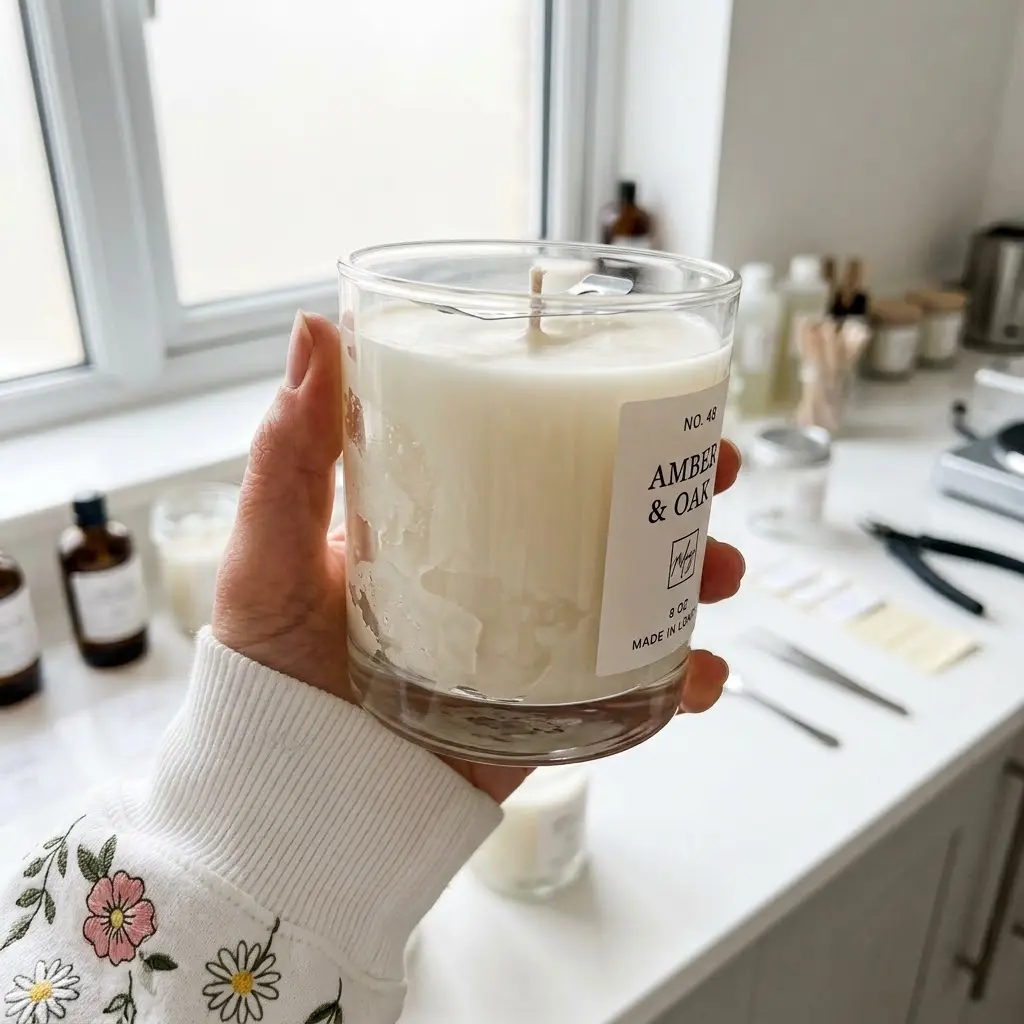
The short version is that soy wax shrinks and moves as it cools, and glass doesn’t move at all. Anywhere the wax pulls away from the jar during that cooling process, a wet spot forms. Several things accelerate this:
- Rapid temperature changes during cooling — moving a candle from a warm room to a cold surface, or placing it near an air vent or open window, causes the wax to contract unevenly.
- Uneven glass temperature at the time of pouring — a cold jar causes the outer layer of wax to set too quickly before the center has cooled, breaking the bond between wax and glass.
- Pouring temperature — wax poured too hot or too cool for the specific wax type tends to adhere less consistently to the glass as it sets.
- The wax type itself — soy wax is the most prone to wet spots of all wax types because of how significantly it contracts during cooling, while paraffin wax and coconut wax blends tend to bond more reliably to glass.
How to Fix Wet Spots Already in a Finished Candle
The honest answer is that once a wet spot has formed in a cooled candle, it can’t be fully and permanently removed — but it can be improved.
- Use a heat gun on a low setting and gently warm the outside of the glass where the wet spot is, which softens the wax enough to re-adhere slightly to the glass.
- A hair dryer on a low heat setting does the same job more gently for anyone without a heat gun.
- The wet spot may return after the next temperature change the candle experiences, since the underlying cause hasn’t been addressed — this is why prevention is more reliable than fixing after the fact.
- For candles being sold, addressing wet spots before they reach a customer is worth the extra step, but educating buyers that wet spots are cosmetic and don’t affect performance also reduces returns and complaints significantly.
How to Prevent Wet Spots in Future Batches
Prevention is significantly more reliable than correction, and a few small adjustments to the pour process make a noticeable difference.
- Warm the jars before pouring — placing glass jars in a warm oven at a very low temperature (around 150°F/65°C) for a few minutes before pouring brings the glass closer to the wax’s temperature and dramatically reduces the chance of the bond breaking during cooling.
- Pour at the correct temperature for the wax type — soy wax generally pours best between 120°F and 140°F (49°C–60°C), while paraffin pours at higher temperatures; always follow the specific wax supplier’s recommended pour temperature rather than a generic guideline.
- Cool candles at room temperature away from drafts, cold surfaces, and temperature fluctuations — placing a freshly poured candle on a cold marble countertop or near a fan is one of the most common causes of wet spots.
- Avoid moving candles during the first hour of cooling, when the wax is most actively contracting and the bond between wax and glass is most vulnerable.
- Use a cardboard box or insulated surface to slow the cooling process down slightly, giving the wax more time to set evenly against the glass.
The Most Important Thing to Know
Wet spots are one of the most common candle making troubleshooting questions for a reason — they affect almost every candle maker at some point regardless of experience level, and they’re almost impossible to eliminate completely when working with soy wax. Professional candle brands deal with them too.
The goal isn’t a zero-wet-spot batch every time, it’s minimizing them through consistent process and knowing that the ones that do appear aren’t a reflection of a bad candle. A wet spot is a wax behavior issue, not a craftsmanship issue, and once that distinction is clear, it becomes much easier to move past them and focus on what actually matters — how the candle burns and how it smells.
FAQ
Do wet spots affect how a candle burns?
No — wet spots are purely cosmetic and exist only where the wax meets the outside of the glass. They have no effect on burn quality, scent throw, or safety.
Why does soy wax get more wet spots than other waxes?
Soy wax has a higher rate of shrinkage and contraction as it cools compared to paraffin or coconut wax, which means it’s more likely to pull away from the glass during the cooling process.
Can I sell candles that have wet spots?
Yes — wet spots don’t affect the candle’s performance in any way. Many candle makers include a small note with their products explaining that wet spots are a natural characteristic of soy wax and are not a defect.
Will the wet spots go away on their own?
Not permanently — they may shift slightly as the candle goes through temperature changes, but they won’t disappear entirely without intervention. The most reliable approach is prevention during the pour rather than correction afterward.