People are clearing their surfaces. Editing their shelves. Painting walls white and feeling — for the first time in years — like they can breathe inside their own home.
Minimalist interior design is not a trend. It is a response to overstimulation, visual noise, and a world that never stops competing for your attention.
More people than ever are choosing space over stuff. Intention over accumulation. Quiet over chaos.
Here is what it actually means — and exactly how to get it.
Affiliate Disclosure: This article contains affiliate links which means we may earn a commission at no extra cost to you. You can check our affiliate disclosure page here.
What Minimalist Interior Design Actually Is
It is not white walls and no personality.
It is not cold, sterile, or joyless.
Minimalist interior design is the practice of keeping only what genuinely adds to a space — and trusting that the space itself, the light, the proportion, the architecture, is already enough.
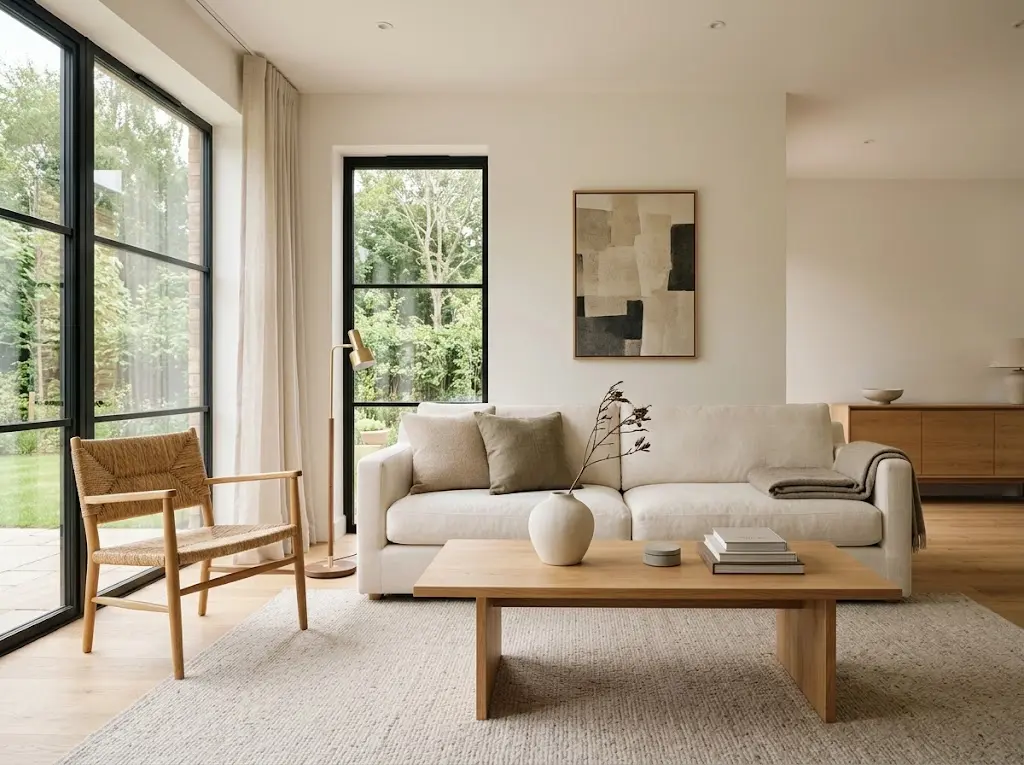
When you remove everything unnecessary, what remains becomes beautiful. One ceramic vase on an empty shelf says more than twenty objects fighting for attention. One perfect sofa in a spacious room feels more considered than a room crowded with furniture.
Less is not emptiness. Less is clarity.
Why It Is Having This Moment
We live surrounded by relentless visual noise. Every screen, every feed, every room competing for attention.
The minimalist home offers something almost radical in response — stillness.
Research consistently links cluttered spaces to higher stress and anxiety. A minimalist house interior does the opposite. It creates the conditions for genuine rest. For focus. For feeling like your home is actually working for you rather than against you.
There is also the sustainability side. Minimalist home design asks you to buy less, choose better, and keep longer. In a culture of constant consumption, that feels quietly revolutionary.
The Key Principles of Minimalist Interior Design
These are the ideas that define the minimalist aesthetic — get these right and everything else follows.
Every object earns its place.
Nothing sits in a minimalist interior by accident. Each piece is there because it is useful, beautiful, or both. If it is neither, it goes.
Quality over quantity — always.
One well-made piece of furniture will always outperform three cheap ones. The minimalist approach invests in fewer things made to last rather than more things made to replace.
Negative space is not wasted space.
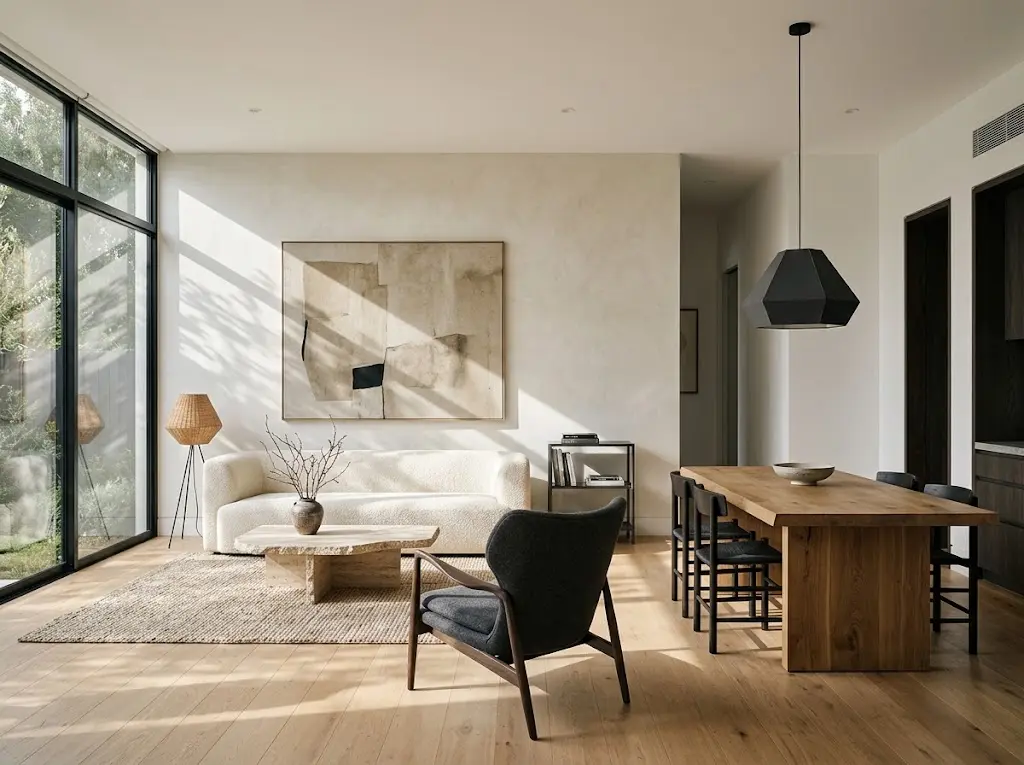
The empty wall. The clear surface. The breathing room between pieces of furniture. In minimalist home design, space is not what is left over — it is part of the design itself.
Colour is edited, not eliminated.
A minimalist home aesthetic does not mean no colour. It means a considered palette — typically two to four tones that work together quietly. White, warm grey, oatmeal, natural wood. Occasionally one deeper tone used with restraint.
Light is everything.
Natural light is the most powerful element in any minimalist house interior. Maximise it. Keep windows clear. Choose light window treatments. Let the light do the work.
The Minimalist Interior Palette
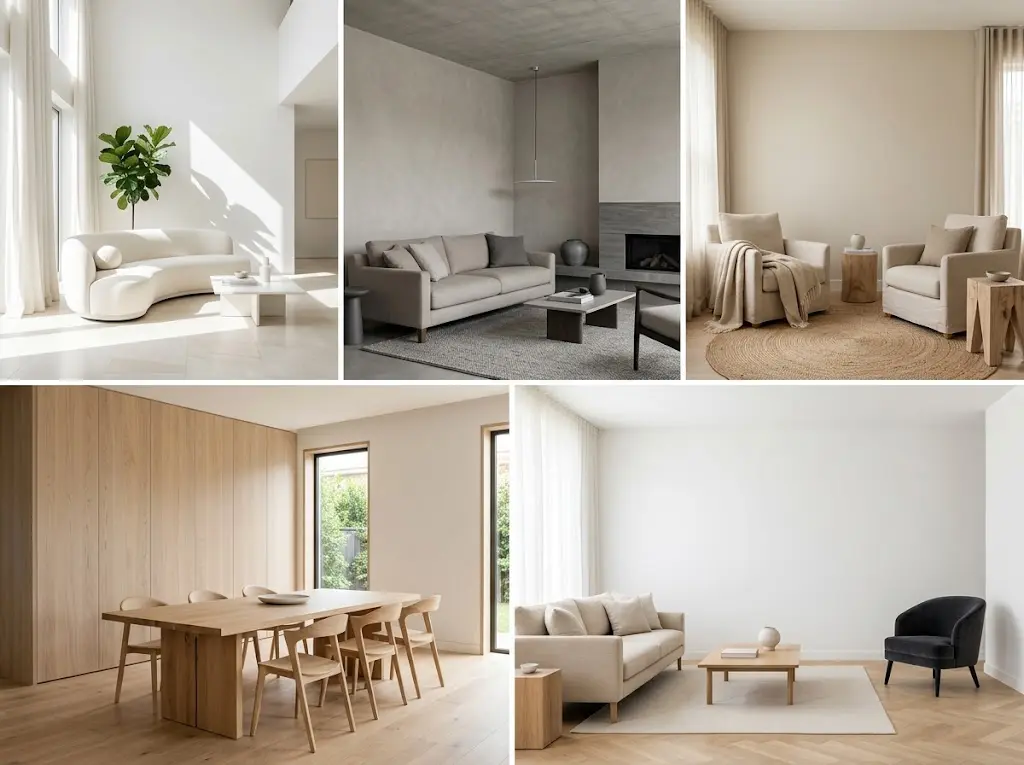
The minimalist colour palette is built on neutrals — but not boring ones.
- White and off-white — the foundation of almost every minimalist interior.
- Warm grey — adds depth without adding colour.
- Oatmeal and linen tones — bring warmth and softness.
- Natural wood — the most important warm element in a minimalist home.
- One deeper tone — charcoal, warm black, or deep clay used sparingly as an anchor.
The key is staying within the palette consistently. One rogue colour breaks the calm the rest of the room is working to create.
Materials That Define the Minimalist Home
The minimalist interior style is tactile even when it is visually quiet. Texture is how it creates warmth.
- Linen and cotton — for soft furnishings, bedding and cushions.
- Natural wood — light oak, ash and pale walnut for furniture and flooring.
- Stone and concrete — for surfaces, countertops and architectural details.
- Ceramic — for vases, bowls and objects.
- Wool and jute — for rugs that add warmth without adding colour.
These materials work because they are honest. They look like what they are. And in a minimalist home, that honesty is everything.
How to Achieve Minimalist Interior Design Room by Room
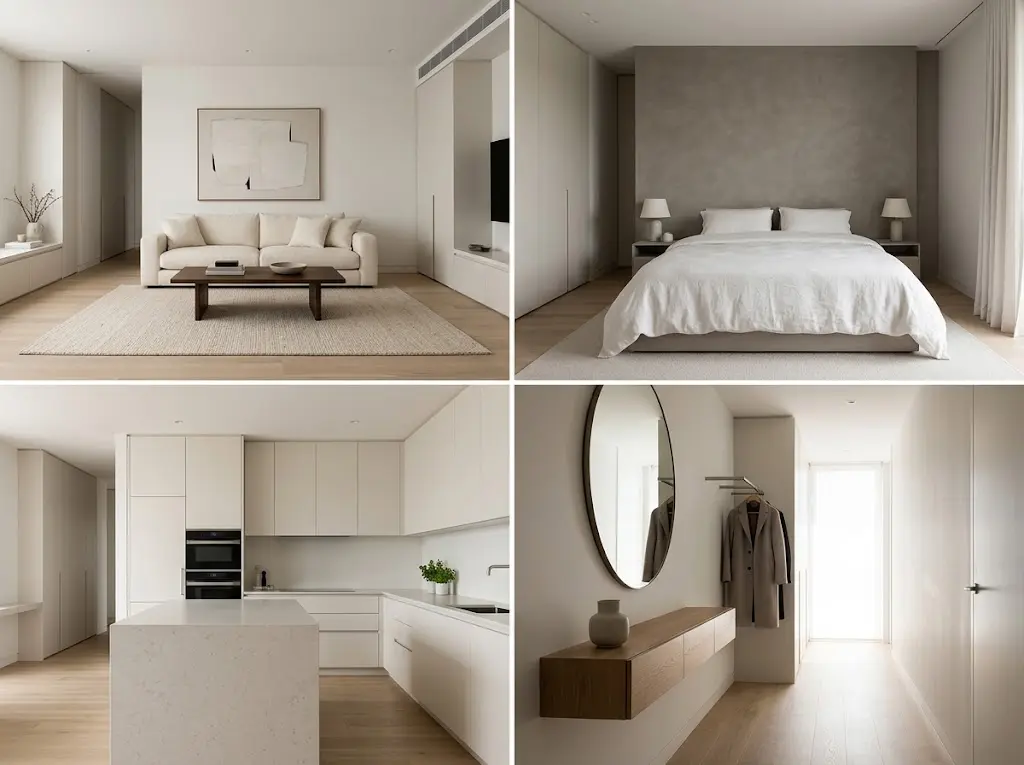
Take it one room at a time — trying to minimise everything at once is how nothing gets done.
Living Room
Start by removing everything from every surface and shelf. Everything.
Then put back only what you genuinely love or genuinely need. You will find the number is far smaller than you expected.
- Choose one sofa in a neutral — linen, cream, warm grey.
- One coffee table with clean lines.
- One rug in a natural tone to anchor the space.
- One piece of art on the wall — large, simple, considered.
- Storage that hides rather than displays.
The minimalist living room is not empty. It is edited.
Bedroom
The bedroom is where minimalist home styling has the most immediate impact on how you feel.
- White or warm white walls.
- Bedding in linen or cotton — white, oatmeal or soft grey.
- One bedside table per side with one lamp each.
- No clutter on surfaces — one object maximum per surface.
- Wardrobe doors closed or storage hidden.
- Nothing under the bed.
The goal is to make the bedroom feel like the most peaceful place in your home. When you get it right, it will be.
Kitchen
The minimalist kitchen is about countertops.
Clear them almost completely. Everything that does not get used daily goes into a cupboard. The appliances you use once a week do not earn surface space.
- Handle-free or minimal handle cabinets.
- One material for countertops used consistently throughout.
- Open shelving only if you can commit to keeping it completely considered.
- A single herb plant as the only decorative element if needed.
- Nothing on the fridge.
Hallway
The hallway sets the tone for the entire home.
- One coat hook or a single slim coat rail — not a row of everything you own.
- One mirror to open the space.
- Clear floor — no shoes, no bags, nothing sitting on the floor.
- One small object or plant if the space calls for it.
If people walk in and feel calm, the hallway is working.
Minimalist Interior Ideas — Where to Start
If the whole approach feels overwhelming, start here:
- Clear one surface completely. Just one. See how it feels.
- Remove half the objects from one shelf. The ones that remain will suddenly look intentional.
- Switch to white or linen bedding. One of the fastest and most impactful minimalist home decor changes you can make.
- Edit your entryway. First impressions set the tone for the entire home.
- Choose one wall to leave completely bare. Let the room breathe.
Minimalism is not done all at once. It is done one decision at a time.
What Minimalist Interior Design Is Not
Worth saying clearly:
- It is not getting rid of everything you love.
- It is not living without comfort or warmth.
- It is not a style only for people with large expensive homes.
- It is not cold, clinical or unwelcoming.
- It is not permanent — you can always add back in.
The minimalist home aesthetic is not about deprivation. It is about making room — for light, for calm, for the things that actually matter to you.
Shop the Minimalist Look
These are the pieces and resources worth having when building a minimalist interior — chosen for quality, simplicity and longevity.
Minimalist Furniture
Clean lined pieces that anchor the space without overpowering it.


Minimalist Decor
Simple beautiful objects that earn their place in a minimalist home.


Minimalist interior design is not about having less for the sake of it.
It is about making space for what genuinely matters. For light. For calm. For the version of your home that feels like a place you actually want to be.
You do not need to start over. You do not need a bigger space or a bigger budget.
You just need to start editing.
One surface. One shelf. One room.
And then watch how the whole home begins to breathe.
FAQ
Can a minimalist home feel warm and cosy?
Absolutely. Warmth in a minimalist interior comes from texture, natural materials and light — not from the number of objects in a room. Linen throws, natural wood, candlelight and wool rugs create genuine warmth without adding visual clutter. Scandi minimalism in particular is built entirely around this idea.
How do I start if I have a lot of stuff?
Start with one room, one surface, or even one drawer. The goal is not to declutter everything at once — it is to experience how a cleared, edited space feels and let that be the motivation to continue. Most people find that once they start, the process becomes addictive.
Can minimalist interior design work in a small home?
It works even better in a small home. Minimalist home design principles — clear surfaces, hidden storage, a neutral palette, maximised light — make small spaces feel significantly larger. A minimalist house interior with fewer pieces and more breathing room will always feel more spacious than a small room crowded with furniture.
How do I keep a minimalist home looking minimalist over time?
The one in one out rule is the most practical approach — when something new comes in, something leaves. Regular editing sessions — even just 20 minutes a month — prevent accumulation from building back up. The habit of asking whether something genuinely earns its place before bringing it home is the most powerful long-term tool.