
You bought a beautiful candle. The label said 50 hours. It’s gone in two weeks.
If you’ve been asking yourself why is my candle burning so fast — you’re not imagining it and you’re not doing anything terribly wrong. But something is off — and once you know what it is, it’s a very easy fix.
Here’s exactly why your candle is burning faster than it should and what to do about it.
Affiliate Disclosure: This article contains affiliate links which means we may earn a commission at no extra cost to you. You can check our affiliate disclosure page here.
What’s a Normal Candle Burn Time Anyway?
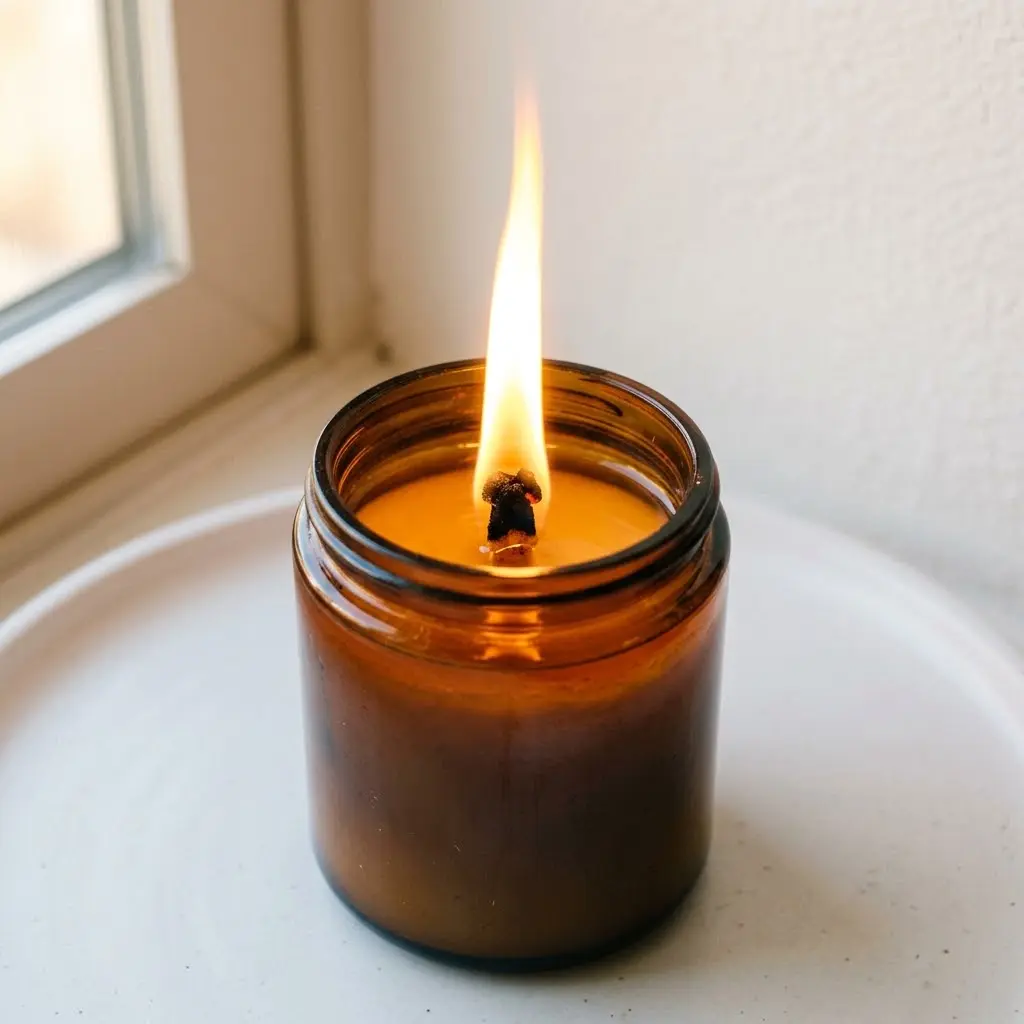
Before fixing the problem it helps to know what normal actually looks like.
A rough guide based on container size:
- Small candle (4–6 oz) — 25 to 40 hours
- Medium candle (8–10 oz) — 40 to 60 hours
- Large candle (12–16 oz) — 60 to 80 hours
If your candle is burning noticeably faster than these ranges, something is working against it. Here’s what.
Reason 1 — The Wick Is Too Large for the Vessel
This is the most common cause and the one most people never think to check.
When a wick is too large for the diameter of the jar, it generates more heat than the candle needs. That excess heat melts wax much faster than it should — creating a deep melt pool, a tall flame, and a candle that disappears far too quickly.
The fix: Match wick size to container diameter. A jar under 3 inches needs a smaller wick than a wide vessel. If you’re a candle maker, this is your burn testing process. If you’re a buyer, this is a sign the candle wasn’t properly tested before it was sold.
A correctly wicked candle should have a melt pool that reaches edge to edge within 2 hours — but shouldn’t be more than half an inch deep. Deeper than that and the wick is too large.
Reason 2 — You’re Burning It in a Drafty Spot
A draft is one of the most overlooked candle burning tips and one of the biggest culprits behind fast burn time.
When air moves across a candle flame — from an open window, a ceiling fan, an air conditioning vent, or even foot traffic in a busy room — it pulls the flame sideways and causes it to work harder to stay lit. That means it burns hotter, faster, and less evenly.
The fix: Move your candle away from windows, fans, AC vents and doorways. Even a gentle breeze you can barely feel is enough to increase burn rate significantly. A still room is always best for candle burn time.
Reason 3 — The Wax Has a Low Melting Point
Not all waxes are created equal and some simply burn faster than others.
Soft waxes — certain soy blends and coconut wax in particular — have a lower melting point. That means the wax liquefies more quickly and the candle burns through its volume faster than a harder paraffin or beeswax candle of the same size would.
This isn’t necessarily a quality issue — soft waxes often have beautiful scent throw and a clean burn. But it does mean your candle burn time will naturally be shorter and your expectations should adjust accordingly.
The fix: If burn time is your priority, look for candles made with harder wax blends or beeswax. If you love coconut or soy candles, burn them in shorter sessions to preserve them longer.
Reason 4 — You’re Not Trimming the Wick
This is the simplest fix on the list and the one most people skip entirely.
An untrimmed wick burns larger than it should. A larger flame means more heat, a faster melt, a deeper wax pool, and significantly reduced candle burn time. It also causes mushrooming — that black carbon buildup on the wick tip that makes the flame even bigger and hotter over time.
The fix: Trim your wick to 1/4 inch before every single burn. Every time. Without exception. A wick trimmer makes this genuinely easy and keeps the cut clean and even. You’ll immediately notice a smaller steadier flame and your candle will last significantly longer.
One More Thing — Burn Long Enough Each Time
Here’s something that works both ways. Burning a candle for too long speeds it up. But burning it for too short a time causes tunneling — which wastes the wax around the edges and also shortens the life of your candle.
The rule is simple: burn for at least one hour per inch of container diameter. A 3-inch jar needs at least a 3-hour first burn to develop a full melt pool. After that, keep each session between 2 and 4 hours maximum.
The Short Version
If your candle is burning too fast:
- Trim the wick to 1/4 inch before every burn — use a wick trimmer.
- Move it away from any draft, fan, window or vent.
- Check the flame — if it’s tall and flickering the wick is too large.
- Burn for the right amount of time — not too short, not longer than 4 hours.
- Use a candle snuffer to extinguish cleanly without disturbing the wax.
These are small habits. But they add hours — sometimes days — to your candle burn time.
FAQ
Why does my candle burn faster on one side?
This is almost always caused by a draft hitting the candle from one direction. The flame leans toward the air movement and melts the wax on that side faster. Move the candle to a still spot and rotate it occasionally.
Does the type of wax affect how fast a candle burns?
Yes significantly. Beeswax burns the slowest. Paraffin is mid-range. Soy and coconut wax blends tend to burn faster due to their lower melting point. A harder wax blend will always give you more burn time for the same candle size.
Should I put the lid on between burns?
Yes — always. The lid protects the wax surface from dust and helps preserve the fragrance. It also slightly slows the cold throw evaporation between burns which means your candle smells stronger for longer.
Does burning multiple candles in the same room make them burn faster?
Not directly — but the ambient heat from multiple flames raises room temperature slightly which can soften the wax in nearby candles. Keep candles at least 3 inches apart when burning more than one at a time.